
Hanksville, Utah Badlands & Sculpted Desert Photography Workshop
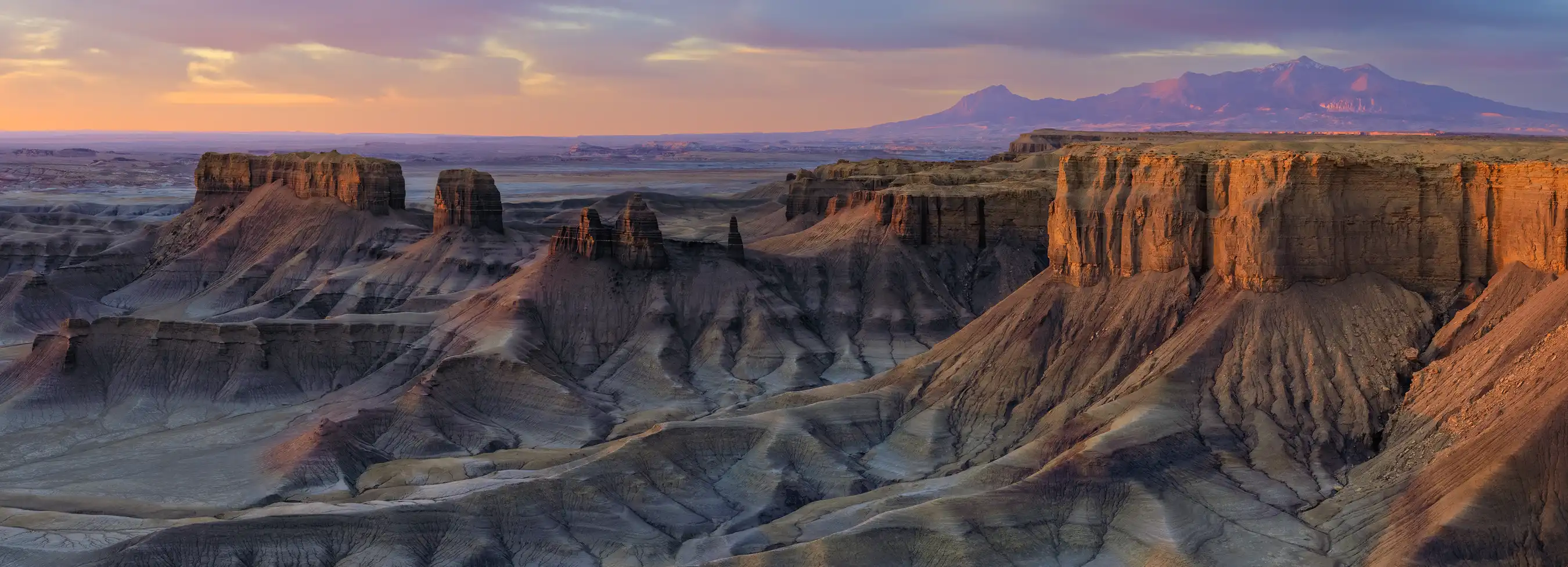
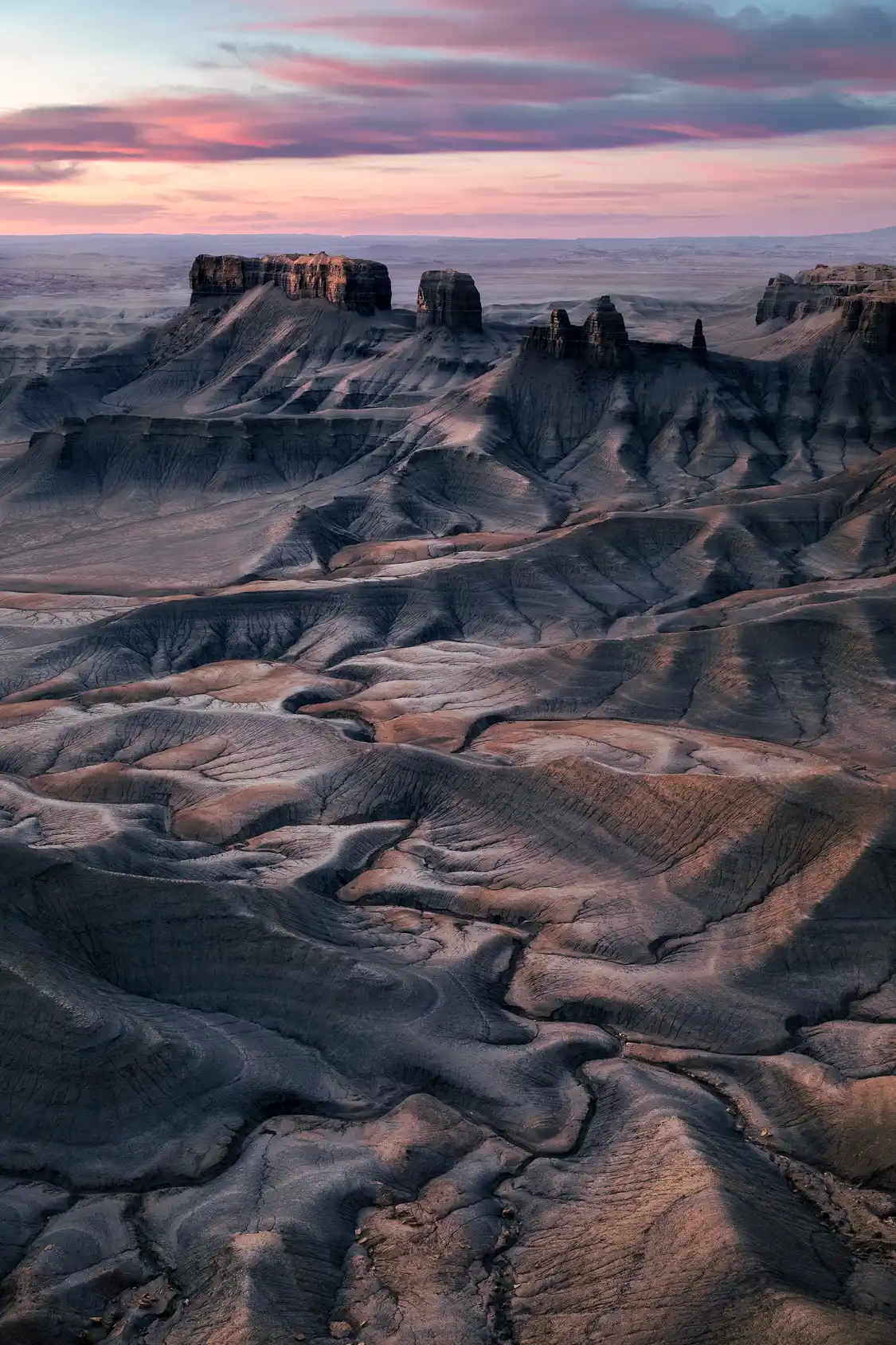
This Utah badlands photography workshop is based in Hanksville, Utah in April. The surrounding landscape is defined by bentonite hills, desert mesas, and open skies shaped by erosion, time, and light. We photograph these landscapes from locations such as Moonscape Overlook, Factory Butte, and the surrounding badlands in a small-group, field-based setting.
Workshop overview
Workshop video
This video documents field work in the Hanksville badlands and examples of how desert formations photograph under spring conditions.
About the Hanksville, Utah photography workshop
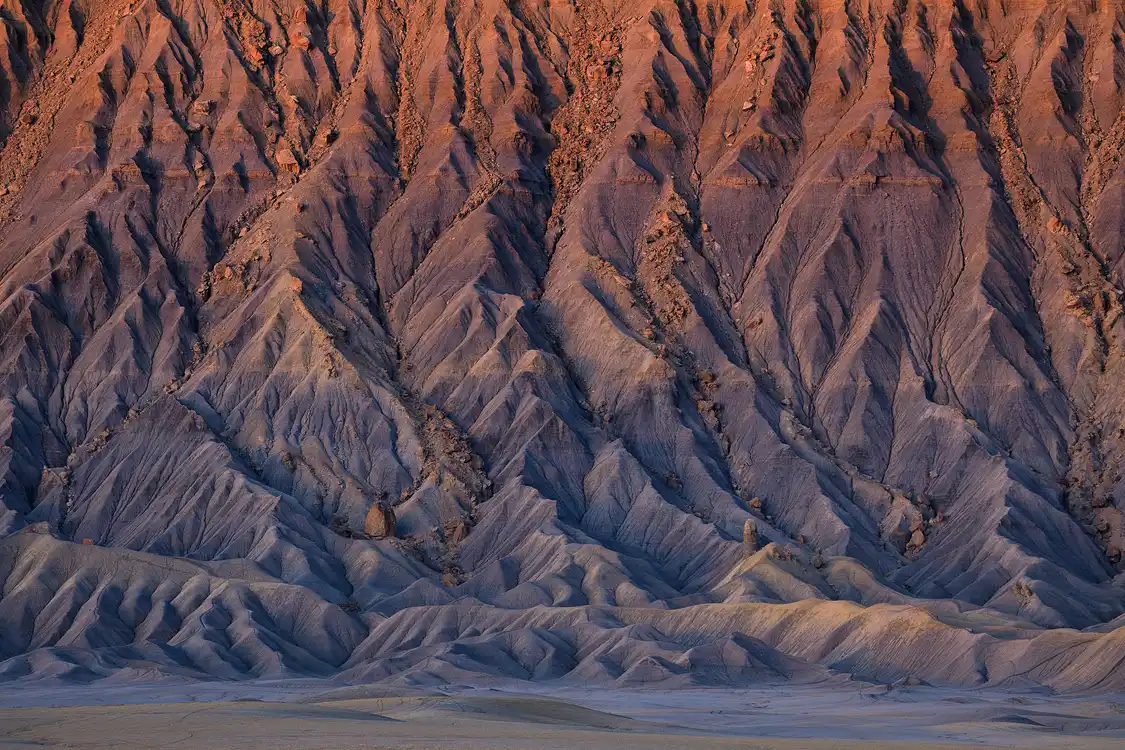
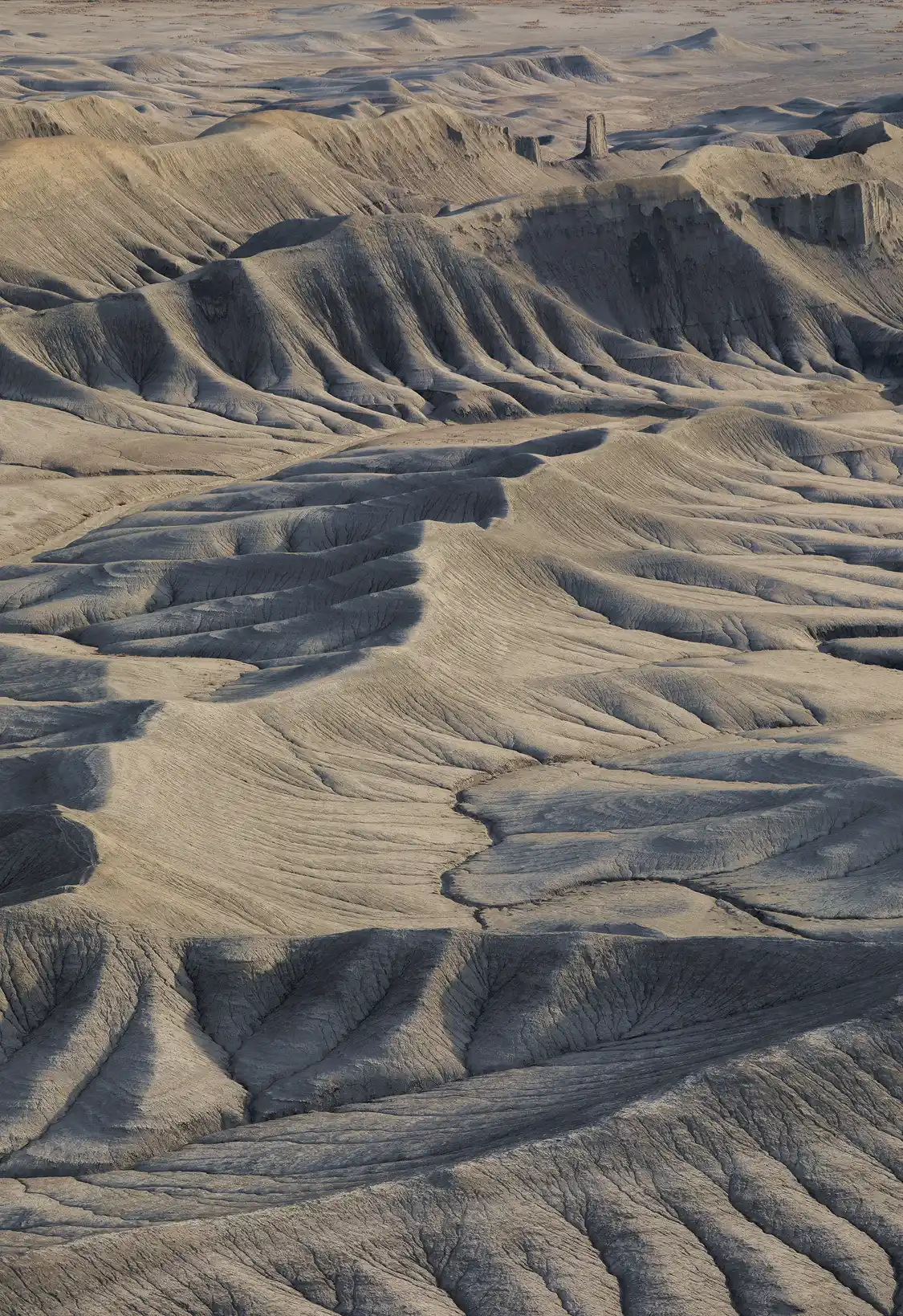
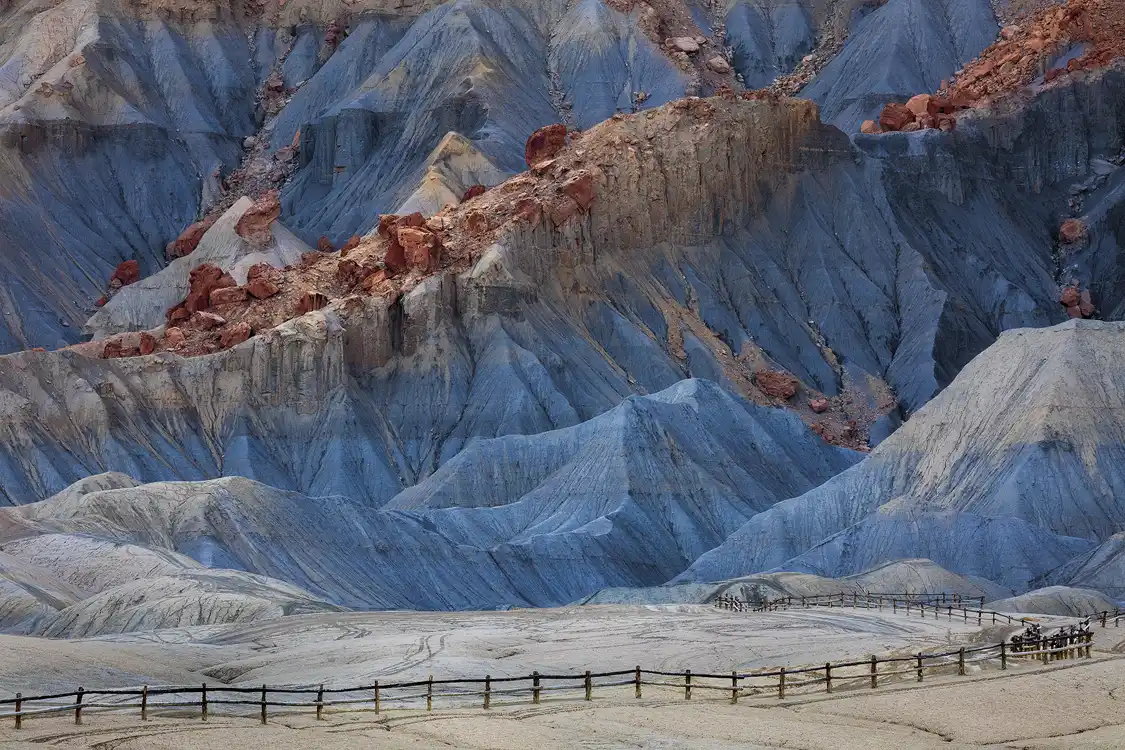
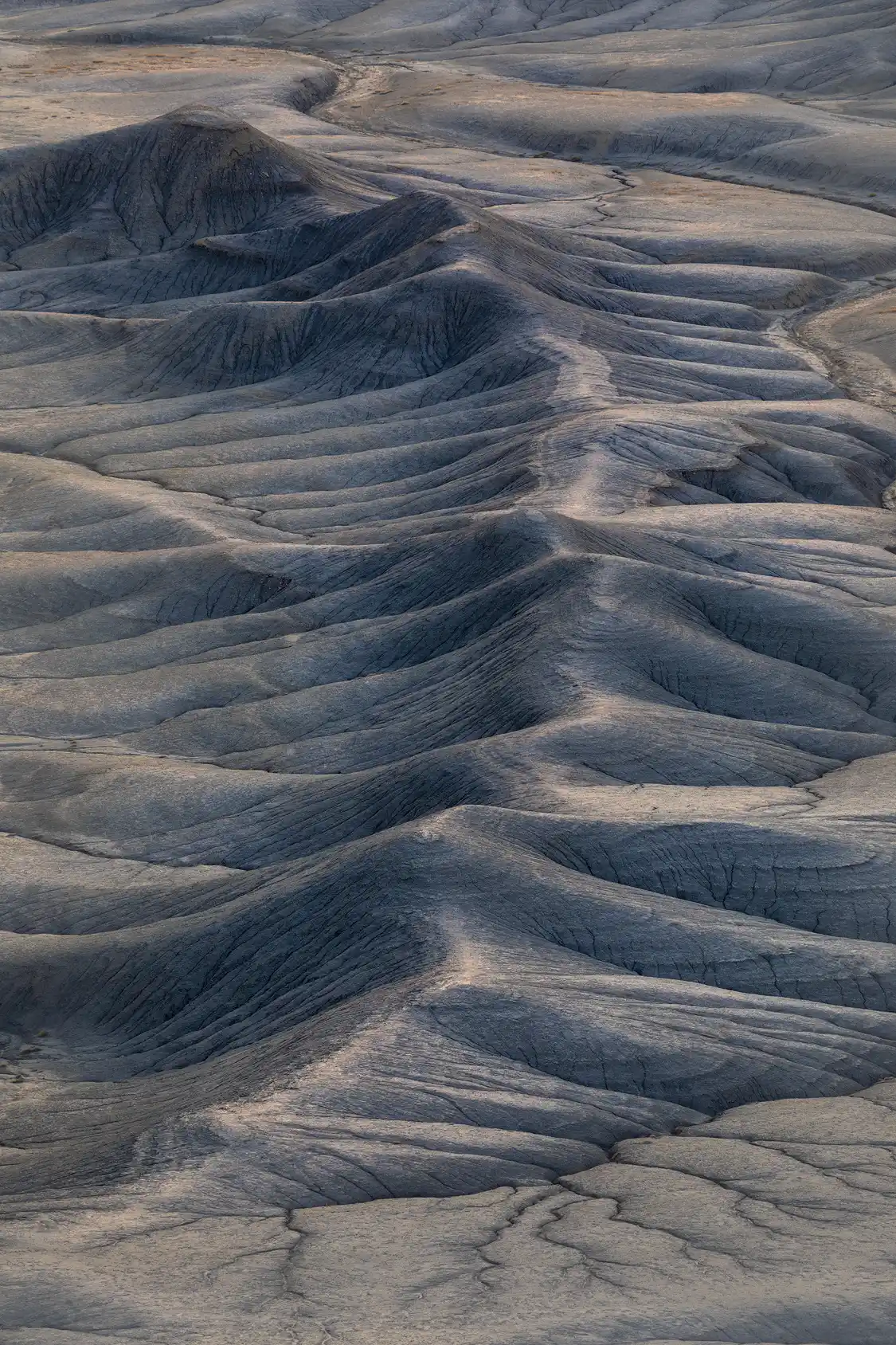
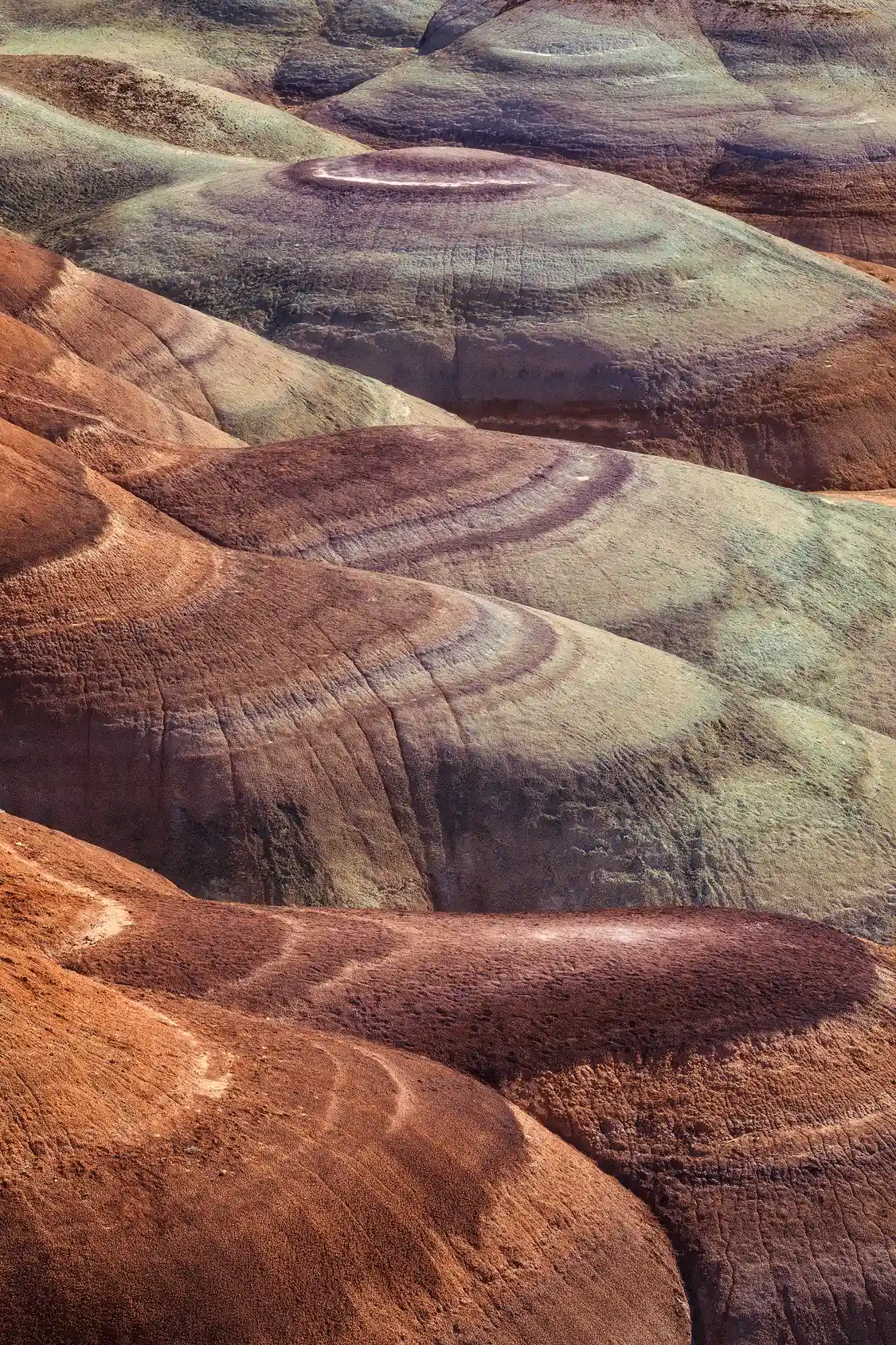
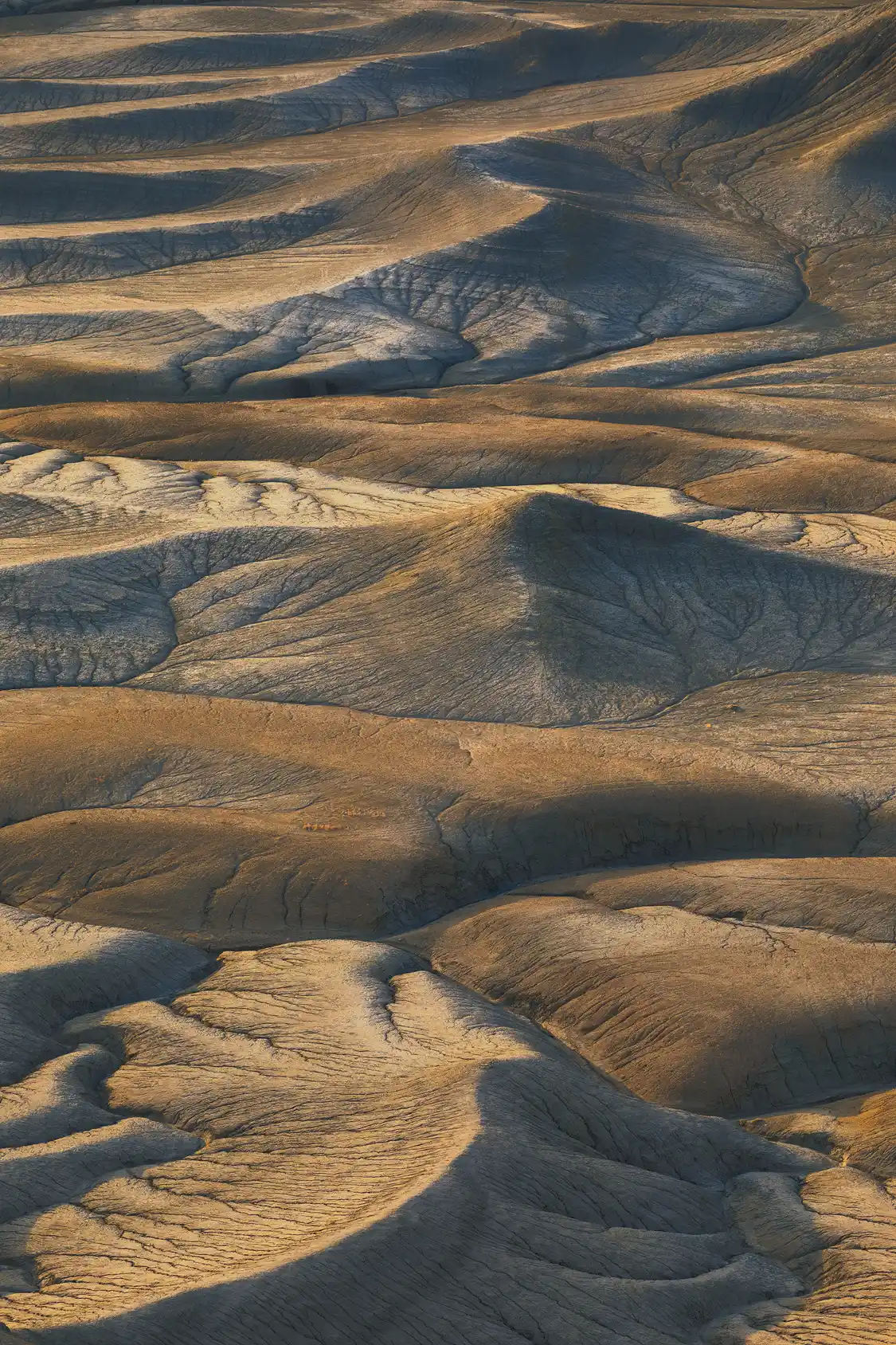
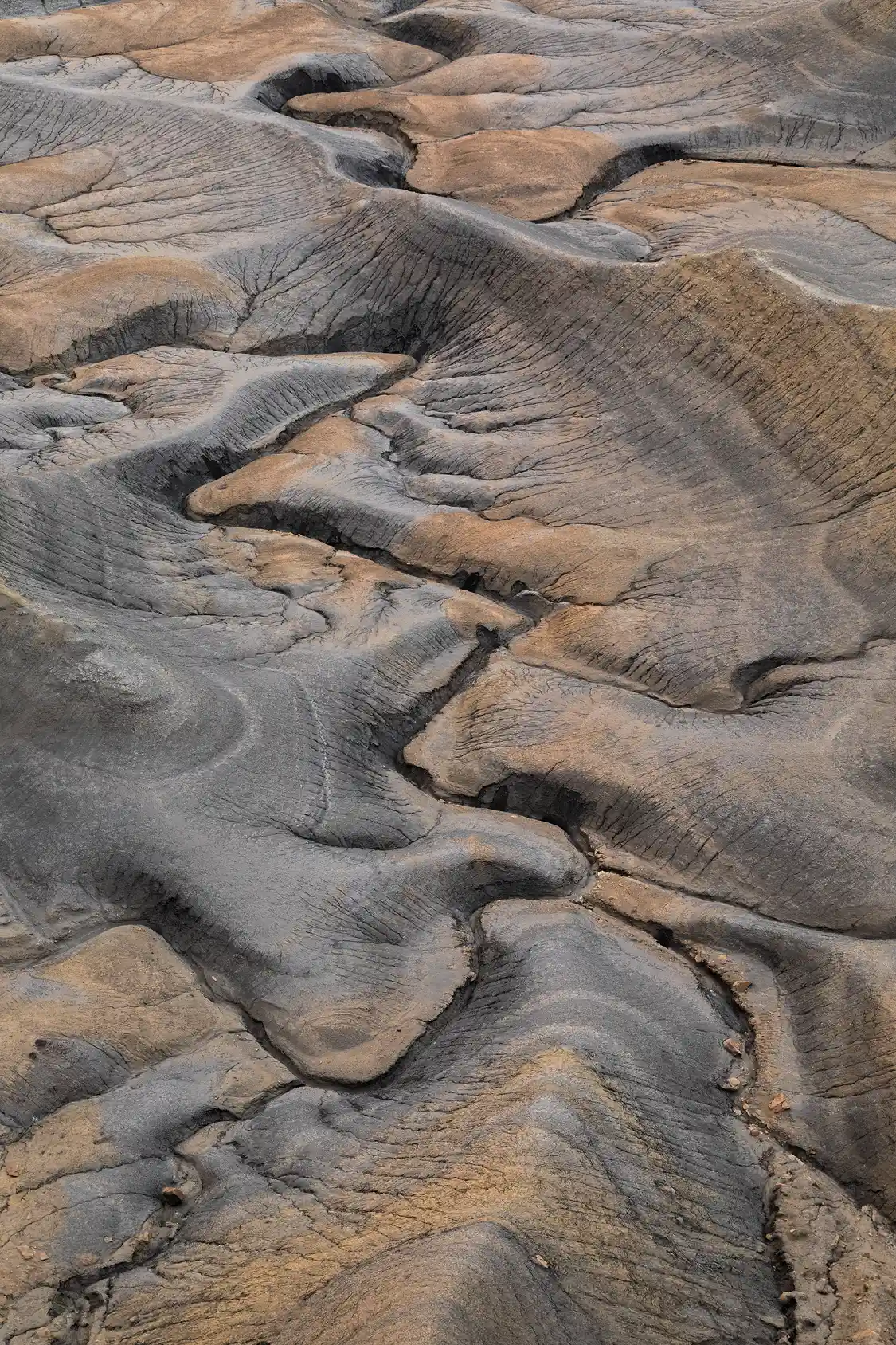
The remote badlands surrounding Hanksville are defined by sculpted clay hills, eroded ridgelines, and wide desert basins. The terrain invites both expansive panoramas and long-lens studies, with compositions shaped by subtle drainage patterns, layered color bands, and the way light moves across textured clay formations.
The badlands are quiet in a way that sharpens attention. Wind moves across open clay slopes, and small changes in light become noticeable. The pace is slower than it looks from a distance.
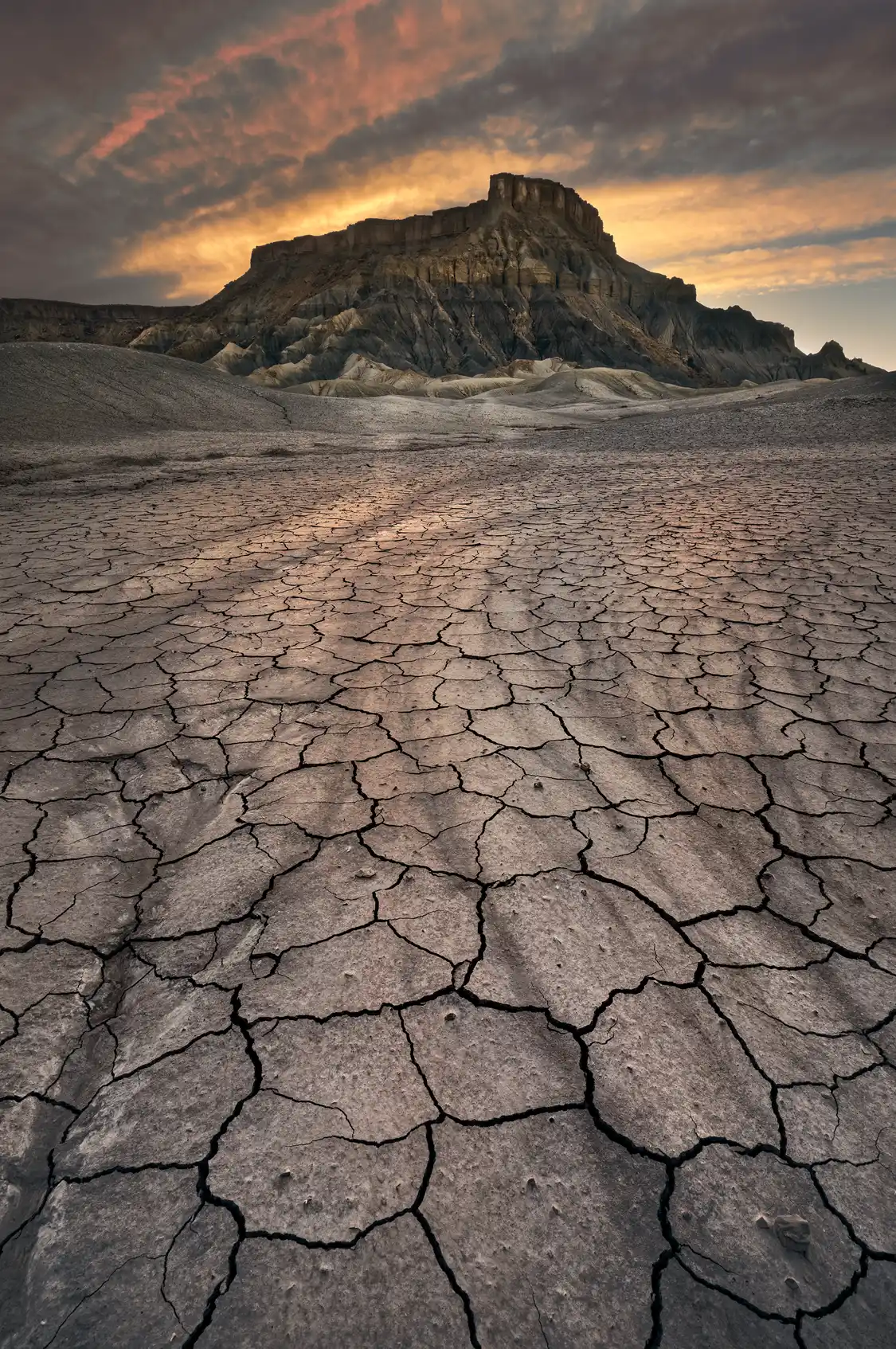
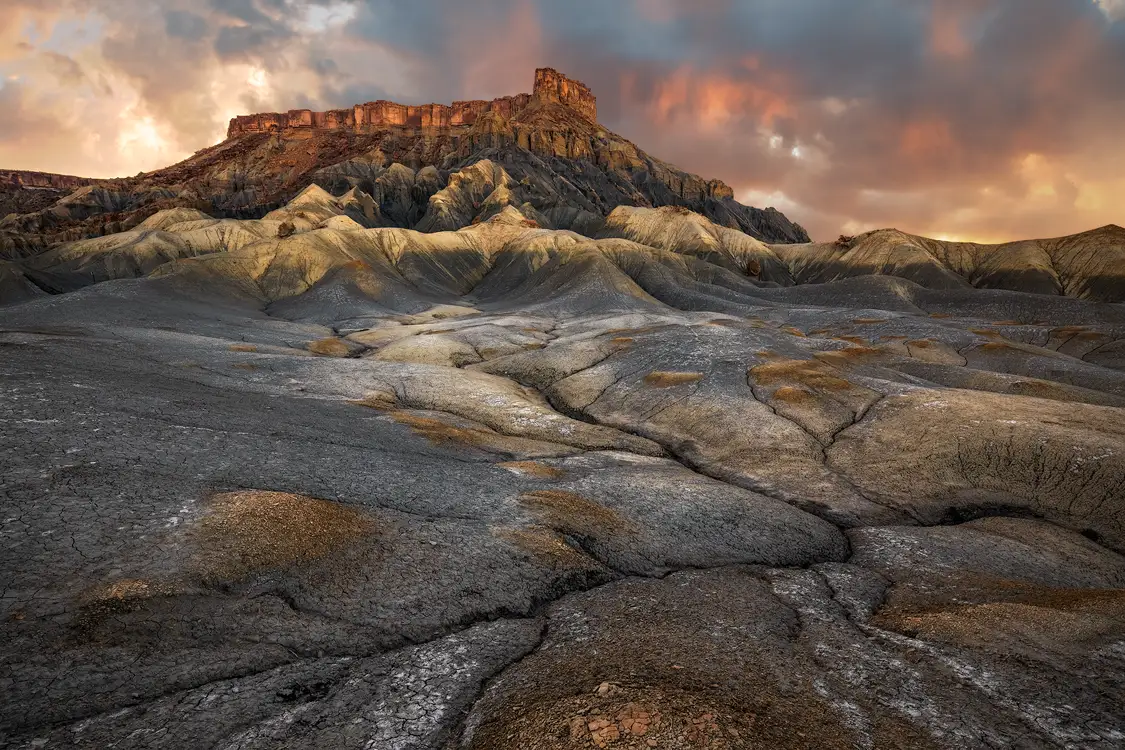
The badlands do not rely on dramatic peaks or obvious subjects. Strong images often come from recognizing subtle terrain features, managing high dynamic range at sunrise, and using focal length intentionally. At Moonscape Overlook, sunrise begins with wide compositions and panoramas, then we move to longer lenses once the sky settles to work the drainage patterns and subtle terrain shapes below. Factory Butte rewards careful timing, where the first light can create a warm glow along its upper slopes while lower terrain remains cool in reflected blue light. In the Bentonite Hills, compositions often exclude the sky entirely, focusing instead on color bands, repeating curves, and clean frame edges.
Andy works alongside participants in the field, not to make his own images, but to help with decisions as scenes evolve. Experience levels vary. Some photographers are building confidence working in subtle terrain; others are refining technique in complex desert light. The structure of the workshop allows extended time on location so you can return to promising areas, adjust compositions, and build a cohesive body of work rather than treating each stop as a single opportunity. You can read more about how instruction works across all workshops on the How We Teach page.
April is especially favorable in this region, bringing moderate temperatures, dynamic cloud cover, and lower sun angles that emphasize texture in the clay formations. Nights are typically cool making it a strong time of year for photography without the smoke common later in the season.
Workshop highlights
Field-based guidance and image review
Instruction happens primarily in the field, where subtle changes in light, focal length, and position make the greatest difference. Andy works alongside participants, helping refine compositions, manage dynamic range at sunrise, and respond to shifting desert contrast across clay hills and ridgelines. Select days include image review and post-processing sessions focused on evaluating files, refining tonal balance, and helping with color.
Workshop itinerary and schedule
Lodging
After registration, we'll send the hotel details where the group is based in Hanksville. Most field locations are reached by short drives from town.
Daily outline
-
DAY 1, SUNDAY, April 18, 2027:
7:00 PM · Welcome & introduction: Meet at the hotel for a group meetup, orientation, and answer questions.
-
DAYS 2-5, MONDAY-THURSDAY, April 19-22, 2027:
Photography sessions
Final sunset session: Thursday, April 22, 2027.
What to expect
A typical day
Days adapt to light, weather, and desert conditions rather than following a fixed itinerary.
- Morning: We head out early to be in position for first light on the mesas and desert formations. As the sun rises, ridgelines, drainage patterns, and layered hillsides change quickly in contrast and color. Mornings often begin with wider compositions before moving to longer lenses as light settles and terrain details emerge. Because some locations offer more material than can be fully explored in a single session, we return to certain areas to continue refining and expanding earlier compositions.
- Midday: Midday hours are typically used for rest. On select days, image review and post-processing discussions focus on evaluating files, refining tonal balance, and building final images.
- Evenings: Evenings take us back into the field as shadows lengthen and desert texture becomes more pronounced. Some sessions revisit familiar terrain under different light; others explore new compositions depending on conditions.
Registration
Registration details are available on the next page where you'll find secure PayPal buttons. You can check out as a guest using your credit or debit card—no PayPal account required.
Workshop details
- Experience level
- This workshop is open to photographers ranging from developing to advanced. Prior desert experience is not required, but you should be comfortable operating your camera in manual mode and working with a tripod. Developing photographers will focus on strengthening exposure control, choosing focal length intentionally, and learning how to simplify complex desert scenes. More experienced photographers can concentrate on managing dynamic range at sunrise, refining long-lens compositions, and making deliberate decisions in changing light. Instruction adapts to your background and goals rather than following a fixed curriculum.
- Group size
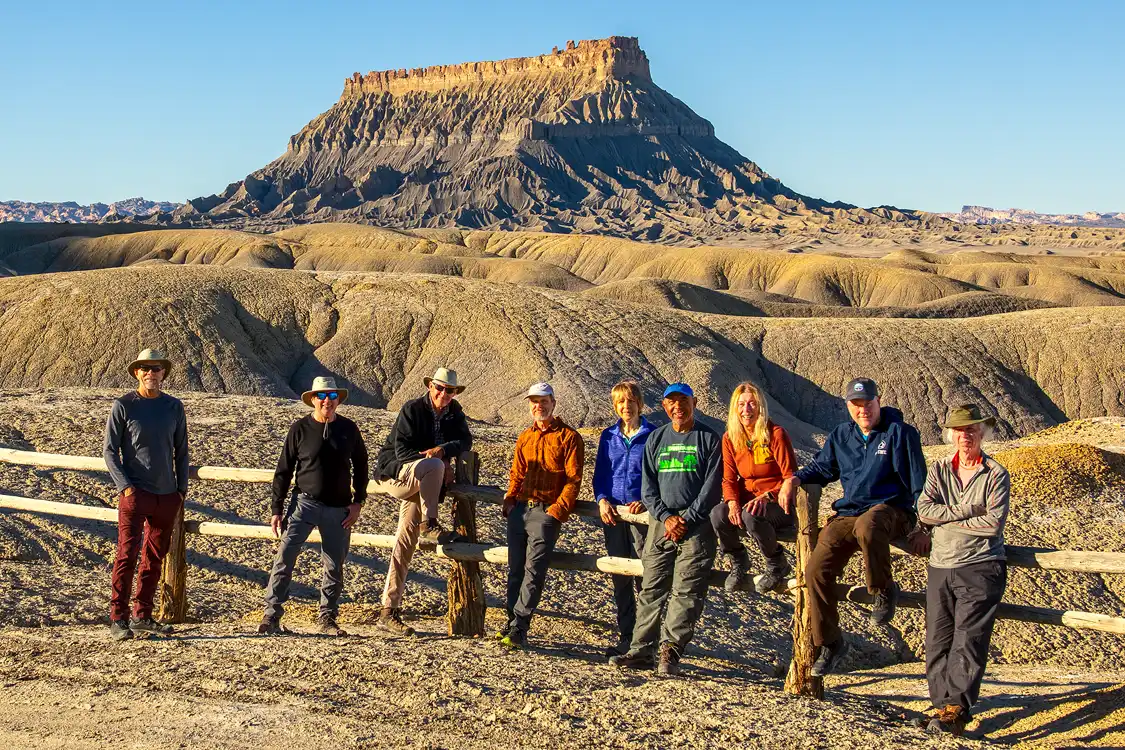
- The workshop is limited to a small group, with a target of eight participants. This allows for meaningful one-on-one guidance in the field, flexibility when working locations, and enough space for everyone to work without feeling crowded.
- Effort and terrain
- Effort ranges from light to moderate. Most locations are accessed from roads or short walks, but footing is uneven and varies by site. Expect soft clay soil, loose rock, shallow gullies, and low ridgelines. One location involves a mostly level walk of roughly one mile each way. After even light rain, bentonite terrain can become slick and unstable. Steady footing and basic mobility are important for navigating the landscape confidently.
- Conditions
- Spring conditions in the Hanksville area vary. Mornings and evenings are often cool, while mid-day temperatures can feel warm in direct sun. Wind is common in exposed locations such as Moonscape Overlook and Factory Butte. Although rain is infrequent, even light moisture can make bentonite terrain slick and difficult to walk on. Layered clothing, sun protection, and a wind-resistant outer layer are strongly recommended.
- Elevation
- Most photography locations range between approximately 4,500 and 5,500 feet in elevation. This is not extreme altitude, but participants should stay hydrated and pace themselves if they are not accustomed to working at elevation. Breaks and schedule adjustments are built into the week as needed.
Getting to the workshop
Air travel
Nearby airports are Grand Junction Regional Airport (GJT) and Salt Lake City International Airport (SLC).
Drive time from Grand Junction: ~2 hr 30 min
Drive time from Salt Lake City: ~3 hr 45 min
Driving and carpooling
Workshop locations are reached via a combination of paved highways and graded dirt roads. Most sites can be accessed without 4WD, but due to the nature of the terrain—especially near Bentonite Hills and Moonscape Overlook—a high-clearance SUV is highly recommended. In wet conditions, some areas may become muddy or impassable, particularly in the Bentonite region, where even light rain can make the clay soil very slick.
We strongly encourage participants to rent or bring an SUV for maximum flexibility and safety.
Whenever possible, during the workshop, we encourage participants to carpool to minimize our impact and foster camaraderie among attendees.
Recommended gear
Lenses
For the varied desert terrain around Hanksville, we recommend a lens range of approximately 16mm to 400mm (full-frame equivalent). Wide-angle lenses work well for expansive views from Moonscape Overlook and when working close to North Caineville Mesa. Telephoto lenses are equally important for isolating drainage patterns and studying how light moves across distant terrain.
Polarizing filter
A polarizer can be useful, but it should be used deliberately. In many desert scenes, especially when photographing clay textures and subtle color transitions, a polarizer may have limited impact or can reduce surface sheen that adds depth. Test it carefully and review the result in the field rather than leaving it on by default.
Footwear
The terrain in this region is dry, open, and often rugged—expect gritty clay soil, small rocks, and uneven footing. We recommend sturdy, ankle-high hiking boots to protect your feet and ankles and to keep dust and debris out. Traction is especially important when exploring Bentonite hills after any moisture.
Workshop community
See photographs created by participants during past Hanksville, Utah workshops.
FAQ
- How much instruction is there versus time to work independently?
-
Guidance is available throughout the workshop, but it is not constant or directive. Some participants prefer frequent feedback in the field; others work independently and check in as needed. The structure allows both approaches, with time to refine compositions without feeling rushed.
- Are drones allowed during the workshop?
-
Participants are welcome to bring drones, but no drone instruction is provided. Drones must be used responsibly, launched and landed away from others, and flown in accordance with FAA regulations and local restrictions. Drone use should not interfere with the experience of the group.
Related workshops
- The elevated perspectives and patterned terrain we work with here share similarities with the Badlands workshop, where erosion and repetition also demand careful framing and tonal separation.
- For those drawn to strong desert structure and working with rock formations at sunrise and sunset, the Arches & Canyonlands workshop offers related compositional challenges from a different vantage point.
- If minimalist composition and managing harsh light appeal to you, the Big Bend workshop presents comparable opportunities to refine clarity and restraint across open landscapes.
Further Study
For photographers interested in refining post-processing techniques related to this workshop, the following tutorials may be helpful: