
Badlands National Park Photography Workshop
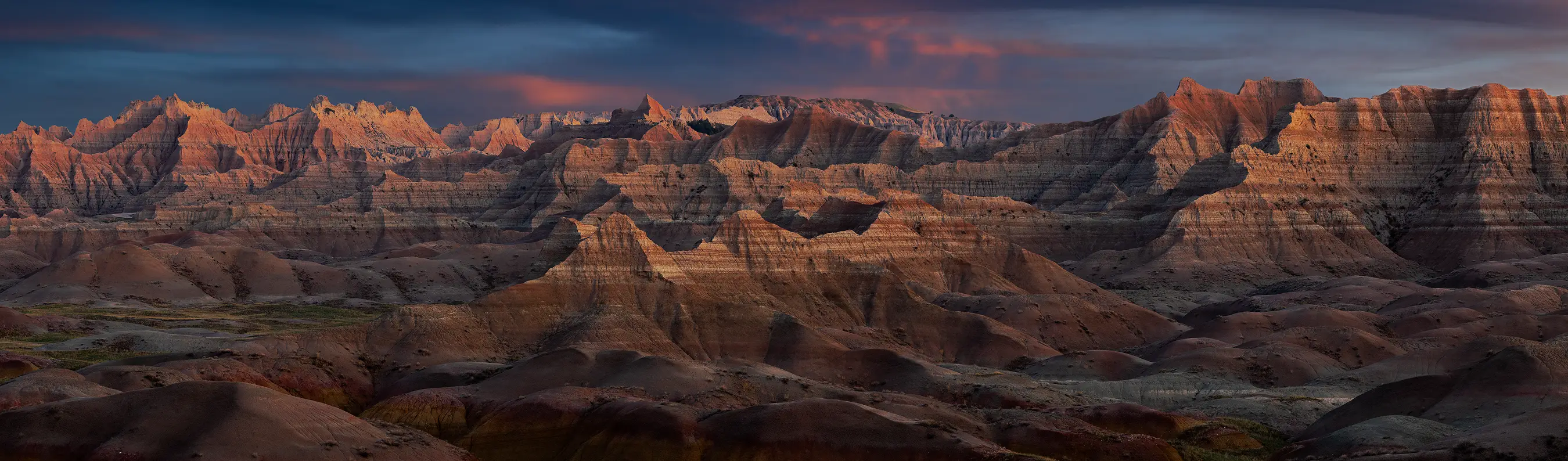
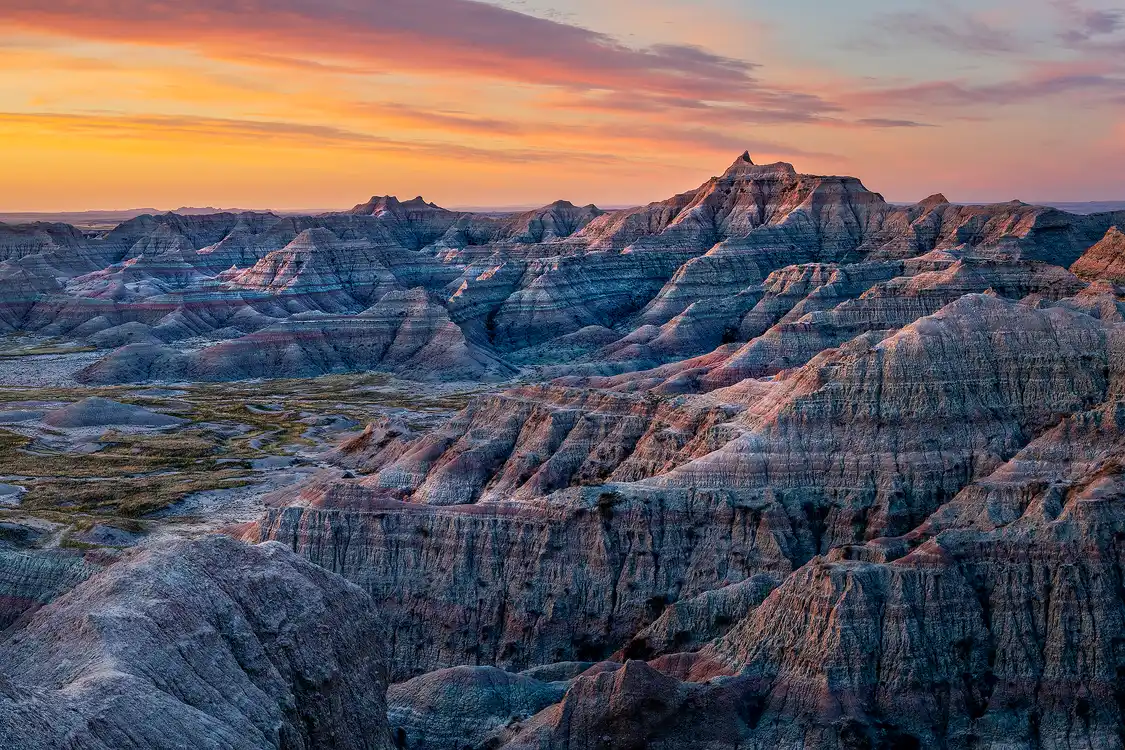
This Badlands National Park photography workshop is based near Wall, South Dakota. The landscape here is defined by layered ridges, erosion formations, and sculpted terrain that reveal structure and depth as light moves across the formations. We photograph these landscapes at sunrise and sunset, working in a small group where instruction happens in the field as conditions, light, and atmospheric depth evolve.
Workshop overview
Workshop video
This video takes you into the field during several Badlands National Park photography workshops, showing participants photographing interesting rock formations, dramatic skies, and ever-changing light throughout the day.
About the Badlands National Park photography workshop
A photography workshop in one of America's most structurally complex and visually deceptive landscapes.
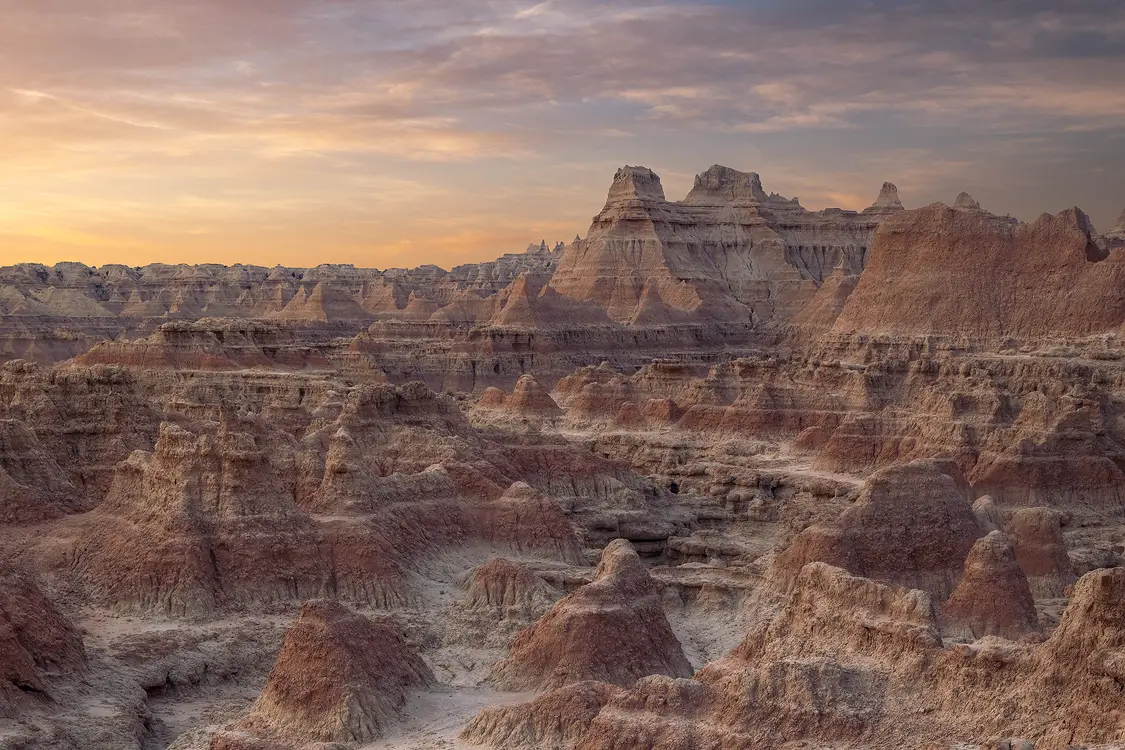
The Badlands can look obvious at first. Big overlooks, big skies, big shapes. Then you get home, review the images, and realize how quickly the frame filled up with distractions or competing elements. This workshop is designed to work through that complexity by choosing effective camera positions, refining focal length choices, paying attention to frame edges, and letting structure and light carry the image. While some sessions begin at established overlooks such as Big Badlands Overlook or Yellow Mounds, much of our time is spent moving along nearby ridges or walking beyond the immediate overlook to simplify relationships between formations. Locations accessed from Badlands Loop Road (SD-240), including areas near Big Foot Pass and other lesser-known ridge systems, often provide stronger compositions than the most obvious viewpoints.
In early May, the Badlands offer long evenings, moderate temperatures, and open ground before seasonal vegetation begins to obscure erosion patterns. This makes the underlying structure more visible and easier to work with in the field. We focus on the transition from late light through sunset, when side-light defines erosion detail and the relationship between foreground and distant ridges. In blue hour, the landscape grows quieter and subtle structures emerge within the terrain. As those details become visible, photographers find renewed focus, working carefully to refine placement before the light fades. Many of the strongest images are made in that window. A few sunrise outings are scheduled when conditions warrant it, but the natural rhythm here favors the late day.
Whether you're newer to landscape photography or have years of experience, the goal is the same: making better decisions in the field. That includes knowing when to go wide and when to narrow the frame, how to simplify scenes that pull in multiple directions, and how to respond to subtle conditions such as shifting cloud cover, distant haze, or clearing storms. Participants leave with strong photographs and a clearer process for working in structurally complex environments like the Badlands. That understanding builds with each session as we work in changing light, terrain, and atmospheric conditions.
Workshop highlights
Untangling composition
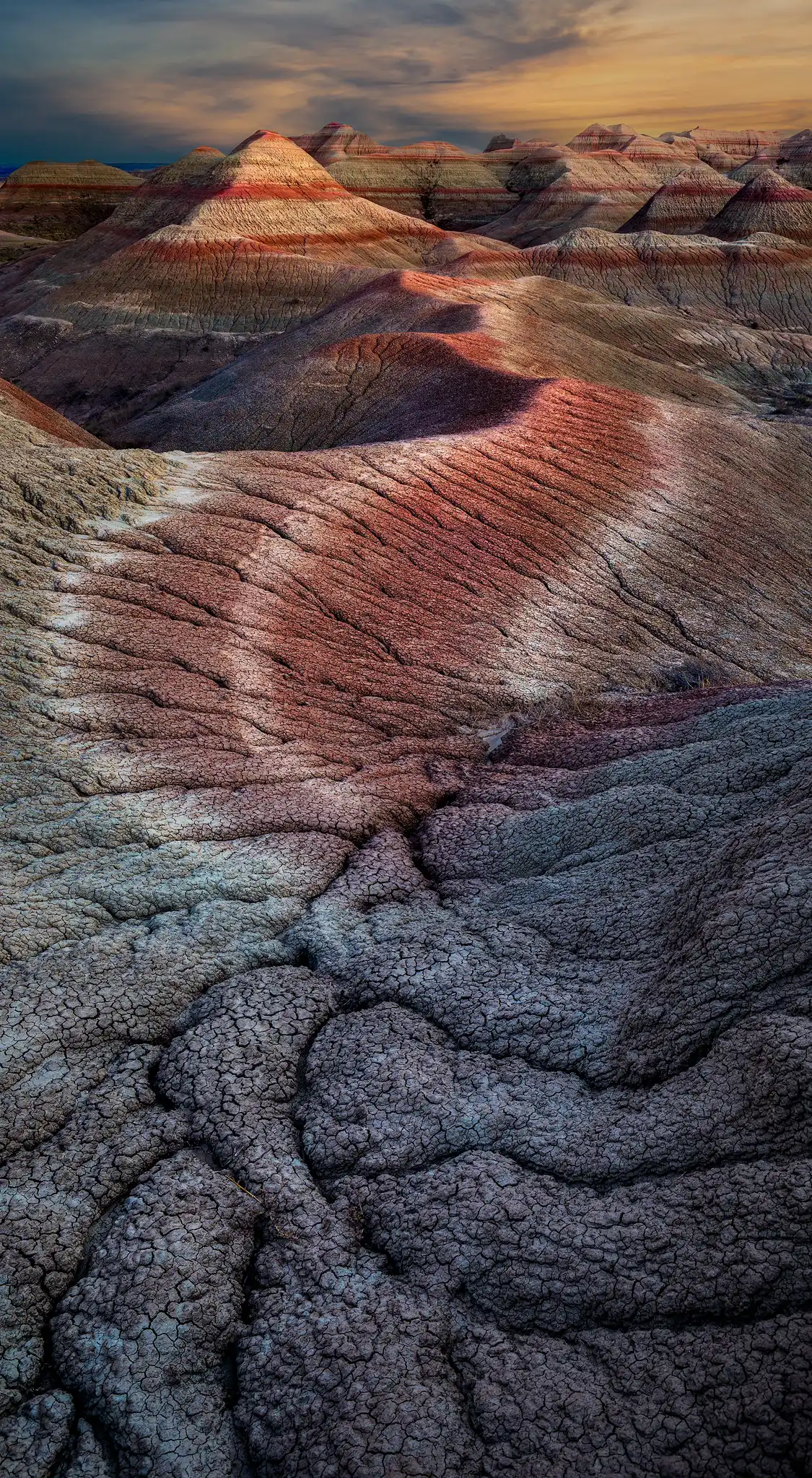
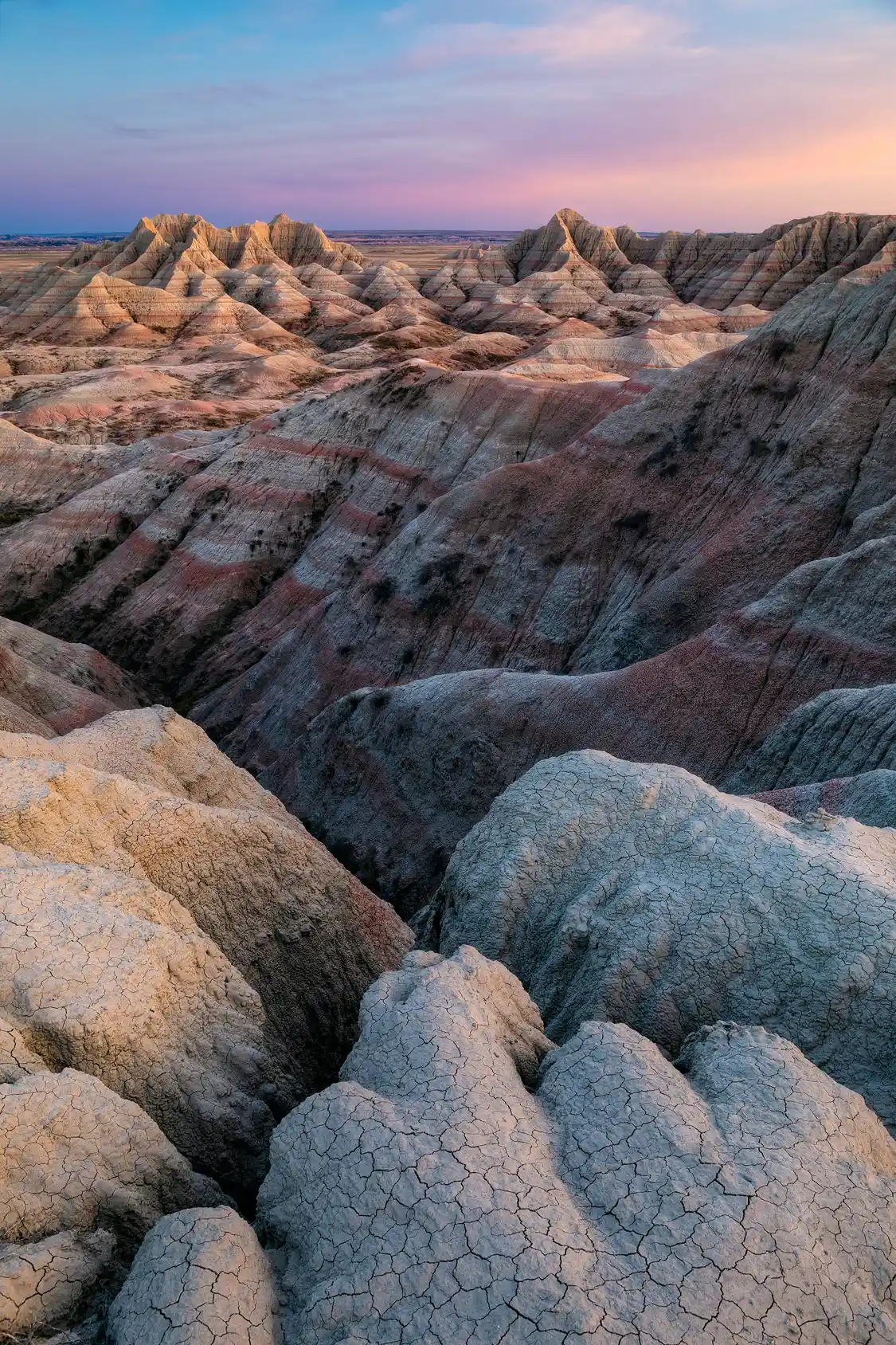
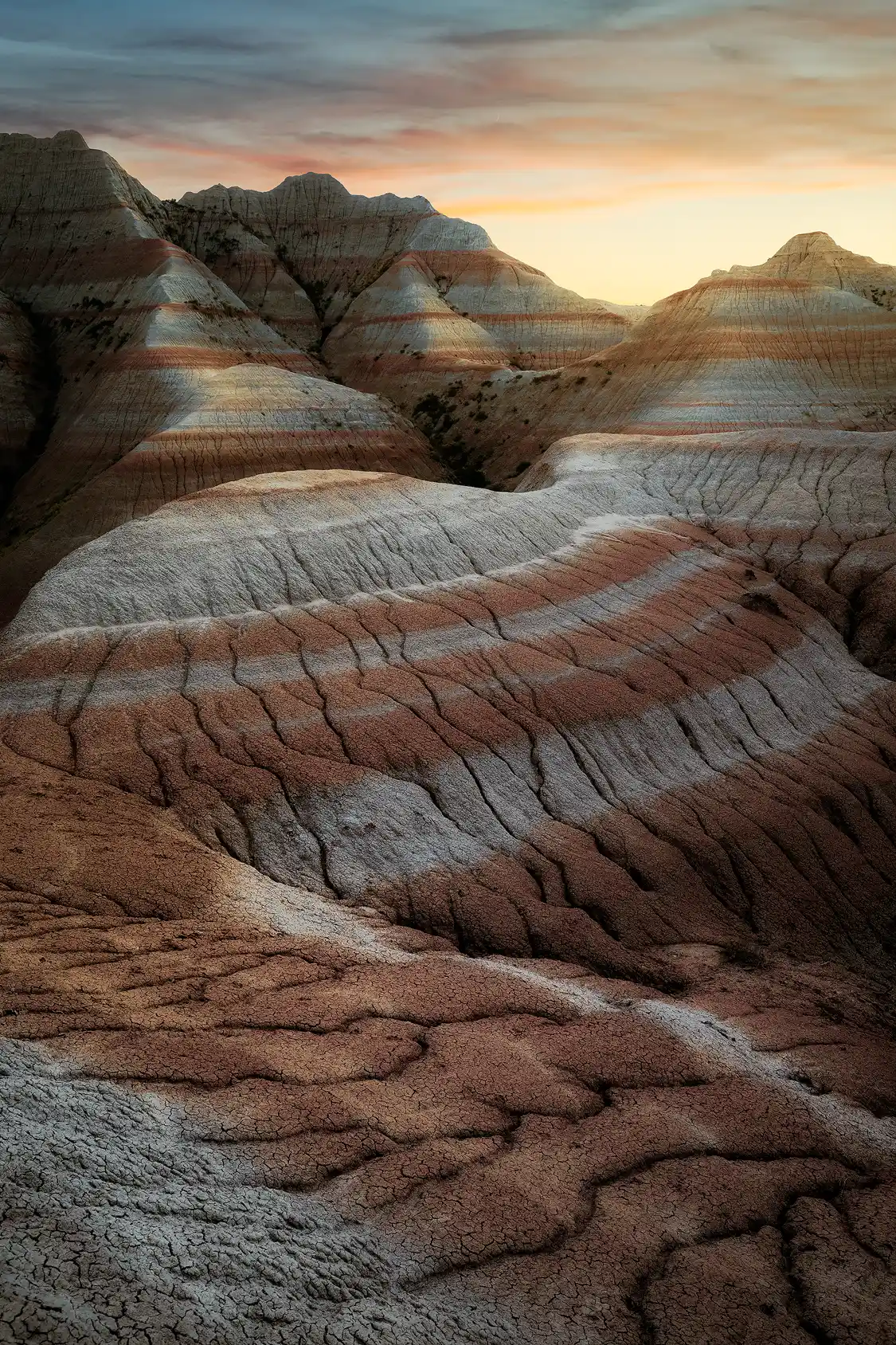
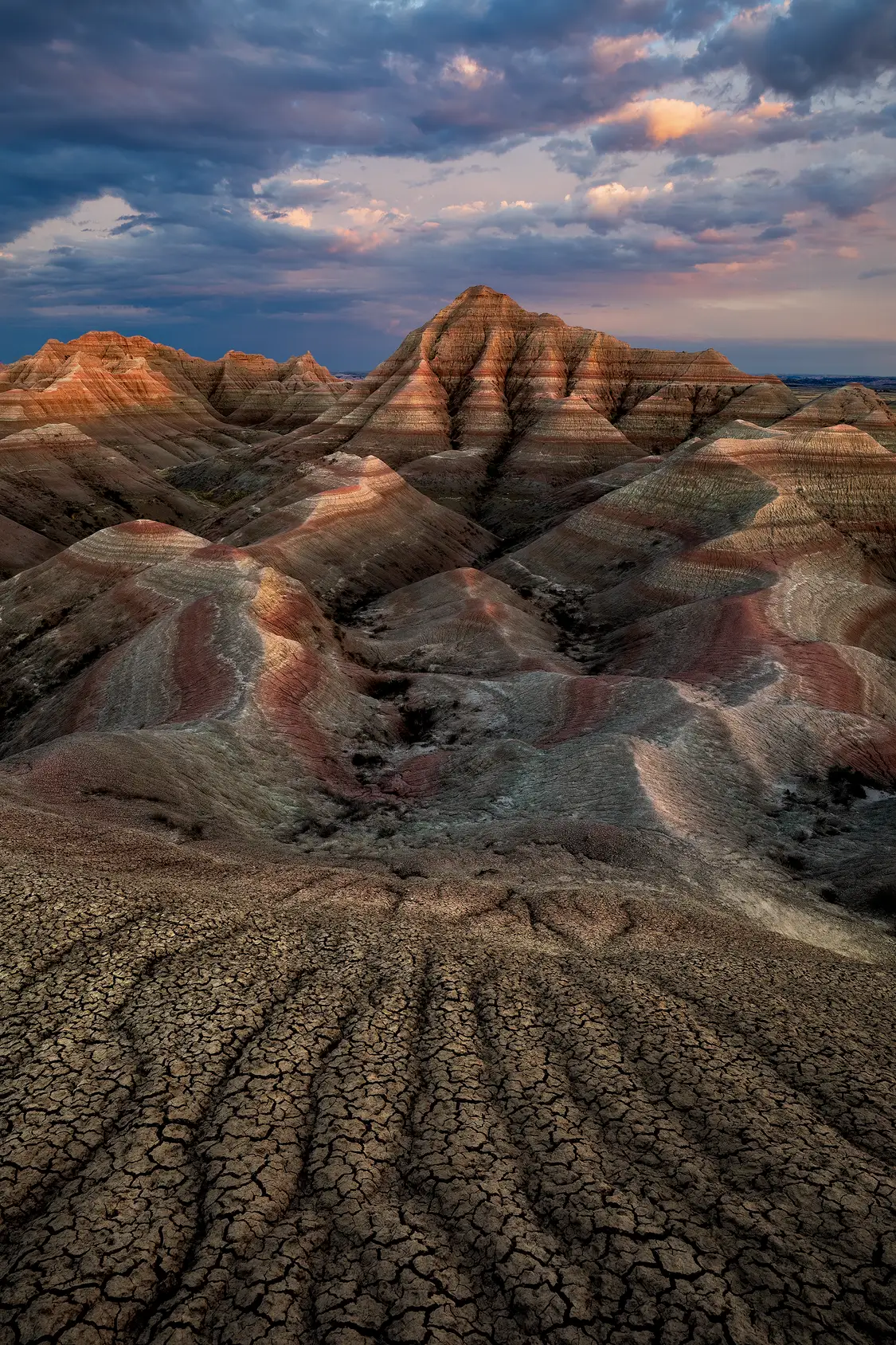
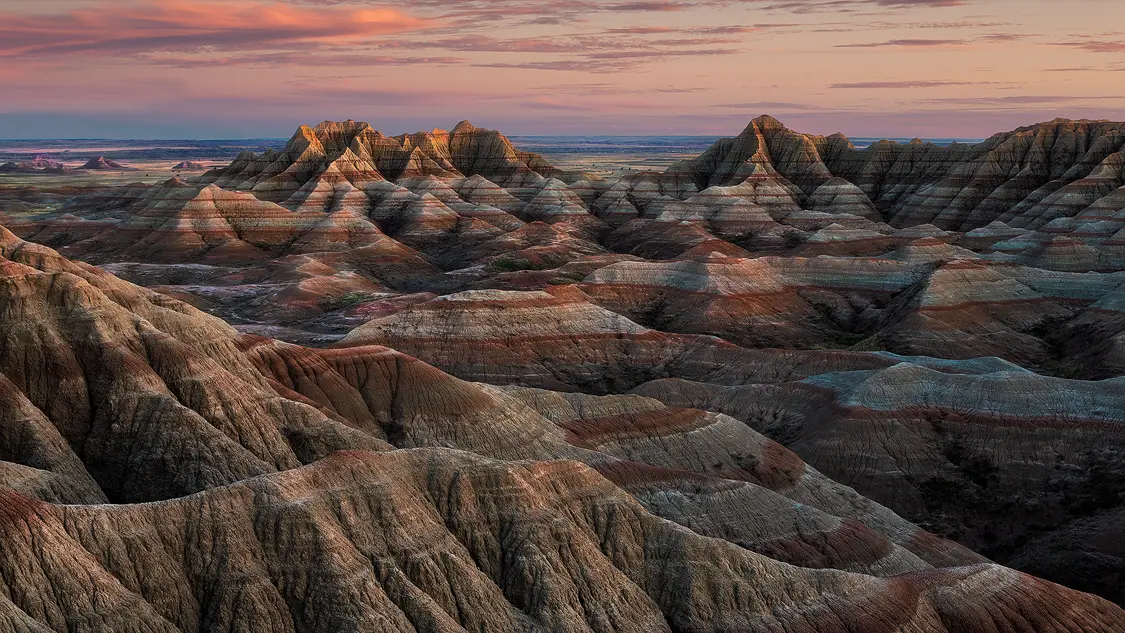
The Badlands are a masterclass in structure, with layered ridges, erosion patterns, repeating angles, and sedimentary bands that can either hold a frame together or pull it apart. Side-light and subtle tonal separation play a larger role here than dramatic color. We focus on making strong compositions with clear foreground-to-background relationships, clean edges, and fewer “almost” elements that weaken the subject.
Decisions at the tripod
Andy is present in the field, not to make his own images, but to help participants at the tripod. That help might involve refining a composition, adjusting exposure, thinking through focus strategy, or identifying distractions that weaken the frame. Guidance is available as much as you want it, with room to work independently when you're in a flow. Participants often find that small adjustments in position or focal length make a meaningful difference in whether the final image holds together. You can read more about how instruction works across all workshops on the How We Teach page.
Off-the-beaten-path locations
We include a few classic overlooks, but much of the workshop takes place along lesser-known ridges, interior pullouts, and quieter terrain accessed from the main park road. These locations often involve short walks beyond the immediate overlook or into nearby formations, with a few longer walks to reach particularly strong vantage points. Working away from the most obvious viewpoints allows us to simplify compositions and respond more carefully to light and structure.
From field to final image
Each day includes time for image review and post-processing guidance. We work through practical workflows such as exposure blending, tonal refinement, color adjustment, and panoramas. Because the Badlands depend heavily on subtle tonal relationships and muted earth tones, careful processing helps ensure the final image reflects what you saw and responded to in the field.
Workshop itinerary and schedule
Overview
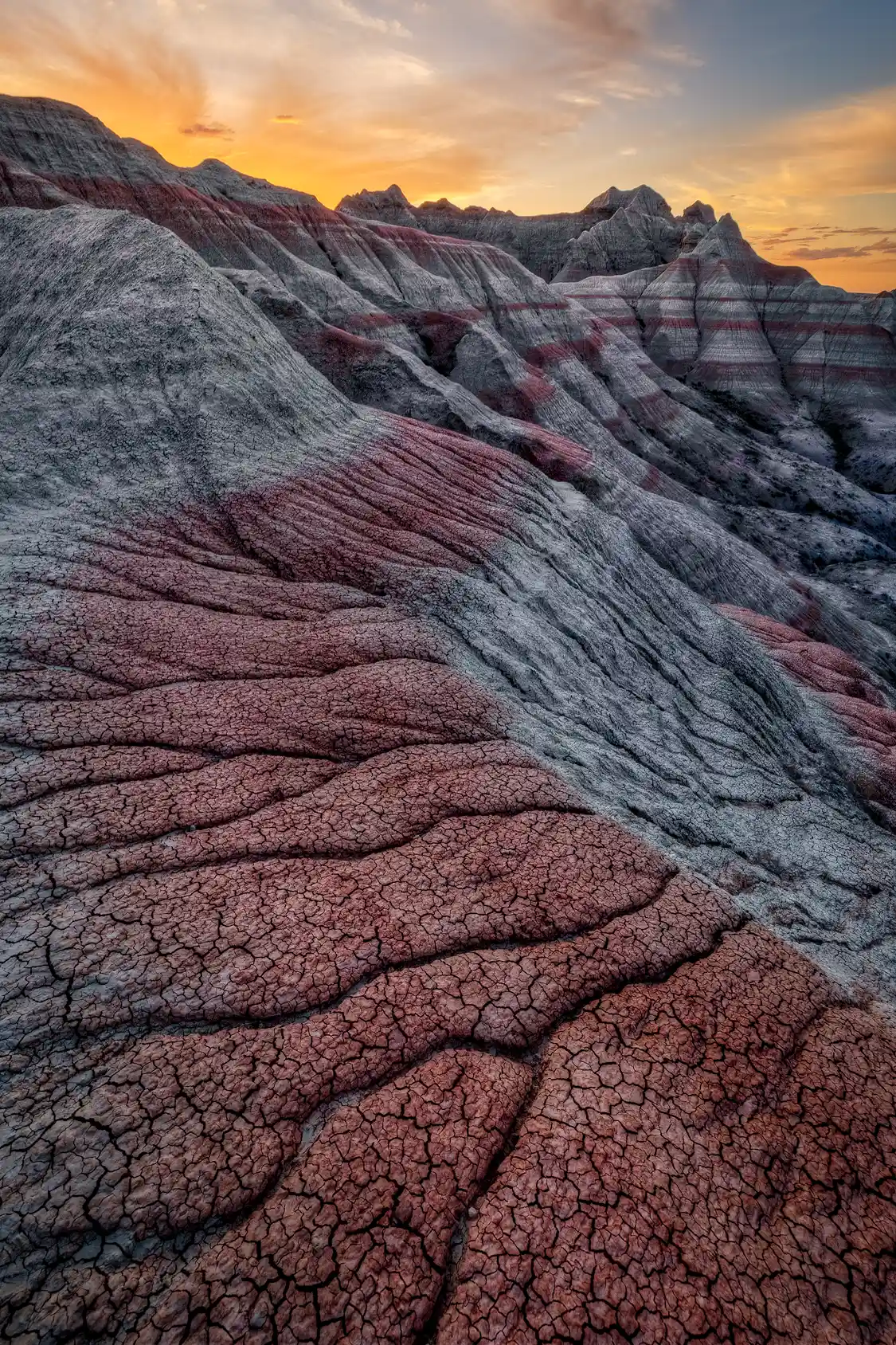
The daily schedule reflects the way the Badlands are best photographed, with flexibility built in to respond to changing conditions, shifting cloud cover, and subtle light. Late-day and evening sessions are prioritized, when side-light reveals erosion detail and tonal separation improves across the layered terrain. Some mornings are included when conditions favor sunrise, but the natural rhythm of this landscape centers on late light and extended evening field sessions.
-
Monday, May 10
— Welcome and introduction session in the hotel breakfast room, then depart for the first sunset shoot.
-
Tuesday–Friday, May 11–14
Field sessions, image reviews, post-processing guidance, and time to rest or explore. Most days are structured around extended evening photography, with flexibility to adjust locations or timing based on weather, sky conditions, or changing light.
-
Friday, May 14
The workshop concludes after the final sunset session.
Lodging
Best Western Plains Motel712 Glenn Street, Wall, SD 57790
Lodging website · 605-279-2145
Meals and dining
Wall, SD is a small gateway town with limited evening dining options and a local coffee shop that offers light breakfast fare. We recommend bringing snacks or breakfast items, especially if you have dietary preferences. A small grocery store in town provides basic provisions.
What to expect
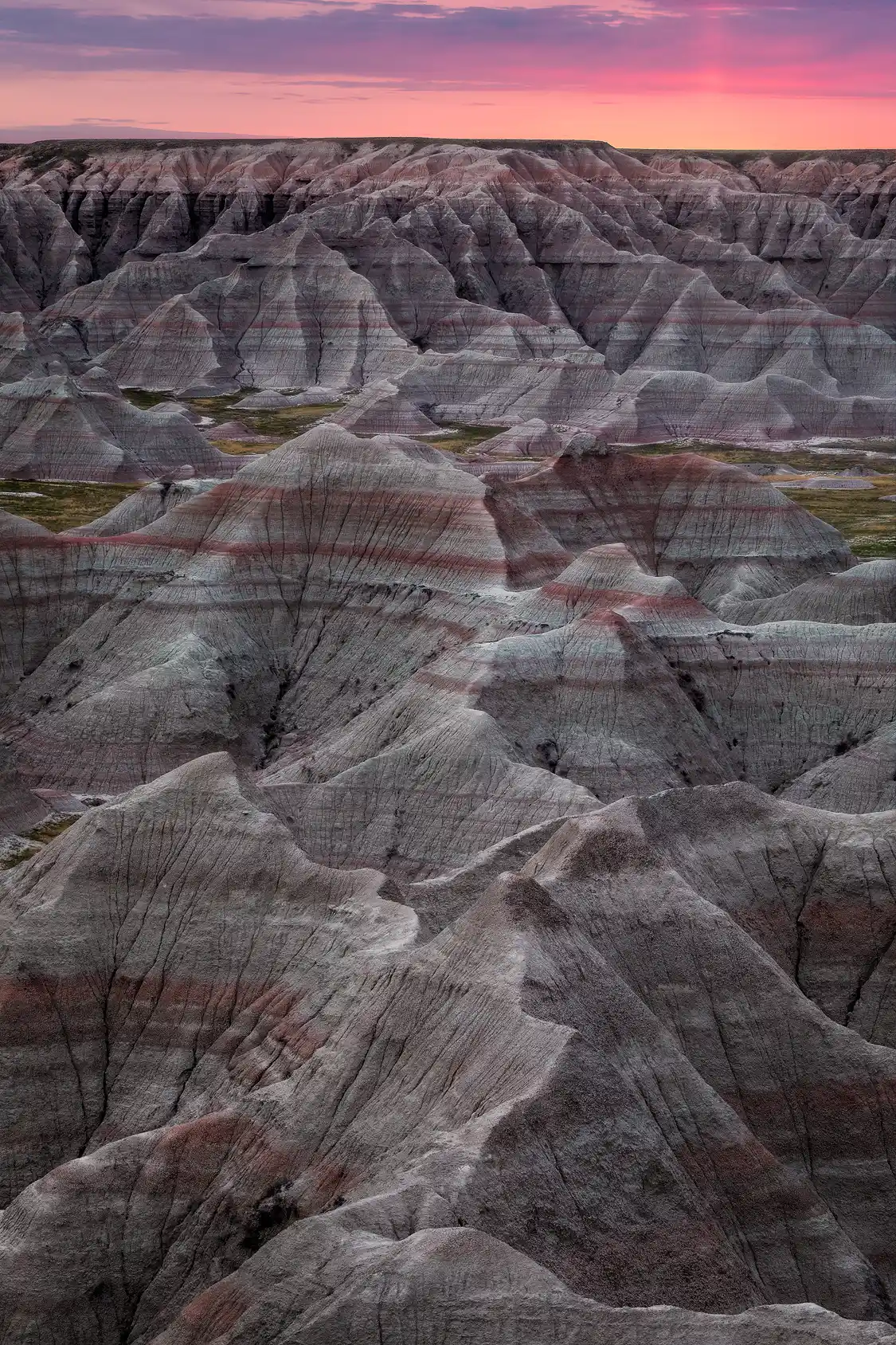
- Morning: While the emphasis is on late light, we photograph on select mornings when conditions favor sunrise. Early light can produce clean side-light across ridge systems and improved separation between foreground formations and distant terrain. Morning sessions are scheduled when they offer strong photographic potential rather than as part of a fixed daily routine.
- Midday: Midday is spent indoors for rest, image review, and post-processing guidance. This time allows you to recover between field sessions, review recent work, and refine processing techniques. Bring a laptop if you'd like to work on your own images or receive feedback.
- Evening: Most days center on extended evening field sessions. We head into the park well before sunset to allow time for careful composition and adjustment as light evolves. Side-light and post-sunset conditions often produce the strongest structural definition, and we frequently continue photographing into blue hour when tonal relationships become more refined. Locations may be revisited when changing conditions offer opportunities to improve upon earlier work.
Registration
Registration details are available on the next page where you'll find secure PayPal buttons. You can check out as a guest using your credit or debit card—no PayPal account required.
Workshop details
- Experience level
- Beginner to advanced. Participants should be comfortable working independently at times, as the group often spreads out while shooting.
- Group size
- Small group (target of 8 participants).
- Effort
- Easy to moderate. Most locations involve minimal hiking along roadsides, trails, or through grass. One key location includes a ~1.25-mile walk (each way) over mostly level terrain, plus gentle hills while exploring for compositions. Participants should be comfortable walking a few miles per day over uneven ground.
- Conditions
- Expect variable spring weather. Mornings can be very cold and thunderstorms are possible. Dress in layers and bring hats, gloves and rain gear.
Getting to the workshop
Air travel
Rapid City Regional Airport (RAP) is the most convenient airport for the workshop. It's approximately one hour from Wall, South Dakota, where lodging is based.
Driving and carpooling
Expect paved highways and well-maintained dirt roads that may be muddy at times. Carpooling during the workshop is encouraged to foster camaraderie and simplify logistics. Locations are spread out across the park, so plan for an average amount of driving each day.
Recommended gear
Lenses
A useful range is roughly 16mm to 400mm (full-frame equivalent) (account for crop factor if you're on a smaller sensor). This covers wide, foreground-driven work and tight telephoto compositions across ridges and patterns. Many participants also find ultra-wide lenses (12mm or 14mm) helpful for emphasizing texture and perspective.
Filters
A polarizer can help manage glare and haze, while improving color and contrast.
Footwear and safety
Expect uneven ground, cacti, and the possibility of prairie rattlesnakes. Sturdy, ankle-high hiking boots are recommended. Snake gaiters are required, especially when walking through tall grass and returning after dark.
Water
Tap water in Wall may not be to everyone's taste. Plan to bring bottled water or purchase some locally so you can stay comfortably hydrated.
Workshop community
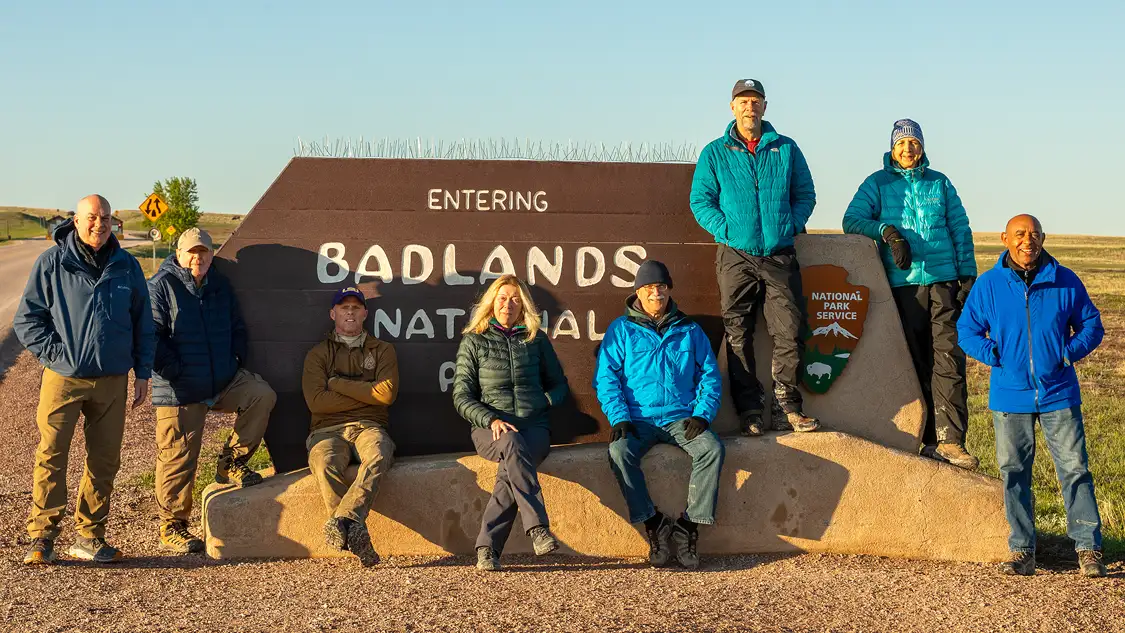
See photographs created by participants during past Badlands National Park workshops.
FAQ
- Is this workshop more about learning or photographing locations?
-
It's both, with an emphasis on decision-making in the field. You'll photograph strong Badlands locations, but the focus is on how choices come together, including where to place the camera, what to include in the frame, and when to wait for light. Andy is present in the field throughout the workshop to help participants talk through those decisions as conditions change. Instruction is available without being forced, and participants can work at their own pace.
- How fast-paced are the days?
-
The rhythm is steady rather than packed. Most days are built around late light, with time mid-day for rest, image review, or post-processing. Locations are spread out, so there is some driving, but we stay long enough to work scenes as light changes rather than rushing from overlook to overlook.
- What experience level works best for this workshop?
-
A wide range fits well. If you're newer to landscape photography, you'll get help with fundamentals like exposure, focus, composition, working with a tripod, and managing contrast. If you're more experienced, the input shifts toward refining judgment, simplifying complex scenes, and adapting when conditions are subtle rather than dramatic. The Badlands tend to favor careful observation and the ability to simplify, which makes this workshop effective at many experience levels.
- How much post-processing instruction is included?
-
Image review and post-processing help are built into slower periods, typically mid-day. You're welcome to bring a laptop with Photoshop installed if you want hands-on guidance with exposure blending, tonal control, color adjustment, or panoramas.
- What are the physical demands and conditions like?
-
The effort level is generally easy to moderate. Many locations are close to roads or parking areas, but one key location involves a longer walk over mostly level terrain, followed by gentle hills while exploring compositions. Weather in May can be variable—cold mornings, wind, and the possibility of thunderstorms—so warm layers and rain gear are important.
- What makes this Badlands workshop different from others you offer?
-
The Badlands rely less on obvious icons and more on how structure, scale, and light work together. This workshop is designed to spend time in places where those relationships can be explored and refined, rather than moving quickly between overlooks. The emphasis is on helping participants recognize when a scene is coming together and how to shape it into a strong photograph.
Related workshops
- The layered ridges and repeating patterns we work with here share similarities with the Arches & Canyonlands workshop, where strong rock formations and graphic structure demand careful framing and timing.
- For those interested in refining foreground-to-background relationships within expansive landscapes, the Colorado Fall workshop offers related compositional challenges in mountain terrain.
- If working carefully within intricate scenes appeals to you, the Caddo Lake workshop presents comparable opportunities to simplify complex environments through deliberate framing and thoughtful adjustments.
Further Study
For photographers interested in refining post-processing techniques related to this workshop, the following tutorials may be helpful: