
Olympic National Park Rainforest & Coastal Photography Workshop
This Olympic National Park photography workshop is based in Forks, Washington. Olympic combines dense old-growth rainforest with a rugged Pacific coastline, where moss-covered forests, waterfalls, sea stacks, and shifting surf create two very different photographic environments. We photograph these landscapes at sunrise and sunset, moving between rainforest valleys and coastal beaches as weather, surf, and forest light evolve.
Workshop overview
About the Olympic National Park photography workshop
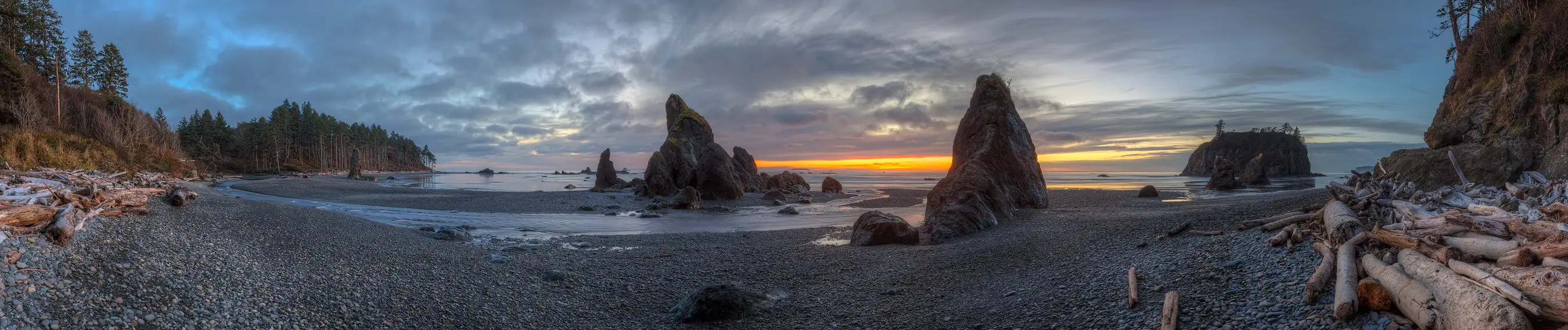
Olympic National Park contains two distinct environments within a short distance of each other. In the rainforest valleys, dense old-growth forest and constant moisture create layered scenes best revealed by soft, even light. A short drive away, along the Pacific coast, the landscape opens into wide beaches where sea stacks rise from the surf and waves and shifting skies continually reshape the scene.
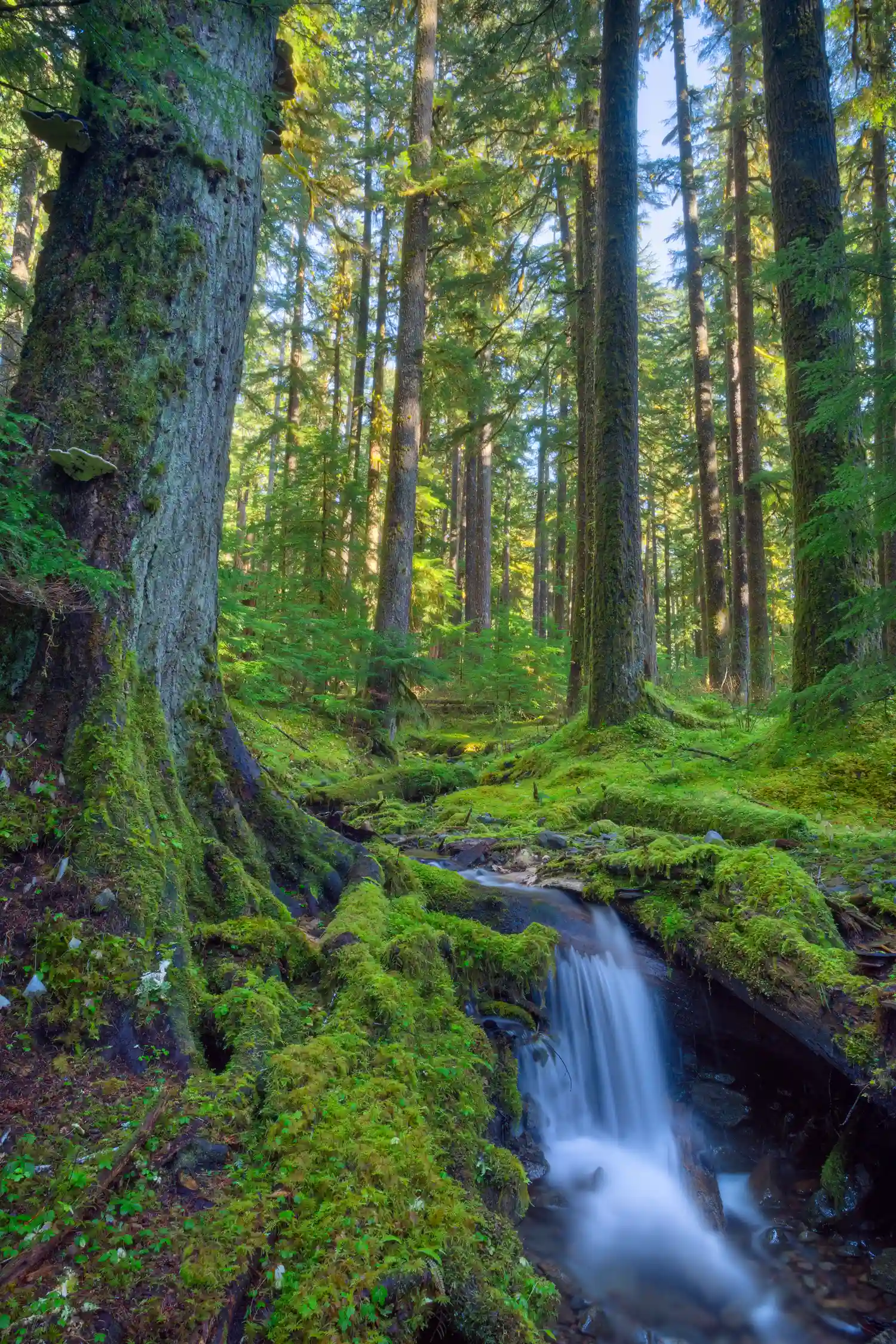
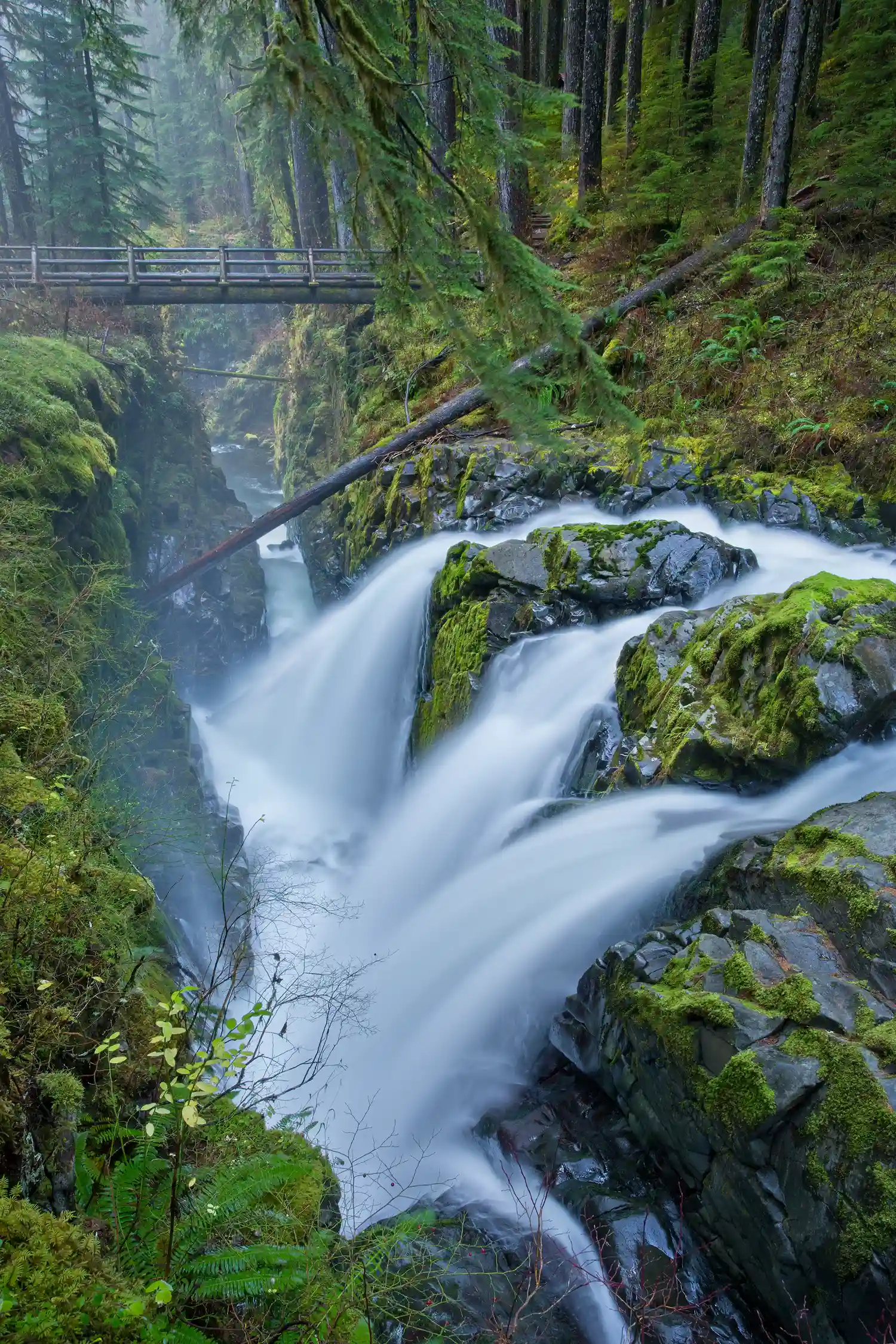
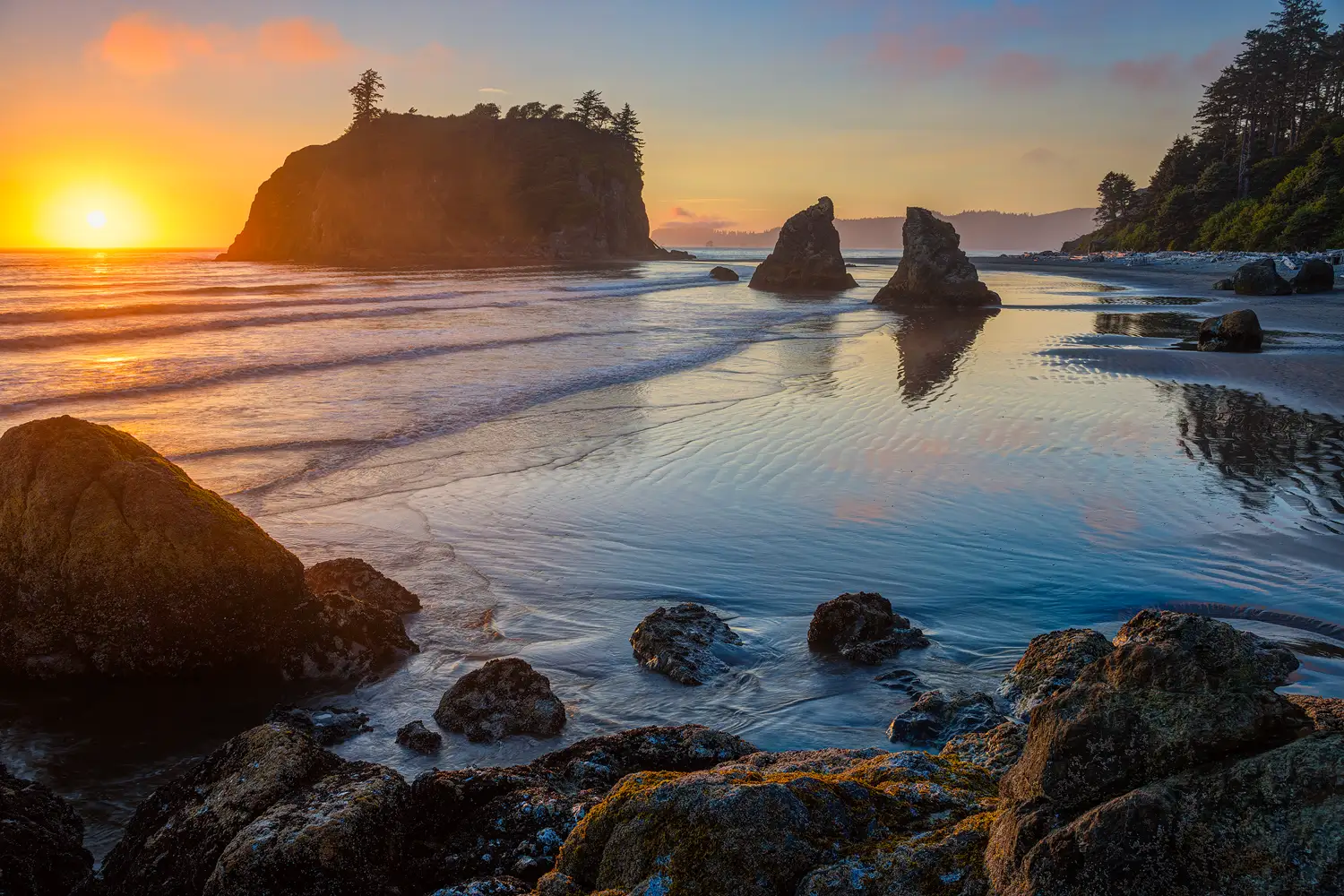
During the workshop we spend extended time in strong locations, staying with each as conditions evolve. Rainforest sessions often unfold slowly as we work through dense forest compositions and the movement of water in shaded creeks, small cascades, and waterfalls such as Sol Duc Falls. Along the coast at beaches like Rialto, Ruby, and Second Beach, attention shifts toward surf patterns, changing light, and the evolving relationship between water, rock, and sky.
Participants come with a range of experience, and guidance happens in the field as scenes develop. Newer photographers can get help with fundamentals like exposure, tripod technique, and composing within complex forest environments. More experienced photographers often focus on refining compositions, managing moving water, and responding to changing coastal light. Andy Cook is present throughout the workshop not to make his own images, but to help participants make stronger photographs, offering feedback when it's useful and stepping back when things are working. You can read more about how instruction works across all workshops on the How We Teach page.
Workshop highlights
Rainforest light and atmosphere
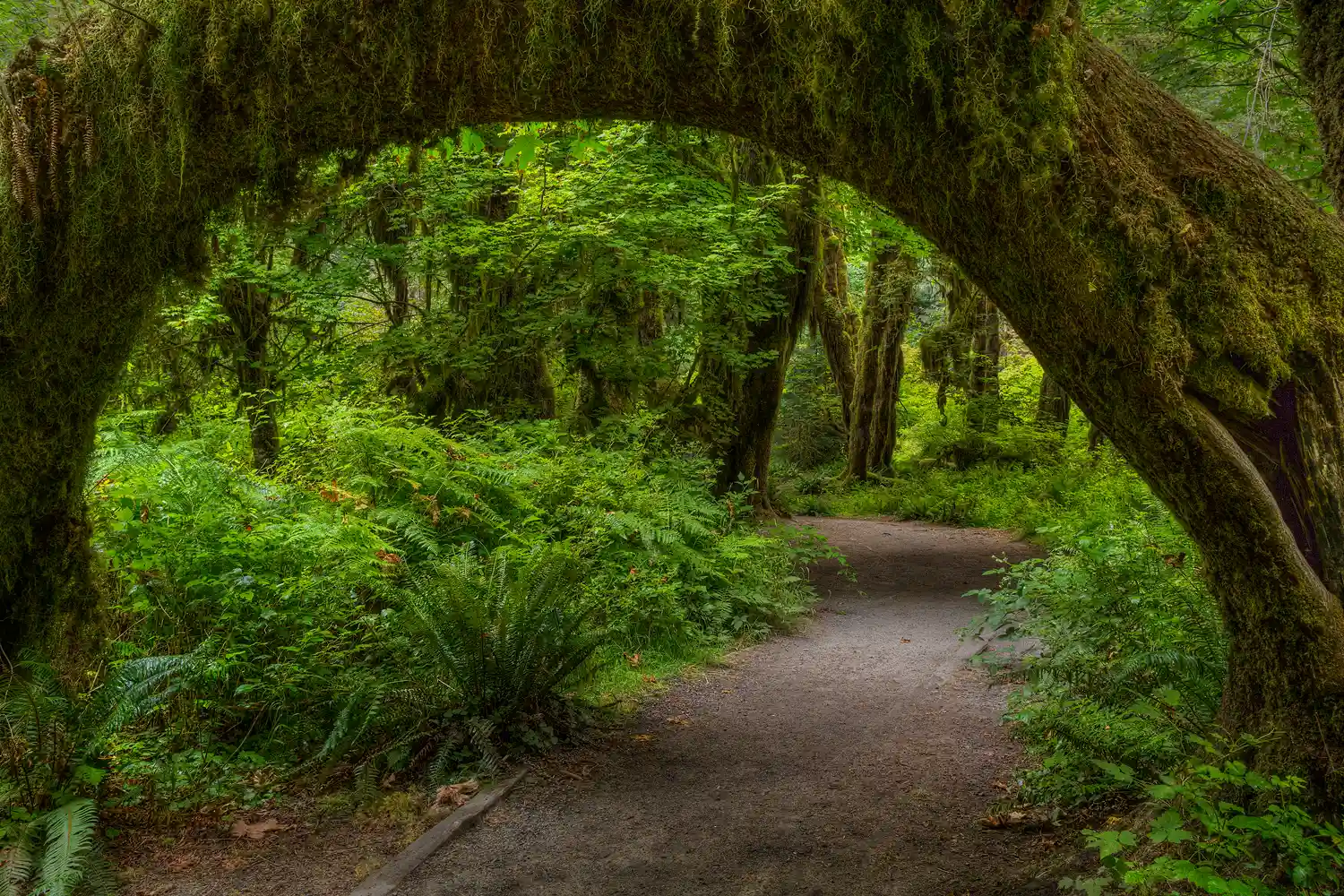
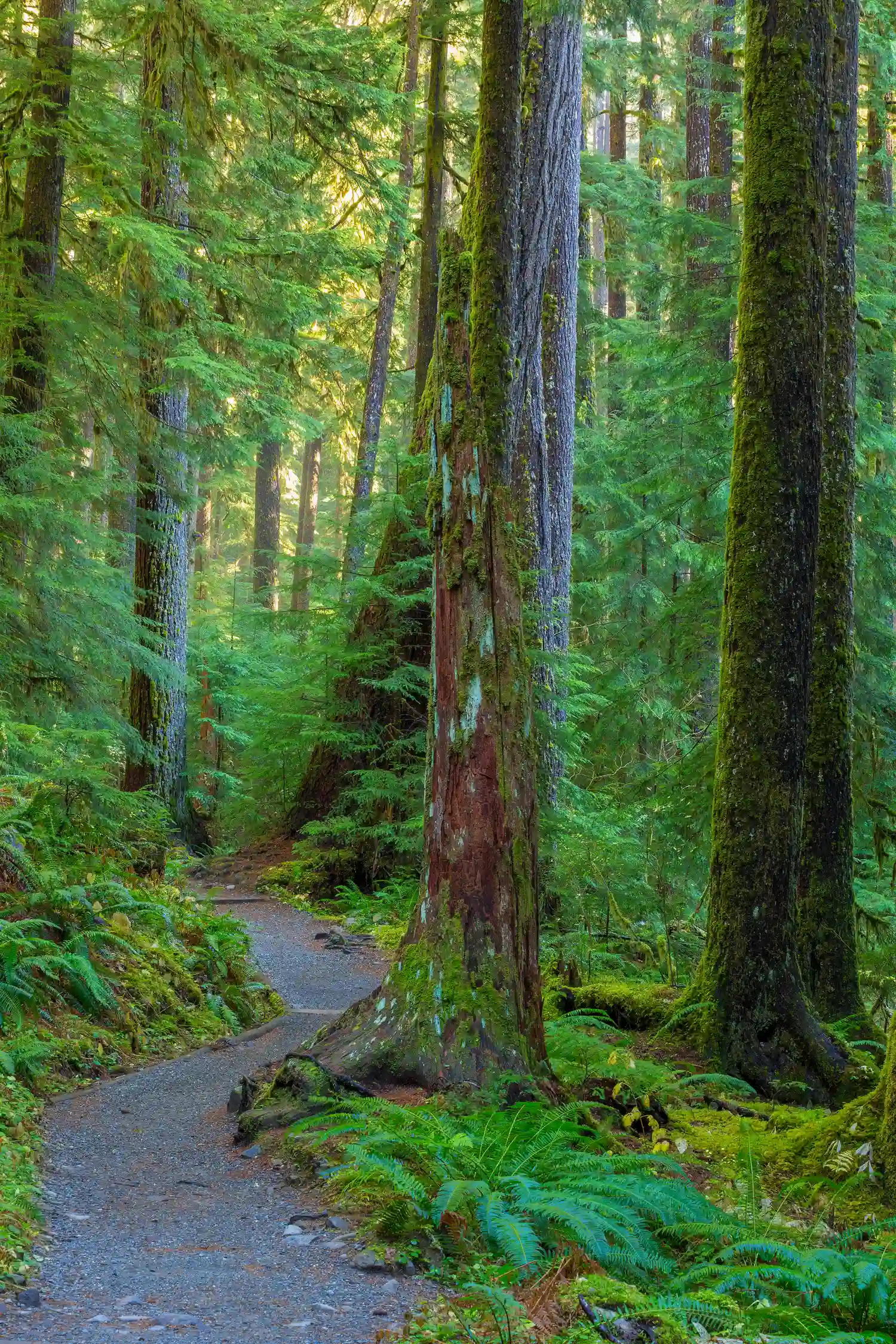
Photographing Olympic's rainforest, like the Hoh Rainforest, is often a slower process. Moss-covered trees, ferns, and small cascades create layered scenes that reward careful composition. Under overcast skies or light rain, color and texture deepen, and the forest becomes easier to photograph as contrast softens across the scene.
Sea stacks, surf, and changing light
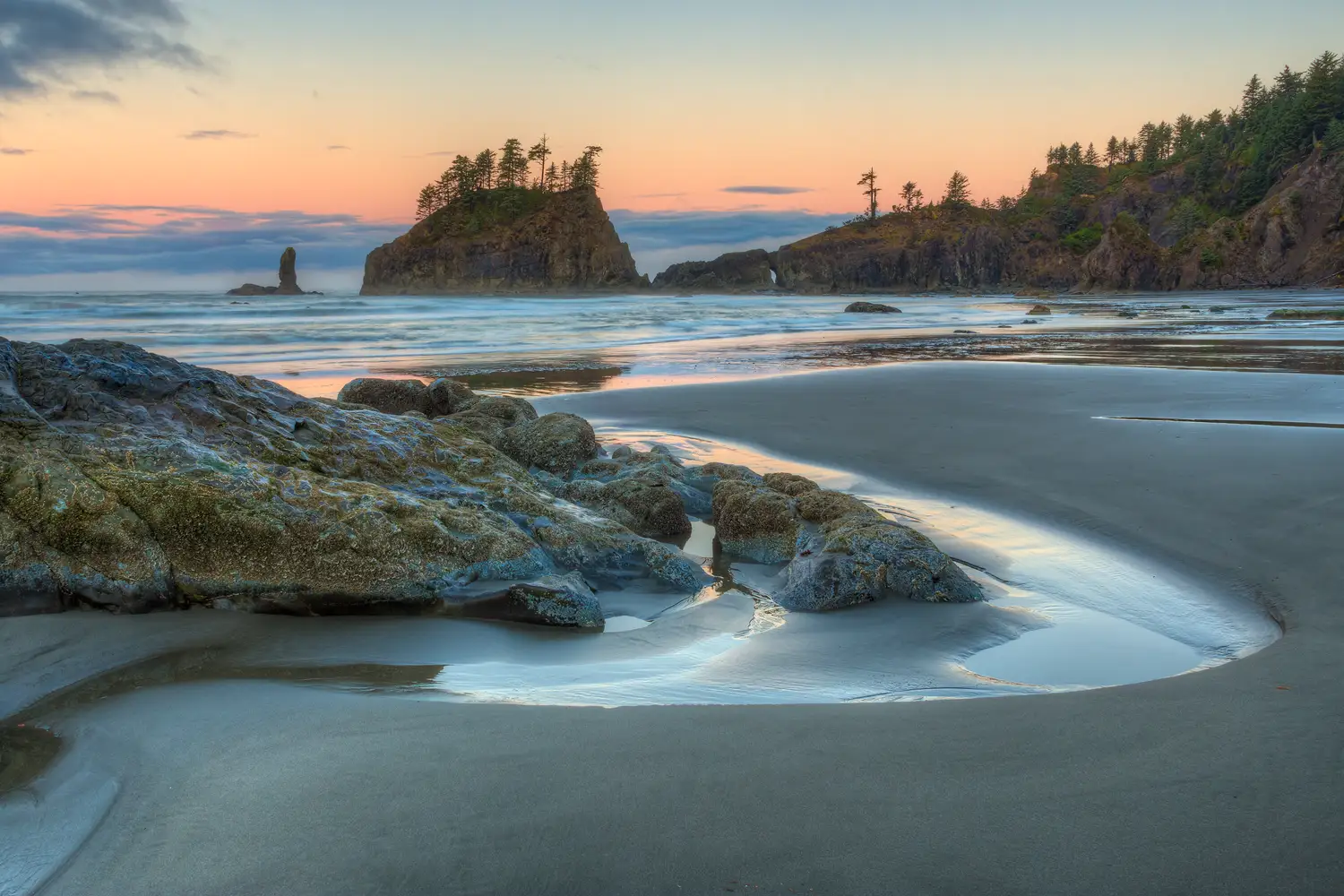
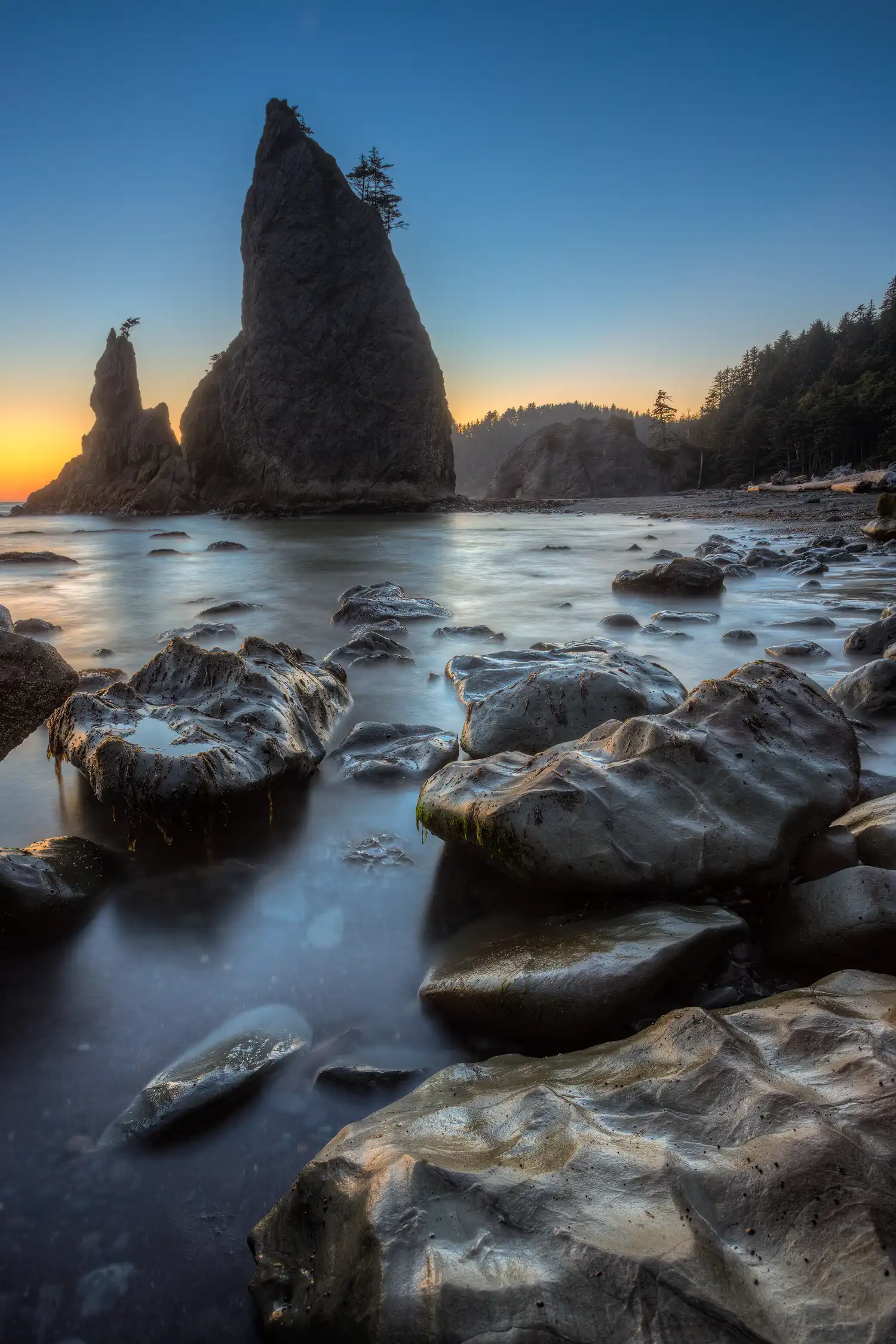
Along Olympic's coast we work with sea stacks, surf, and shifting skies at sunrise and sunset. Beaches such as Rialto, Ruby, and Second Beach offer changing foregrounds as tides rise and fall and waves move through the rocks. Sometimes the goal is precise timing with natural exposures; other times neutral density filters allow longer exposures that turn moving water into softer, more abstract forms.
Working with weather
Weather is part of the experience here, not something to avoid. Light rain, mist, and cloud cover often improve forest and waterfall scenes. On the coast, cloud structure adds depth and shape to the sky, and changing conditions can transform the character of a scene over the course of a single session.
Workshop itinerary and schedule
Overview
-
Workshop start (date TBA)
Welcome meeting and introductions in the evening. Photography begins the following morning.
-
Workshop end (date TBA)
The workshop concludes after evening photography on the final day.
Lodging
Olympic Suites Inn800 Olympic Drive, Forks, WA
Lodging website · 800-262-3433
What to expect
- Morning: Mornings usually begin early, often before sunrise, especially on the coast where tides, surf, and early light dictate the timing. In the rainforest, mornings tend to start later as we wait for light to build enough to work effectively. When conditions are right, we stay with a scene long enough for light, water, and weather to change and reveal new compositions.
- Midday: Midday provides a natural pause. This time is used for rest, downloading files, image review, and post-processing help. Participation is flexible; some people use the break to rest, others to review or process images, and others to explore on their own.
- Evening: Evening shoots are shaped by location and conditions and typically follow the evening meal. On the coast, timing is influenced by tides and surf, with sunset and twilight sessions focused on sea stacks, waves, and changing skies. In the forest, light fades earlier, and evening work often ends sooner as the canopy darkens before sunset.
Registration
Dates for this workshop haven't been announced yet.
Workshop details
- Experience level
- Beginner to advanced. Participants should be comfortable working independently at times, as the group often spreads out while shooting.
- Group size
- Small group (target of 8 participants).
- Effort
- Moderate to difficult. Trail hiking with a few hundred feet of elevation gain to reach some locations. Longer trails range from about 1–2 miles each way. We hike most days, sometimes twice a day.
- Conditions
- Cool temperatures and moisture are common. If it's windy on the coast it can be cold.
Getting to the workshop
Air travel
Most participants fly into Seattle Tacoma International Airport (SeaTac).
Drive times:
SeaTac to Port Angeles: ~2 hr 30 min
Forks to SeaTac: ~3 hr 30 min
Driving and carpooling
Expect a mix of maintained dirt and paved roads. A standard rental car is sufficient. We encourage participants to carpool during the workshop to limit impact and simplify logistics.
Recommended gear
Lenses
A useful range is roughly 18mm to 400mm (full-frame equivalent). Wide coverage helps in the rainforest and on beaches, and longer focal lengths are useful for isolating sea stacks and compressing layers.
Lens hoods
To protect the front lens element from light rain and surf air.
Filters
Bring a polarizer plus 6-stop and 10-stop neutral density filters for long exposure surf and waterfall work.
Clothing and footwear
Rain is a real possibility. We may shoot in the rain—bring an umbrella and rainproof clothing. Waterproof hiking boots are recommended.
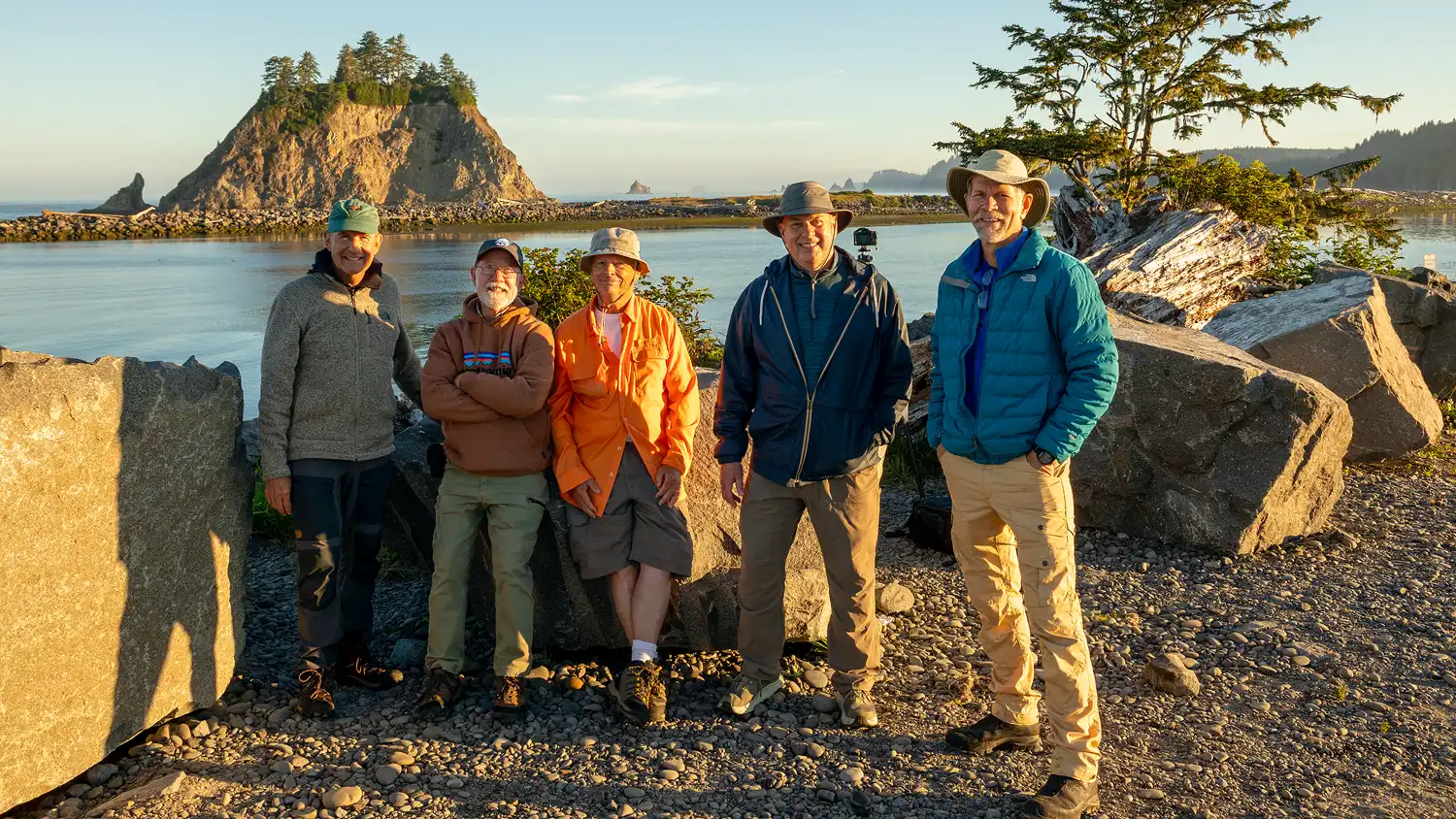
Workshop community
FAQ
- Is this workshop more rainforest-focused or coast-focused?
-
It's genuinely both. Olympic is one of the few places where old-growth rainforest and sea stacks belong in the same week. We'll photograph mossy forest scenes and waterfalls when the light is soft, then shift to the coast for sunrise and sunset as conditions allow. The mix keeps the workshop productive even when weather changes.
- How physically demanding is the hiking?
-
This workshop is more physical than some of the others. Expect regular trail hiking, a few hundred feet of elevation gain to reach certain locations, and longer walks in the 1–2 mile range each way. We hike on most days, sometimes twice a day. You don't need to be fast, but you do need to be comfortable carrying your gear and moving steadily on wet, uneven trails.
- What are the conditions typically like, and do we shoot in the rain?
-
This time of year marks the transition from the rainy season to the drier months, so conditions can range from cool and damp to sunny. Rain is a possibility, and light drizzle can actually be excellent in the rainforest. We'll work in light rain, but avoid heavy rain and high wind. Waterproof boots and real rain gear can make the week dramatically more comfortable.
- How much post-processing and image review is included?
-
Image review and post-processing help are part of the workshop, typically during midday breaks. Andy can review images and help with editing decisions using your own files.
- What gear matters most for Olympic—anything people overlook?
-
Two things: traction and rain protection. Waterproof hiking boots with good grip, plus a jacket that actually keeps you dry, will help you stay focused. A polarizer is useful in the rainforest and near water, and solid ND filters (6-stop and 10-stop) are great for long exposures on surf and waterfalls. Bring a stable tripod and a way to keep your camera dry while shooting.
Further Study
For photographers interested in refining post-processing techniques related to this workshop, the following tutorials may be helpful: