
Oregon Coast Photography Workshop
This Oregon Coast photography workshop is based along the southern shoreline near Bandon Beach and the Samuel H. Boardman State Scenic Corridor. The southern Oregon coast is known for its sea stacks, shifting surf patterns, and dramatic Pacific weather. We photograph these landscapes at sunrise and sunset, returning to strong locations as tide and weather evolve to refine compositions in a small-group, field-based setting.
Workshop overview
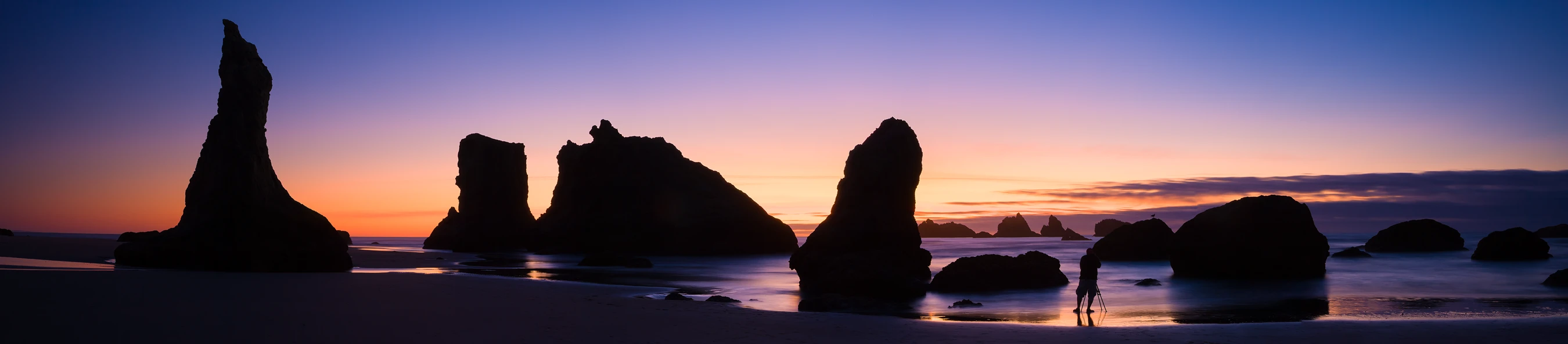
Workshop video
This video shows behind-the-scenes field sessions at Bandon Beach and the Samuel H. Boardman corridor, along with finished images captured as tide, surf, and light evolved.
About the Oregon Coast photography workshop
Oregon's southern coastline is shaped by tide, surf, and weather. The coast never looks the same twice. Sea stacks rise from swirling water, fog moves in and out without warning, and reflections appear and disappear with each wave.
Working close to the surf requires attention. Wind, water, and light are always in motion. You feel it the moment you step onto the sand. Timing, footing, and patience matter as much as composition. Rather than trying to cover as much ground as possible, this workshop returns to a small number of productive locations and works them carefully as conditions evolve.
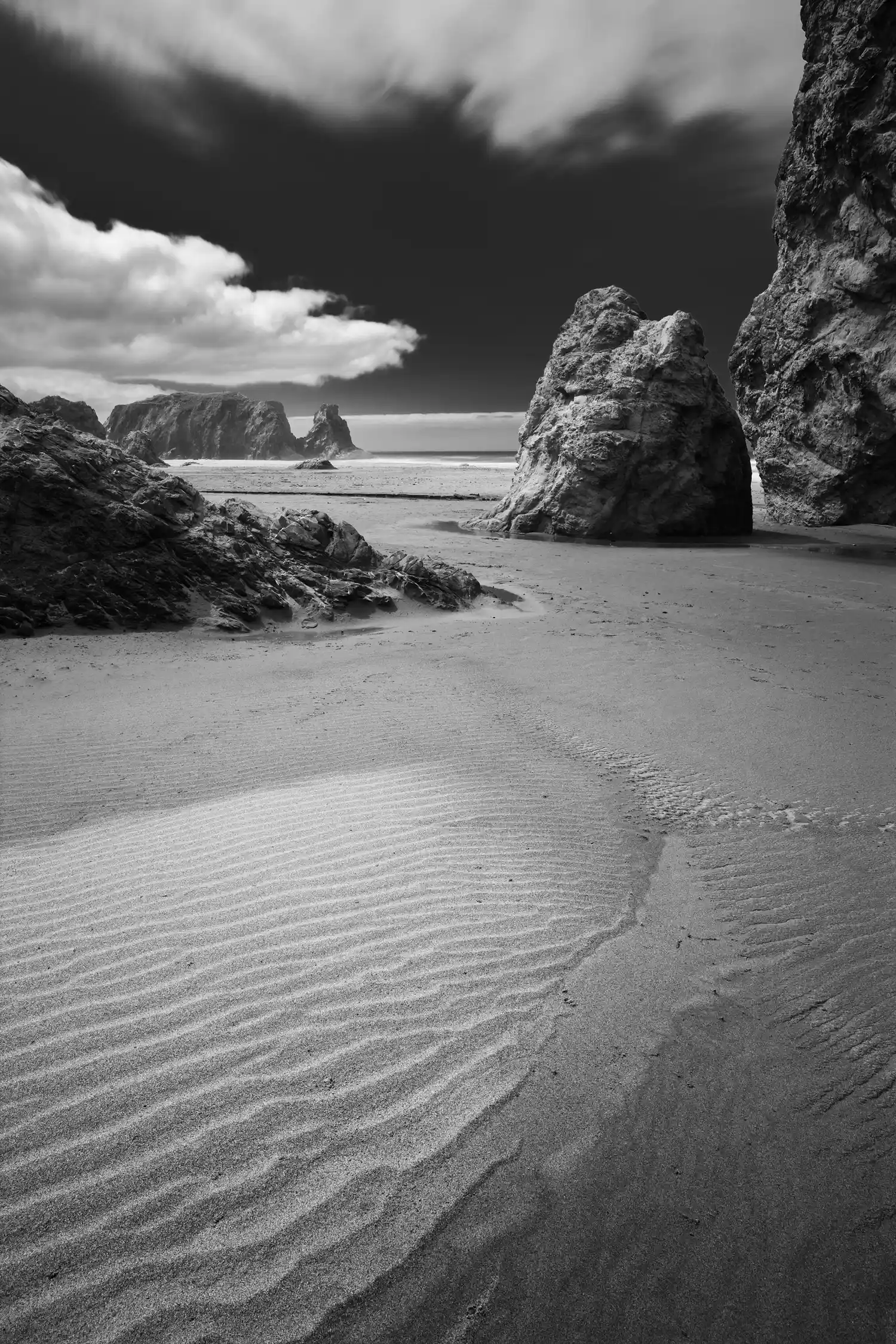
We concentrate our time in two of the most photographically rich areas along the coast: Bandon Beach and the Samuel H. Boardman State Scenic Corridor. Tide height reshapes foregrounds, surf patterns shift by the hour, and light transforms a scene from morning to evening. Sometimes the strongest frame appears in a brief pause between incoming waves. By revisiting the same locations under different conditions, new compositions reveal themselves. Foreground rock patterns hidden at high tide become accessible, reflections form in calmer water, and relationships between foreground and background clarify as contrast softens. Depth of time with a scene consistently produces stronger photographs than constant movement.
Working here requires patience and control. Shutter speed decisions affect whether surf becomes motion or structure. Tripod placement matters in moving sand. Exposure must balance bright foam against darker rock and shadow. Andy works alongside participants in the field, not to make his own images, but to help refine decisions as conditions unfold. Some photographers prefer frequent discussion; others value longer stretches of independent work. Instruction adapts to your pace and experience, with image review and post-processing guidance available when it adds clarity. You can read more about how instruction works across all workshops on the How We Teach page.
Workshop highlights
In-depth coastal exploration
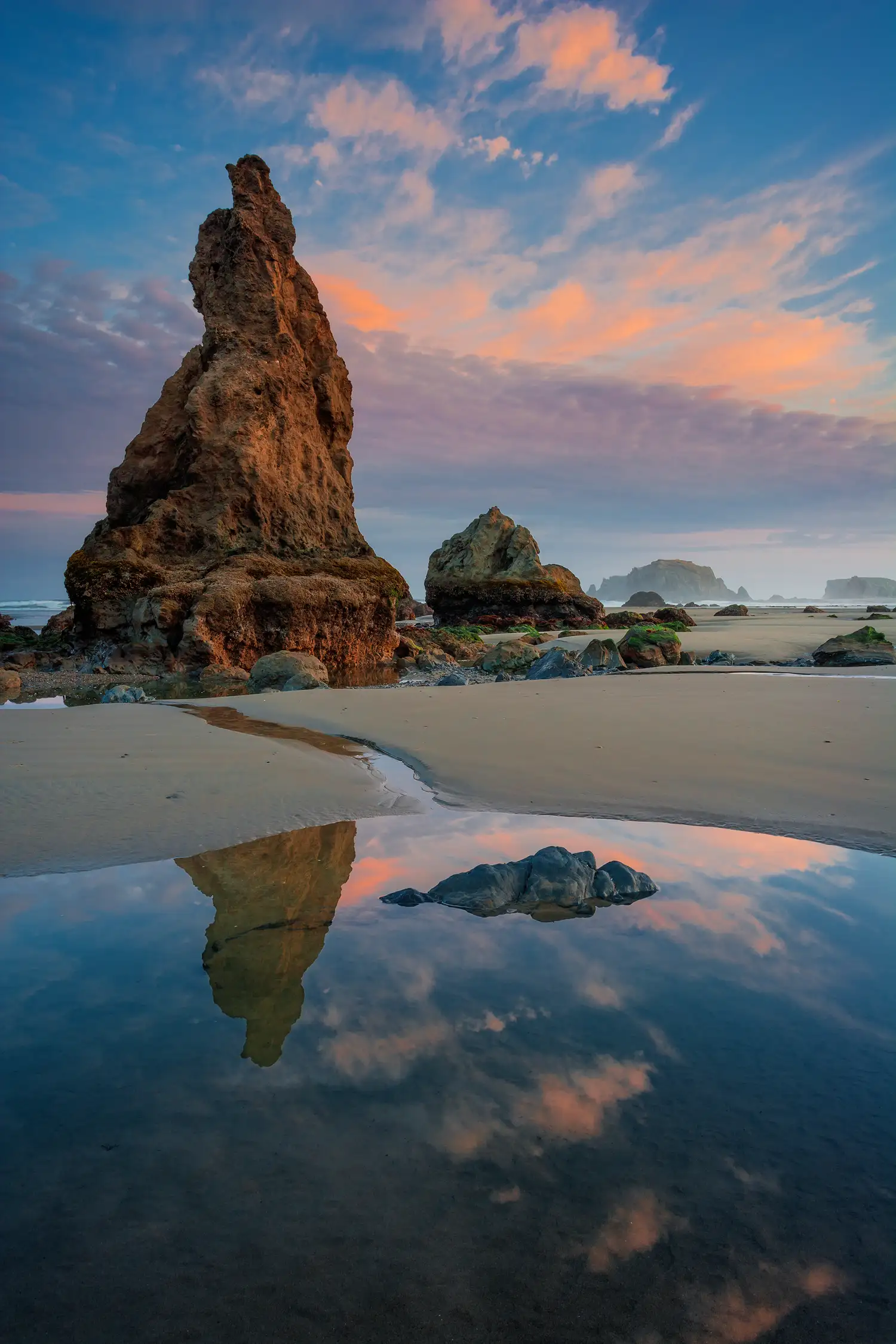
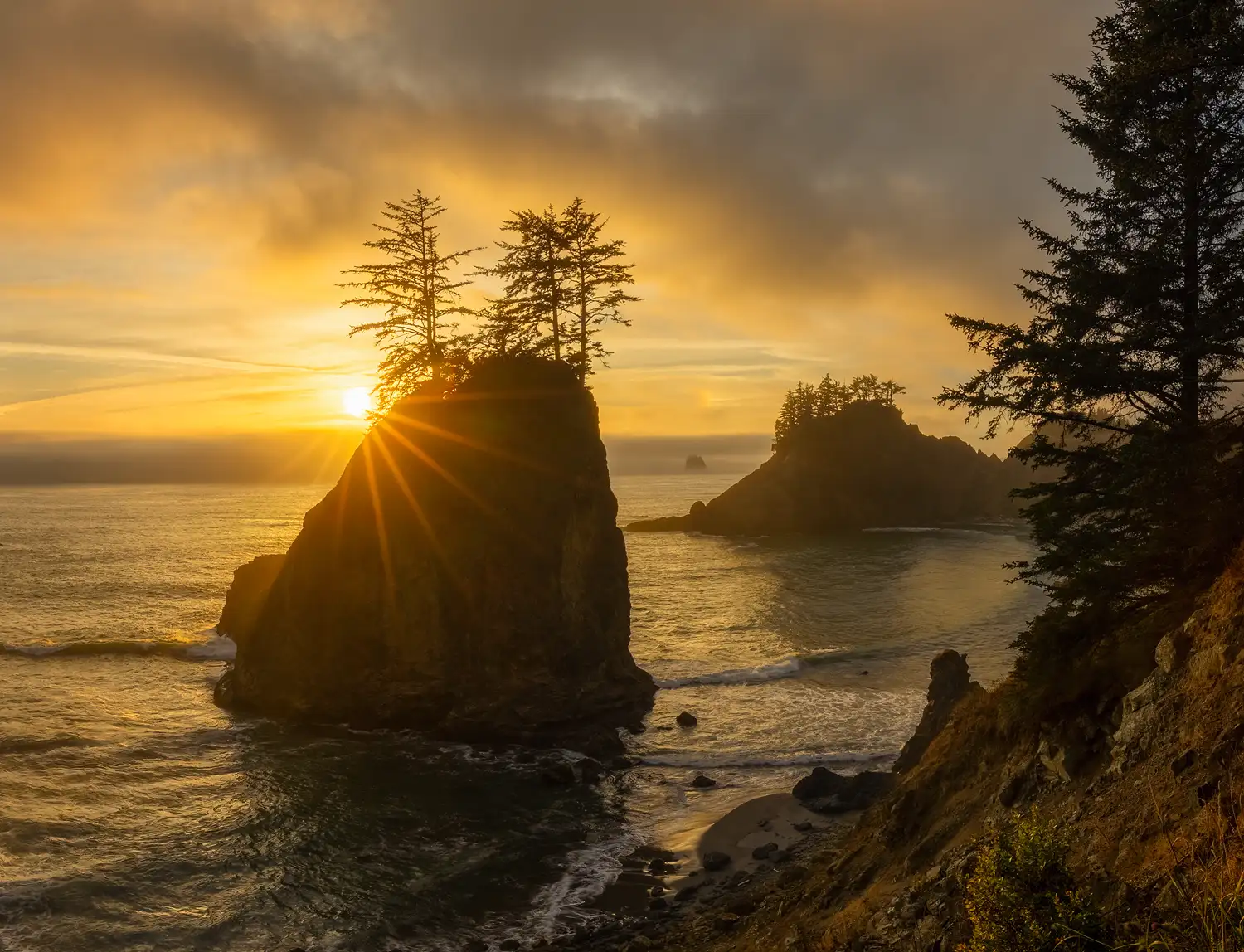
We spend multiple sessions at locations such as Bandon Beach and the Samuel H. Boardman State Scenic Corridor, including areas near Face Rock, Wizard's Hat, Elephant Rock, Cat and Kittens, Secret Beach, and Arch Rock. Returning under different tides and light reveals compositions that simply did not exist on an earlier visit. Rather than settling for the first workable frame, you refine position, timing, and perspective as surf and light continue to shift.
Working with tide, surf, and changing light
Ocean photography requires timing, stability, and deliberate control. We work with shifting surf patterns, reflections at low tide, and changing foreground relationships as water levels rise and fall. The emphasis is on making clear decisions in real time so that your compositions reflect what you saw and intended in the moment.
Compositional refinement and review
Image reviews focus on decisions made in the field, examining why a composition works, why another nearly works, and how small adjustments in placement or focal length strengthen the final image. Post-processing guidance is available, but the primary goal is recognizing stronger compositions before you leave the beach.
Workshop itinerary and schedule
Overview
The workshop includes early mornings and long evenings, with enough time in between to rest and review.
-
Thursday, August 3
— Welcome meeting and introductions.
— Depart for first photography session. -
Friday, August 4
Morning and evening photography at Bandon Beach, with midday image review and processing help.
-
Saturday, August 5
Sunrise photography at Bandon Beach, followed by check-out and relocation to Gold Beach. Evening session in the Samuel H. Boardman State Scenic Corridor.
-
Sunday, August 6
Morning and evening photography in the Samuel H. Boardman State Scenic Corridor, with midday image review and processing help.
-
Monday, August 7
Final sunrise session; workshop concludes afterward.
Lodging
Sunset Motel1865 Beach Loop Drive, Bandon, OR
Lodging website · 800-842-2407
August 5, participants relocate to Gold Beach, OR. The instructor stays at:
SureStay Plus by Best Western29232 Ellensburg Ave, Gold Beach, OR 97444
Lodging website · 541-247-7066
What to expect
- Morning: Sunrise sessions begin at civil twilight and continue through first light. We stay long enough to work changing tide and light, then break for breakfast.
- Midday: This time is slower and flexible. On select days, Photoshop help and image review are available for those who want it. Bring a laptop with Photoshop installed if you’d like hands-on guidance.
- Evening: After group dinners, we return to the coast as light builds toward golden hour and fades into twilight.
Registration
Registration details are available on the next page where you'll find secure PayPal buttons. You can check out as a guest using your credit or debit card—no PayPal account required.

Workshop details
- Experience level
- Beginner to advanced. Participants should be comfortable working independently at times, as the group will spread out at some locations, limiting immediate access to the instructor.
- Group size
- Small group (maximum of 8 participants).
- Effort
- The first two days involve climbing stairs to access Bandon Beach and walking along the shoreline. The final two days include short hikes of about ¼ mile each way on primitive, sloped, and uneven trails, with a few exposed sections and some elevation above the ocean.
- Conditions
- Cool temperatures and moisture are common. Bring a very warm jacket, hat and weather-resistant layers.

Getting to the workshop
Air travel
Most participants fly into Portland (PDX) or Eugene (EUG).
Drive time to Gold Beach: ~6 hr from Portland, ~3 hr 45 min from Eugene.
Driving and carpooling
Roads are mostly paved. Carpooling during the workshop is encouraged to reduce impact and build community. A standard rental car is sufficient.
Recommended gear
Lenses
Bring lenses covering roughly 16mm to 200mm (full-frame equivalent). This range handles wide coastal scenes, mid-range framing, and tighter compositions as light, tide, and scale change. If you're using a crop-sensor camera, account for the crop factor so you have a true wide option—typically around 10–12mm on APS-C or 7–8mm on Micro Four Thirds.
Filters
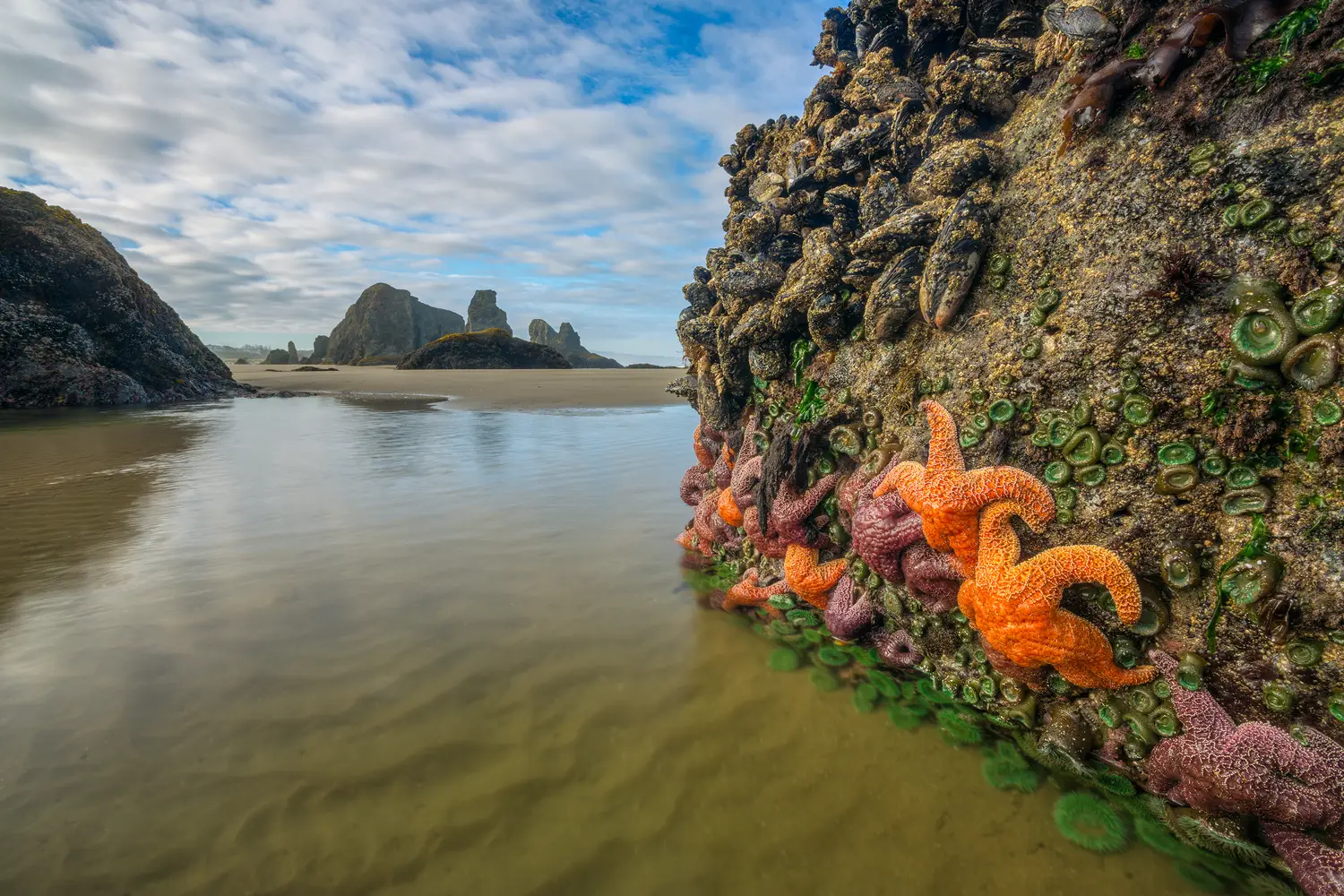
A polarizer helps control glare and deepen color in wet sand and tide pools. Bring 6-stop and 10-stop solid ND filters to create long exposure effects with the waves and clouds. Variable NDs are not recommended.
Footwear and clothing
Expect wet feet and uneven ground. Secure sandals or water shoes work well in tide pools, and neoprene socks can help prevent blisters. Andy typically wears a winter jacket, hat, shorts, and Tevas on the beach. Knee-high rubber boots are popular, but they often flood. For the final days, supportive hiking boots are essential. Cool, damp conditions are common—layers matter.
Workshop community
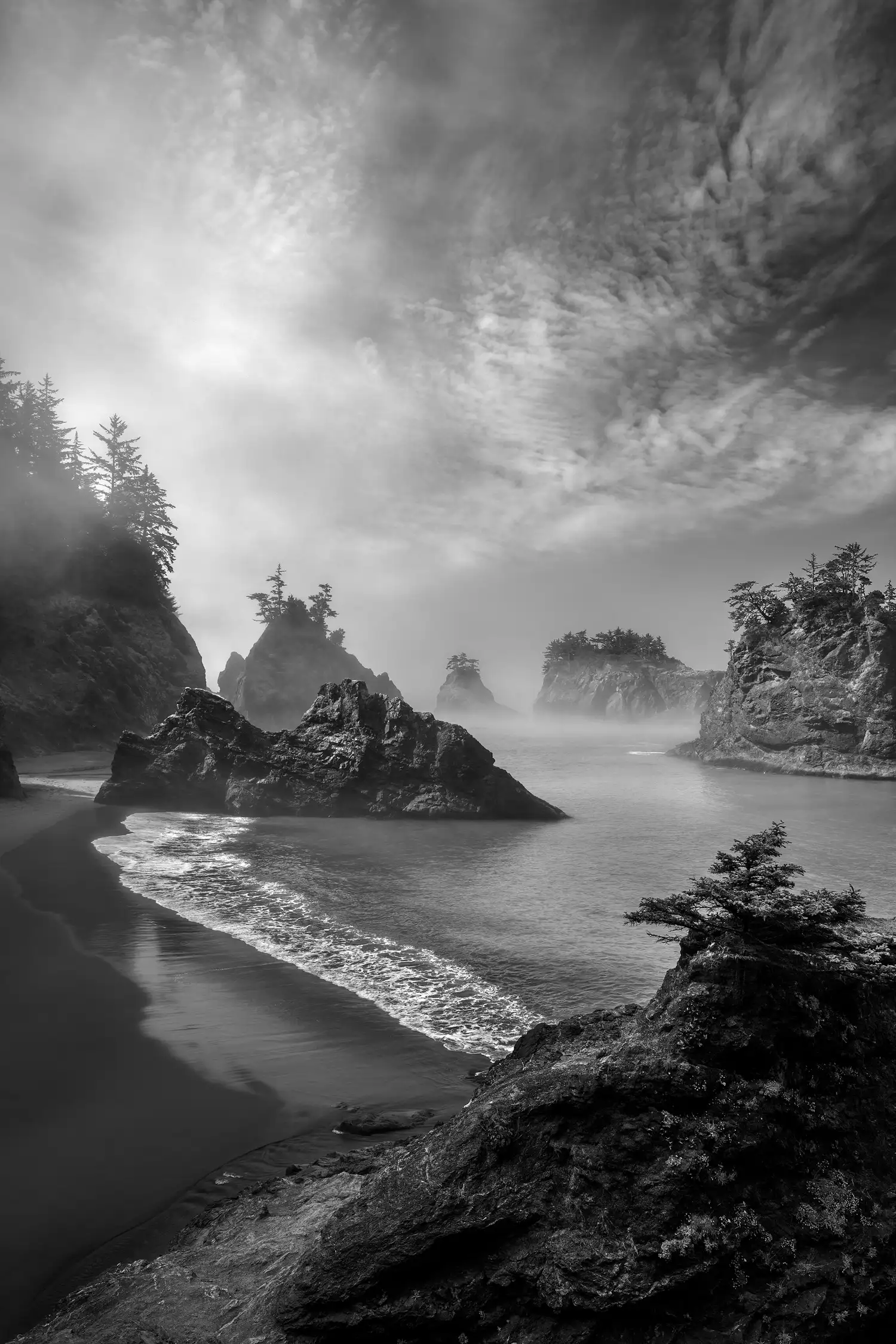
See photographs created by participants during past Oregon Coast workshops.
FAQ
- Is this workshop more about learning or photographing locations?
-
It's both. We spend real time at excellent locations and focus on making better decisions in the field, including where to position the camera, what to include, when to wait, and when to find another composition. Instruction is available throughout the day, but it isn't forced. Some participants work on their own, while others talk through choices as the light and tide change.
- How fast-paced are the days?
-
The pace is unhurried. We don't bounce from overlook to overlook. Instead, we stay in productive areas long enough for conditions to evolve and give you time to work through a scene. There's time to rest between sessions, especially after early mornings.
- What experience level is this workshop best suited for?
-
A wide range of experience levels fit well here. If you're newer, you'll get help with fundamentals like exposure, composition, and working on a tripod in coastal conditions. If you're more experienced, the focus shifts toward refining choices, simplifying scenes, and adapting when conditions aren't ideal.
- How much post-processing instruction is included?
-
Post-processing help is available during slower midday periods for those who want it. You're welcome to bring a laptop and ask questions or work through images together, but it's optional. The primary emphasis remains on making thoughtful captures in the field.
- What makes this Oregon Coast workshop different from others you run?
-
Photography on the Oregon Coast is influenced by tide, weather, and timing more than most locations, and the range of possible compositions changes constantly. By working repeatedly at places like Bandon Beach and the Samuel H. Boardman State Scenic Corridor, you begin to recognize when a scene has shifted and how small changes in tide, light, or position can create a stronger photograph.
Further Study
For photographers interested in refining post-processing techniques related to this workshop, the following tutorials may be helpful: