
Maine Coast Photography Workshop
This Maine Coast photography workshop follows a planned route from Bailey Island and Pemaquid Lighthouse to Port Clyde and Monhegan Island. The coastline here is shaped by granite headlands, working harbors, and historic villages that reflect Maine's maritime character. We photograph these landscapes at sunrise and sunset in a small-group setting where instruction happens in the field as weather and coastal light evolve.
Workshop overview
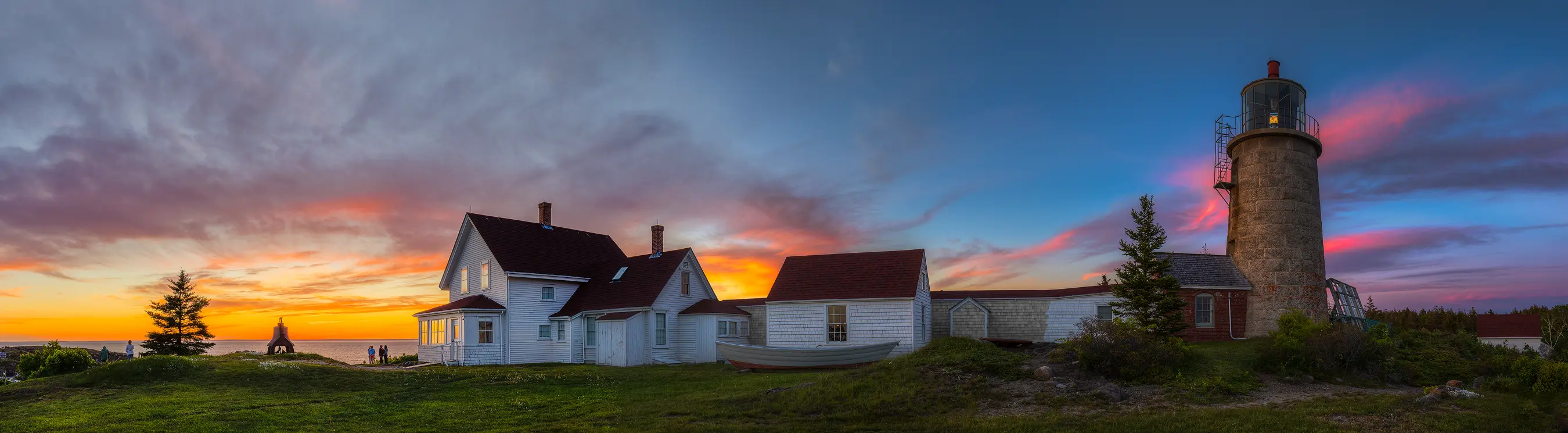
Workshop video
Go behind the scenes of the Maine Coast experience to see our workshop participants in action, from quiet harbor sunrises to the offshore rhythm of Monhegan Island.
About the Maine Coast photography workshop
The Maine coast offers a mix of weathered lighthouses, working harbors, rocky shoreline, and constantly changing light. Boats rise and fall with the tide. Rope, wood, and paint show years of salt exposure, and mornings often begin with a chill in the air. The Maine coast doesn't depend on bold or dramatic moments. Instead, strong photographs emerge from noticing how boats, buildings, shoreline, and sky interact within scenes that can initially seem ordinary. Making a compelling photograph here requires careful positioning, thoughtful framing, and attention to how human elements balance with land and sea.
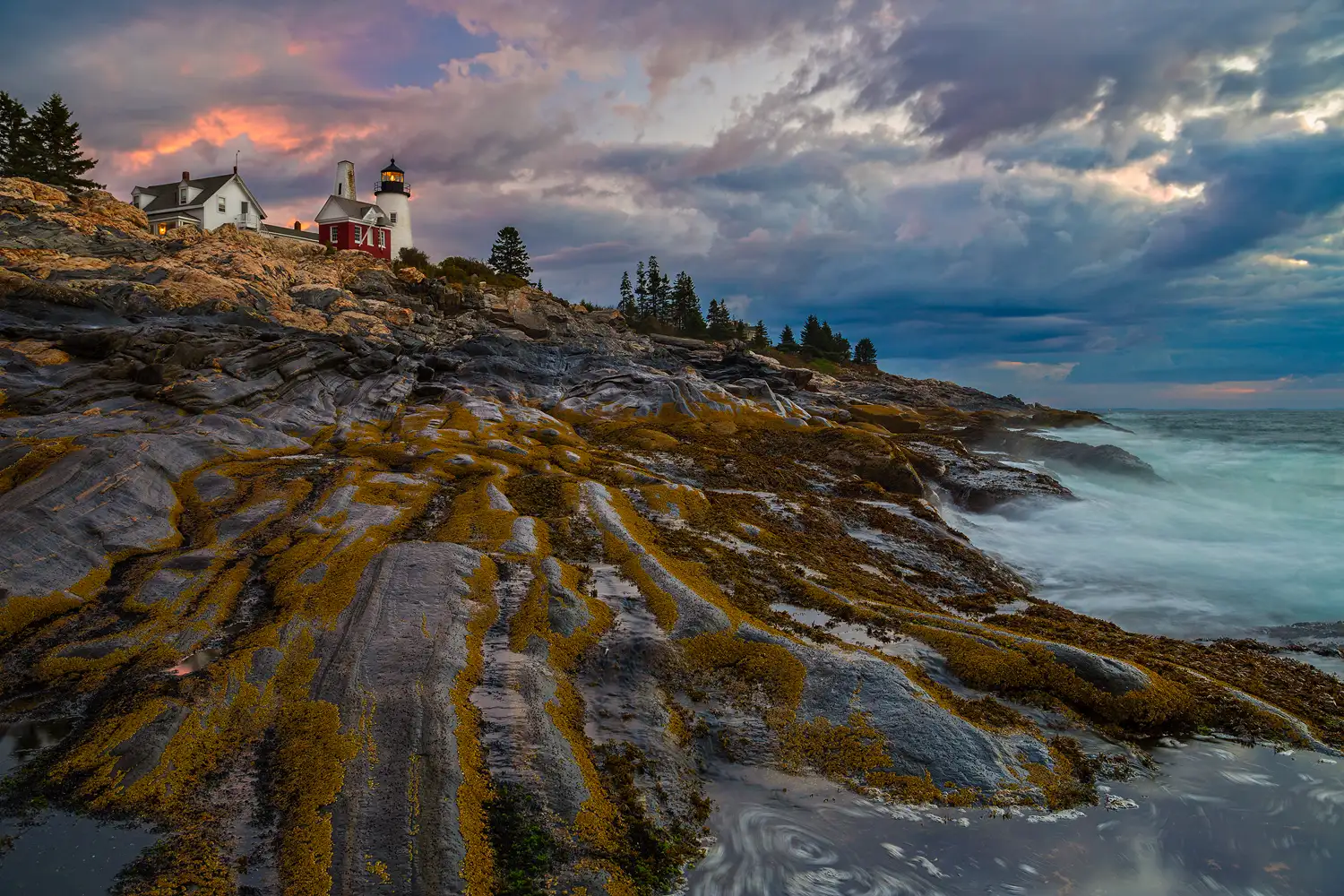
We relocate during the week to stay near different sections of shoreline. This allows us to work with a wide range of locations under appropriate light, from Bailey Island and Pemaquid Lighthouse to the harbor at Port Clyde. Each stop presents its own compositional challenges: vertical lighthouses standing against layered clouds, moored boats and dock lines that either strengthen or clutter a frame, and shoreline textures that respond differently as the light evolves. Working this way creates ongoing opportunities to assess new scenes, choose strong vantage points, and refine compositions as conditions change.
Late May along the Maine coast often feels more like early spring than summer. The ocean keeps the air cool, and cold fingers at sunrise are common. Cloud layers determine much of what the light will offer. When they align, skies can build gradually into color that reflects in harbor water or settles behind a lighthouse for several steady minutes. Other mornings remain soft and overcast, rewarding quieter compositions shaped by texture and tone. We work with whatever the week brings, adapting to cloud structure and coastal weather.
Midweek, time on Monhegan Island shifts the rhythm of the workshop. Twelve miles offshore, the island removes the car from the equation and slows the pace. We photograph the lighthouse above the village, explore the side streets and footpaths of the community, and wander the shoreline. Without constant relocation, participants often work more independently, returning to scenes and refining ideas while Andy circulates to help as needed. Evenings there tend to feel different, with shared meals, conversation, and a sense of being immersed in a place that operates on its own schedule.
Andy Cook is present throughout the workshop, not to make his own images, but to offer guidance as needed, whether that means talking through lens choice, refining a composition, or stepping back when a scene is coming together. Participants work in different ways, but the shared focus remains: making clear decisions in the field and returning home with a strong set of photographs from across the Maine coast. You can read more about how instruction works across all workshops on the How We Teach page.
Workshop highlights
A coastal route designed for photography
The workshop progresses north along the coast, positioning us near sunrise and sunset locations instead of commuting long distances each day. Moving between Bailey Island, Pemaquid, Port Clyde, and Monhegan keeps the focus on light rather than logistics, allowing more time on location and less time in the car.
Harbors, lighthouses, and coastal villages
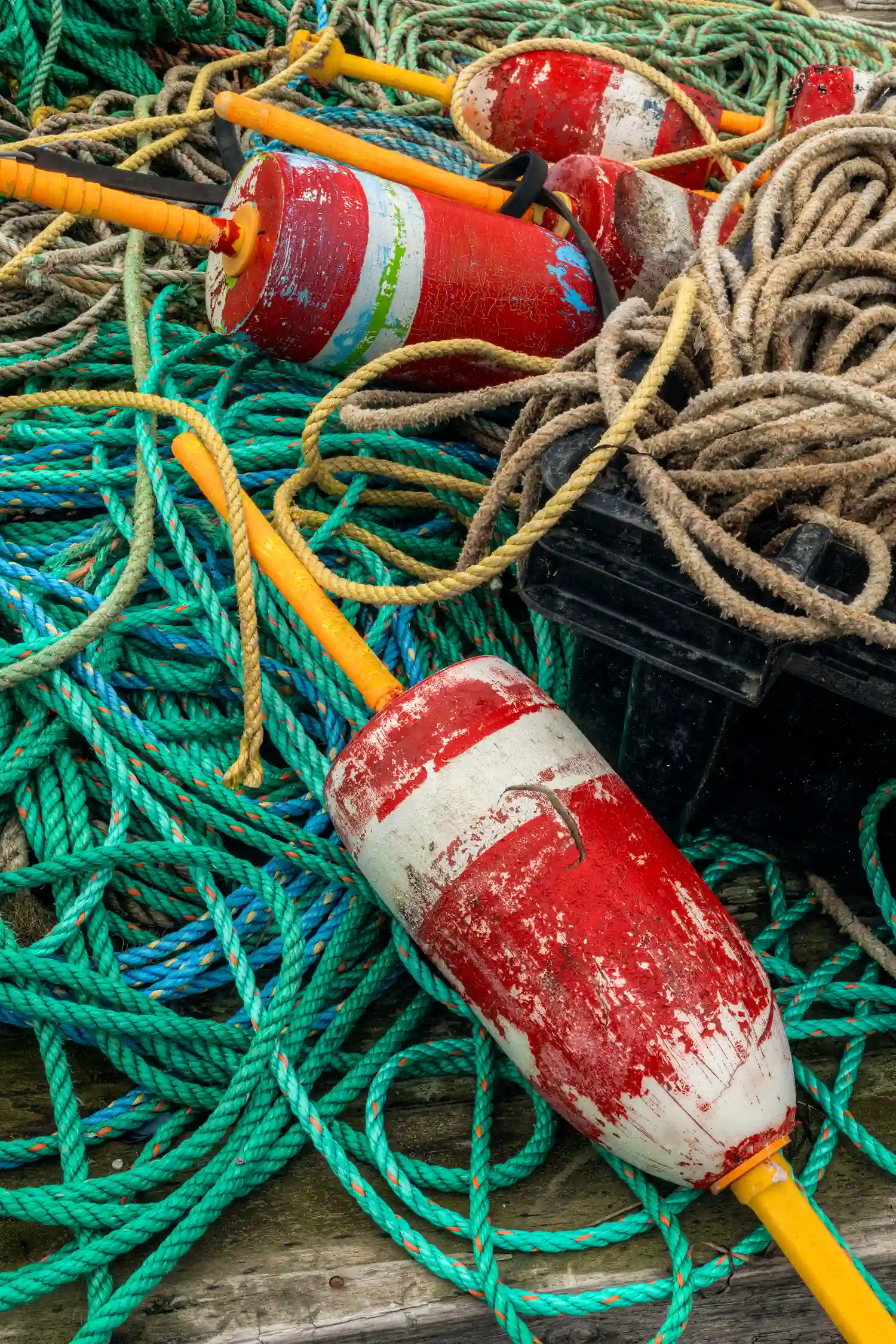
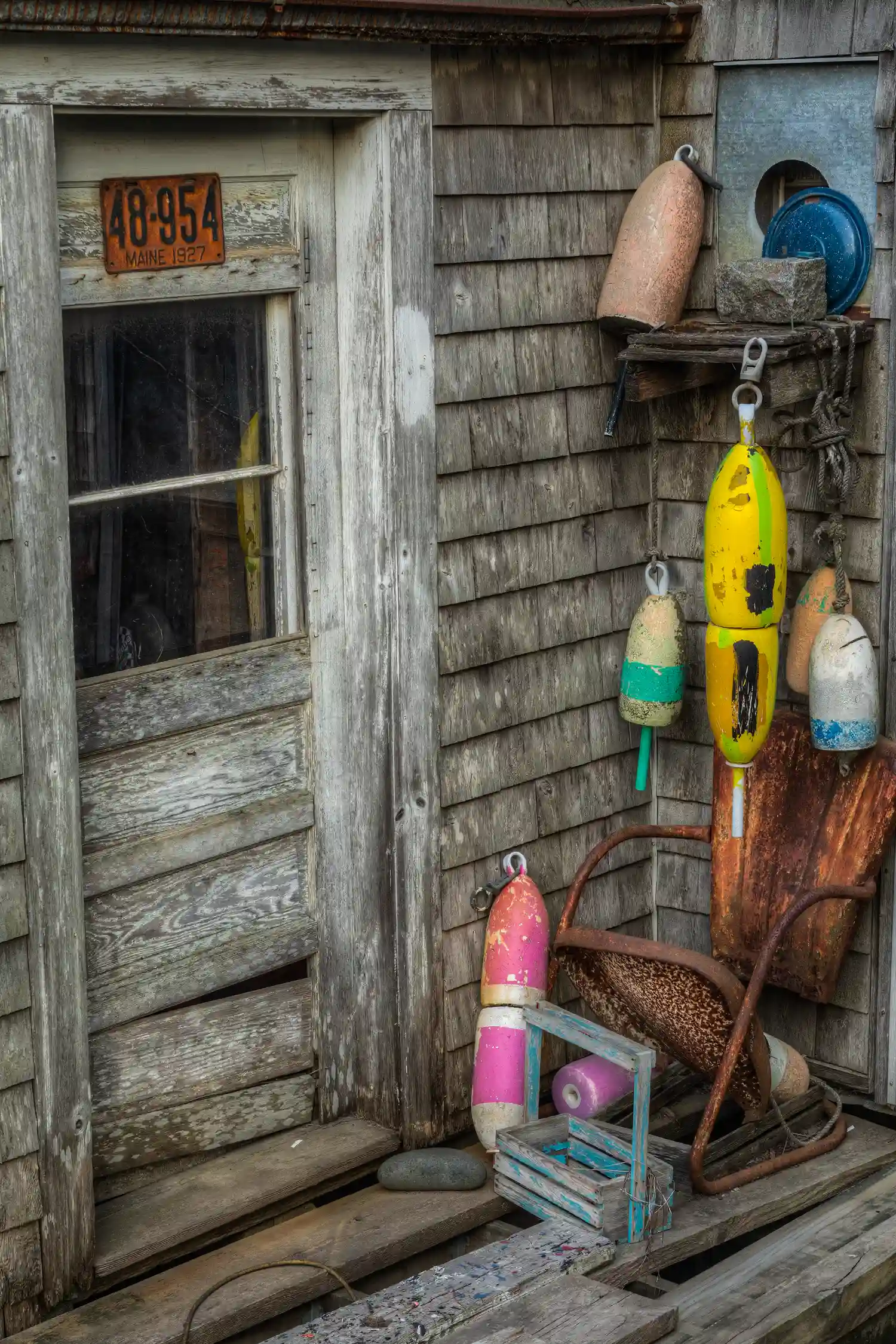
Lighthouses, harbors, and villages offer more visual information than first meets the eye. Boats, docks, and buildings create layered compositions that reward careful simplification and placement. The work here lies in recognizing relationships that make a strong image.
Monhegan Island: a different rhythm
The ferry ride offshore marks a shift in pace. With nearly all travel on foot, time expands. Scenes can be revisited, compositions reconsidered, and ideas pursued without constant relocation. The island experience itself becomes part of the workshop, influencing both the photographs and the shared experience of the week.
Workshop itinerary and schedule
Overview
This workshop includes multiple lodging stops along the coast and a ferry transfer to Monhegan Island. We plan to photograph sunrise and sunset each day, with travel and downtime built into the middle of the day.
-
Sunday, May 23
— Meet at the Bailey Island Motel for introductions and a brief discussion.
— Preview morning locations and photograph sunset. (Please have dinner before the meeting.) -
Monday, May 24
Relocate to Edgecomb, Maine.
-
Tuesday, May 25
Relocate to Port Clyde (lodging TBD).
-
Wednesday, May 26
Ferry to Monhegan Island; check in and photograph on the island.
-
Friday, May 28
Final morning photography; ferry returns midday. Avoid flights scheduled for Friday if possible.
Lodging
Bailey Island Motel2041 Harpswell Islands Road, Bailey Island, ME 04003
Lodging website · 207-833-2886
We will have already paid for the Bailey Island Motel rooms. This night's lodging cost will be collected in advance of the workshop, and there's no need to contact the hotel.
Cod Cove Inn22 Cross Road, Edgecomb, ME 04556
Lodging website · 207-882-9586
Tuesday, May 25: relocate to Port Clyde (lodging TBD), Port Clyde, ME 04855.
Check-in: ·
Check-out:
Monhegan Island, ME
Lodging website · 207-594-7983
We will have a block of rooms reserved here. Participants may contact the hotel starting January 2027 to put a room in their name—please tell them you are with our group.
The workshop ends after morning photography on Friday, May 28, 2027.
Ferry return: Our ferry tickets are for a set departure time. We return midday on Friday, May 28. Because timing can vary, we recommend avoiding flights scheduled for Friday.
Optional: If you arrive early or stay after the workshop, consider photographing Portland Head Light or Nubble Light, both excellent sunrise and sunset locations.
What to expect
- Morning: We're out early, arriving before civil twilight and photographing through sunrise. Mornings are spent working scenes as light builds and shifts. Breakfast follows once the light is finished.
- Midday: Midday is generally lighter and more flexible. Travel, rest, and conversation happen here, along with time to review images. When questions come up, Andy is available to help talk through decisions made in the field.
- Evening: After dinner, we head back out to photograph through sunset and into twilight.
Registration
Registration details are available on the next page where you'll find secure PayPal buttons. You can check out as a guest using your credit or debit card—no PayPal account required.
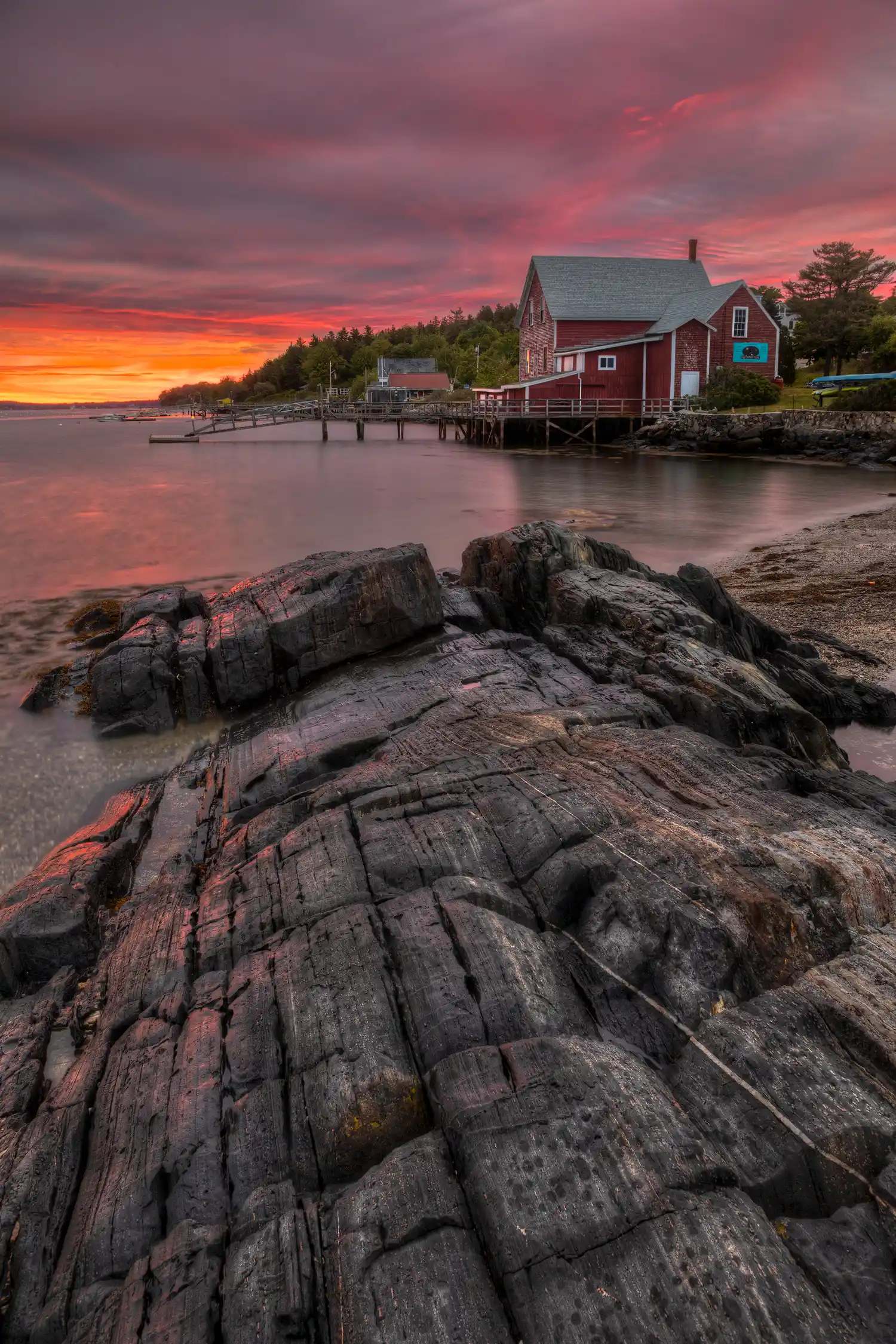
Workshop details
- Experience level
- Beginner to advanced. Participants should be comfortable working independently at times, as the group often spreads out while shooting.
- Group size
- Small group (target number of 8 participants).
- Effort
- Moderate. Some locations are right off the parking lot, while others include rock scrambling or hikes with elevation—especially on Monhegan Island. Hiking boots are recommended.
- Conditions
- Cold ocean water keeps the air chilly. Bring warm layers, including winter-weight clothing, to stay comfortable during long periods in the field.
- Included
- Ferry transportation to Monhegan Island.
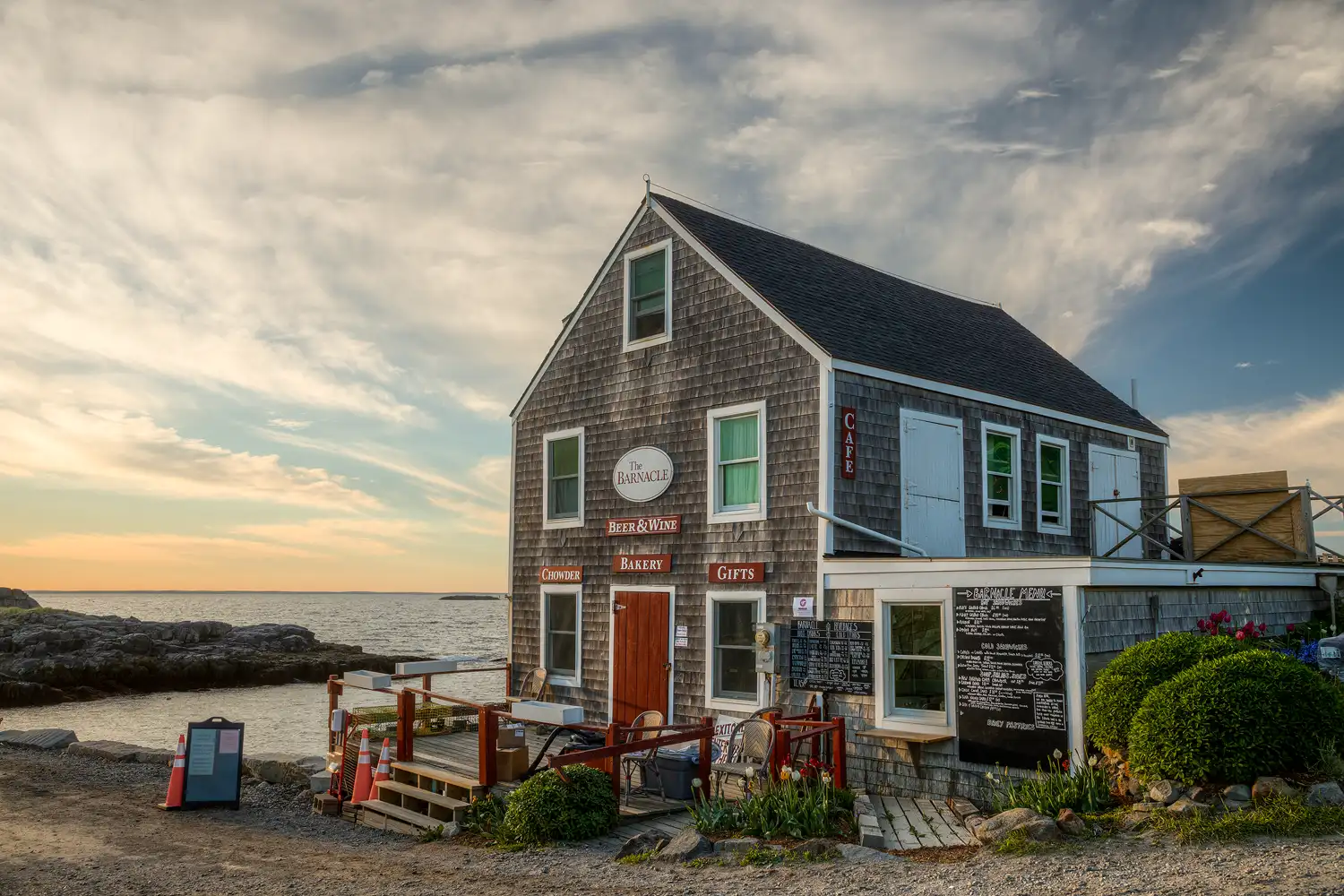
Getting to the workshop
Air travel
Most participants fly into Portland, Maine or Manchester, New Hampshire. Boston is another option.
Drive times:
Portland to Bailey Island: ~1 hour
Port Clyde to Portland: ~2 hours
Manchester to Bailey Island: ~3 hours
Port Clyde to Manchester: ~3.25 hours
Driving and carpooling
Roads are mostly paved and a standard rental car is sufficient. A GPS or smartphone makes relocating between hotels and restaurants straightforward.
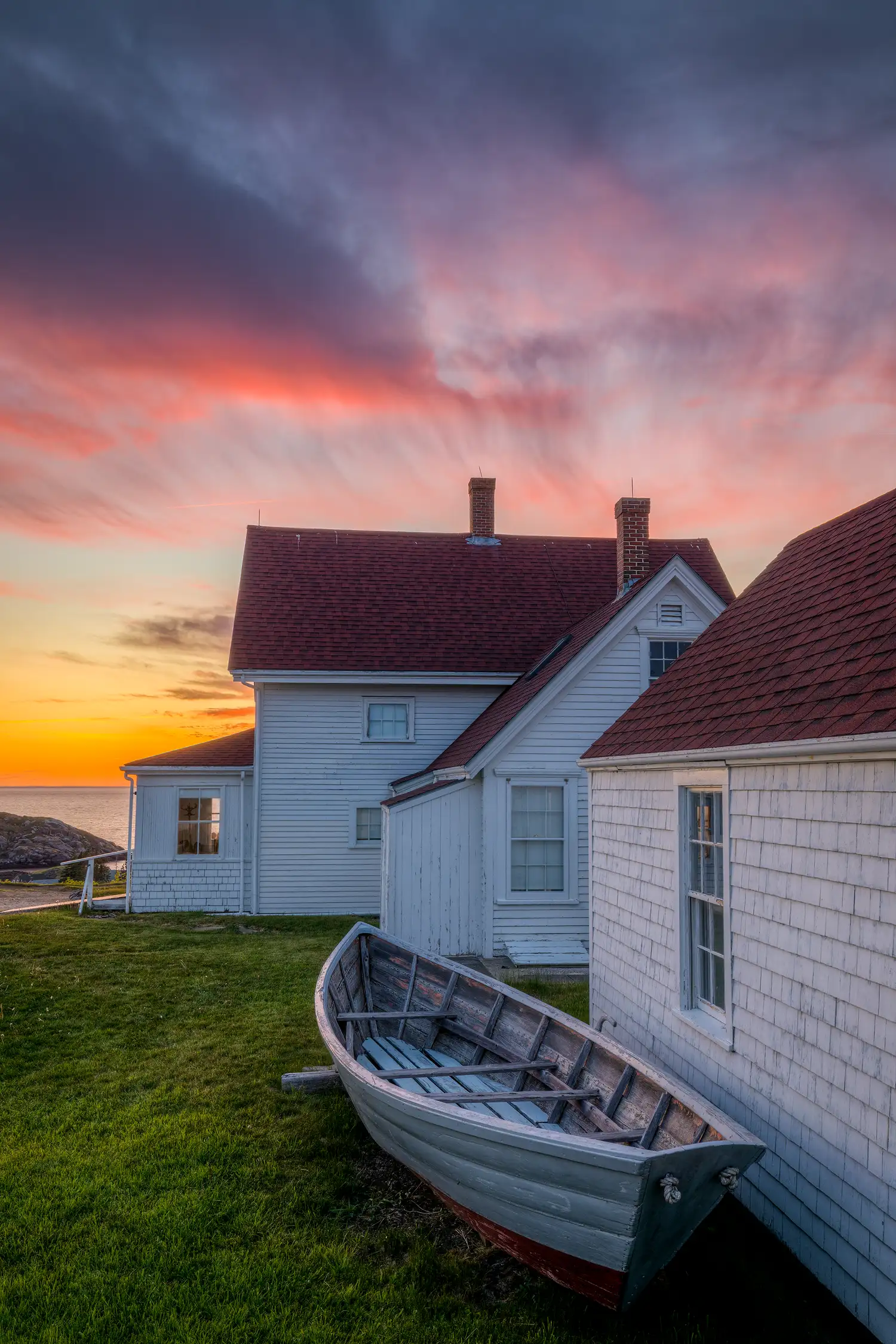
Recommended gear
Lenses
A versatile range helps on the Maine coast. Focal lengths spanning roughly 16mm to 400mm (after crop-factor adjustment) cover wide shoreline scenes, lighthouse framing, and tighter details in harbors.
Filters
A polarizer helps manage glare and deepen color. A 6-stop (or stronger) neutral density filter is useful for long exposures when waves and tide invite slower shutter speeds.
Monhegan Island travel
Monhegan has almost no vehicles, so we carry what we bring. Consider packing a smaller, easy-to-carry bag or duffel for the island portion of the workshop. You can leave larger luggage in your vehicle on the mainland and travel light.
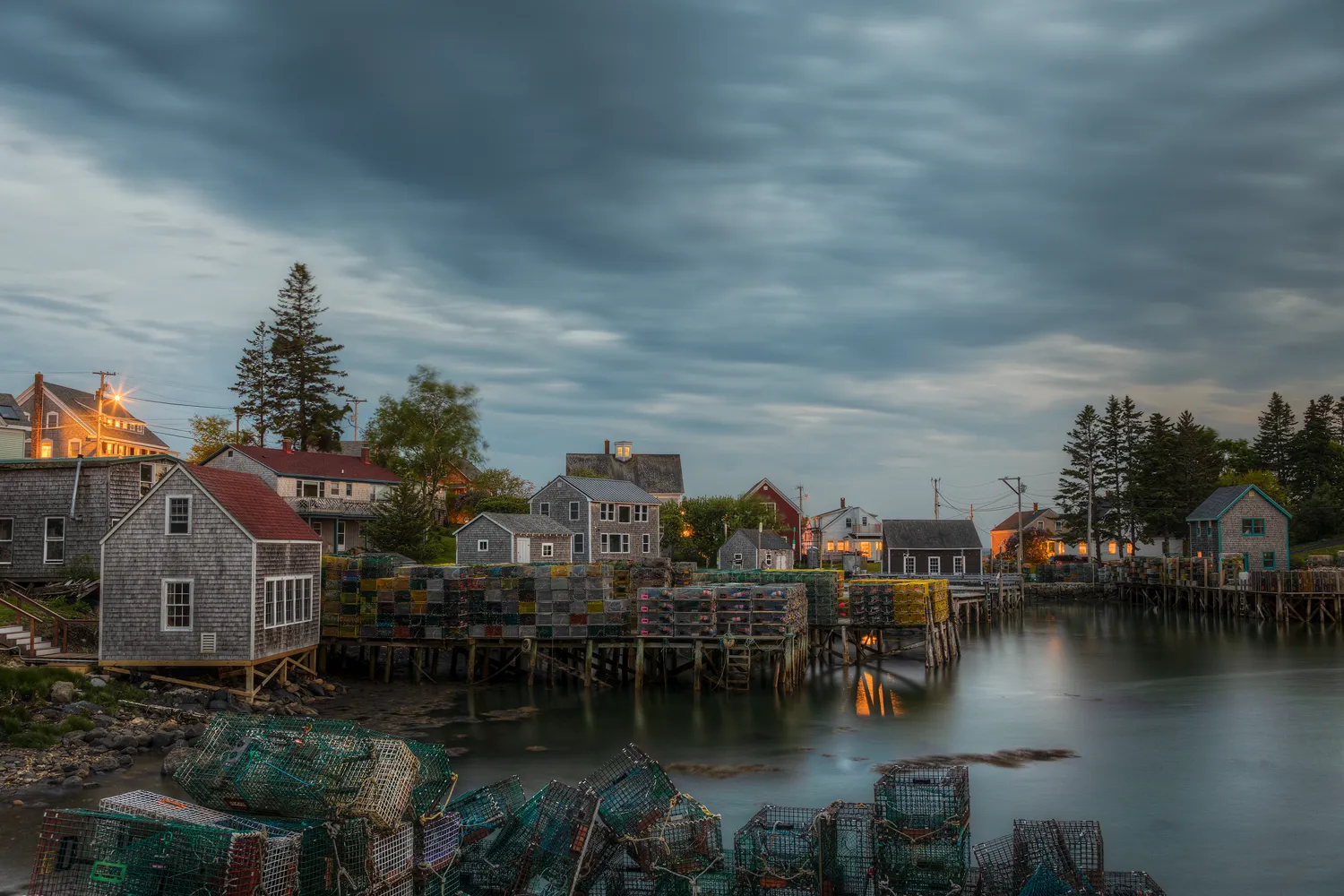
Workshop community
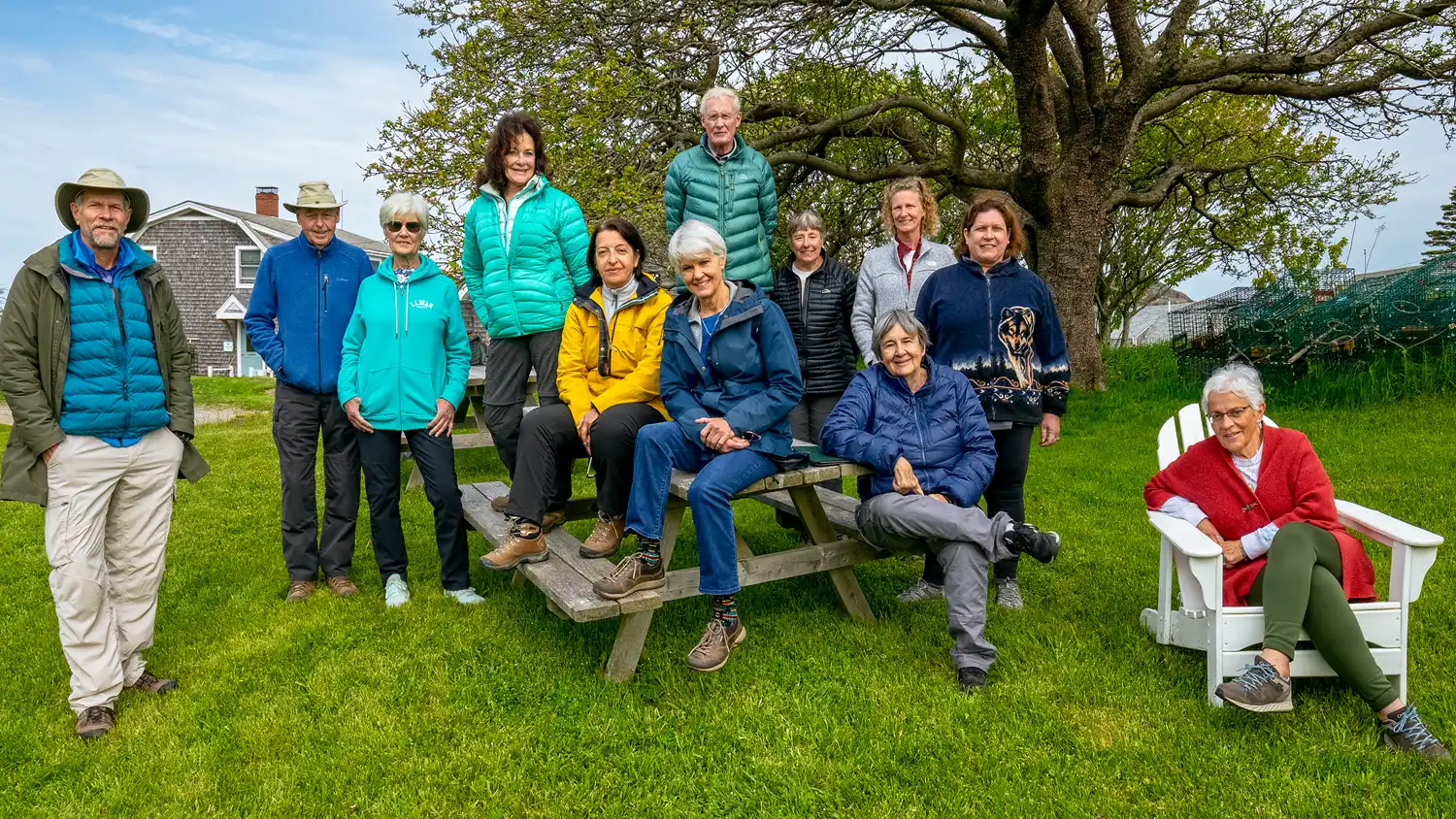
See photographs created by participants during past Maine Coast workshops.
FAQ
- Is this workshop more about learning or photographing locations?
-
Both. You'll photograph strong Maine locations, but much of the growth happens in how you see them. Harbors and villages rarely present themselves as dramatic scenes; the work is in recognizing relationships between boats, buildings, shoreline, and sky. Andy is present throughout the workshop to help refine those decisions as conditions evolve. Instruction is available without being forced, and participants work at their own pace.
- How fast-paced is this workshop, with all the relocations?
-
The week has a clear rhythm built around sunrise and sunset, with most travel happening mid-day. Relocations are intentional and designed to keep us close to the right light rather than driving long distances each morning and evening. Some days involve more movement, particularly when lodging changes, while others, especially on Monhegan Island, allow longer blocks of uninterrupted time in the field. The pace is steady but balanced.
- How much hiking and scrambling is involved?
-
Moderate. Some locations are close to parking, while others involve uneven rock, short climbs, and occasional scrambling, especially on Monhegan Island. You don't need to be especially fast or athletic, but you should be comfortable moving carefully on natural terrain, sometimes in the dark, with wind, or wet conditions. Good hiking boots make the week noticeably easier.
- How does the Monhegan Island portion work, and what should I expect?
-
Monhegan is primarily foot travel. Luggage is transported separately to the hotel, but once on the island you'll be walking everywhere. That change in logistics is part of what makes the experience different. Without a car, scenes can be revisited and reconsidered. For the island portion, pack a smaller bag and leave extra luggage in your vehicle on the mainland.
- Will there be post-processing instruction and image review?
-
Travel and early mornings naturally limit long processing sessions. That said, Andy is available to review images, talk through edits, and answer Photoshop questions as time allows. If you'd like hands-on help, bring a laptop with Photoshop installed, but the primary focus remains field decisions and well-considered captures.
- What are the conditions like in late May on the Maine coast?
-
Late May feels more like early spring than summer. Wind is common, temperatures change quickly, and the cold ocean keeps the air cooler than most people imagine. Overcast conditions are frequent and can be excellent for coastal photography, while clear mornings tend to be crisp and high-contrast. People who dress for spring and summer end up very cold sooner than they expect.
Further Study
For photographers interested in refining post-processing techniques related to this workshop, the following tutorials may be helpful: