
Acadia National Park Fall Foliage & Coastal Photography Workshop
This Acadia National Park photography workshop is based in Bar Harbor on Mount Desert Island during peak autumn color in October. The landscape here combines granite shoreline, quiet inland lakes and ponds, and forested slopes shaped by the meeting of ocean and mountains. We photograph these landscapes at sunrise and sunset, working in a small group where instruction happens in the field as light and weather evolve.
Workshop overview
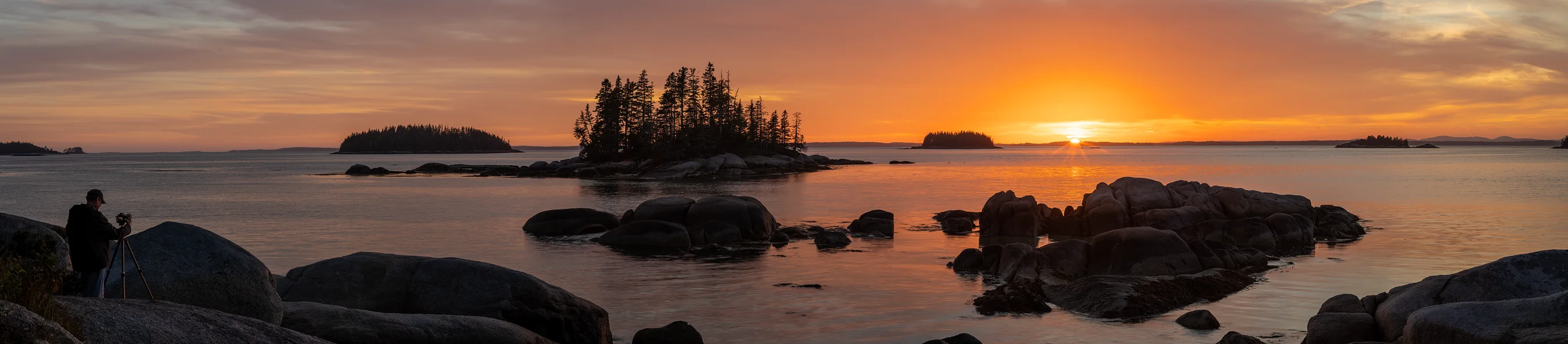
About the Acadia National Park photography workshop
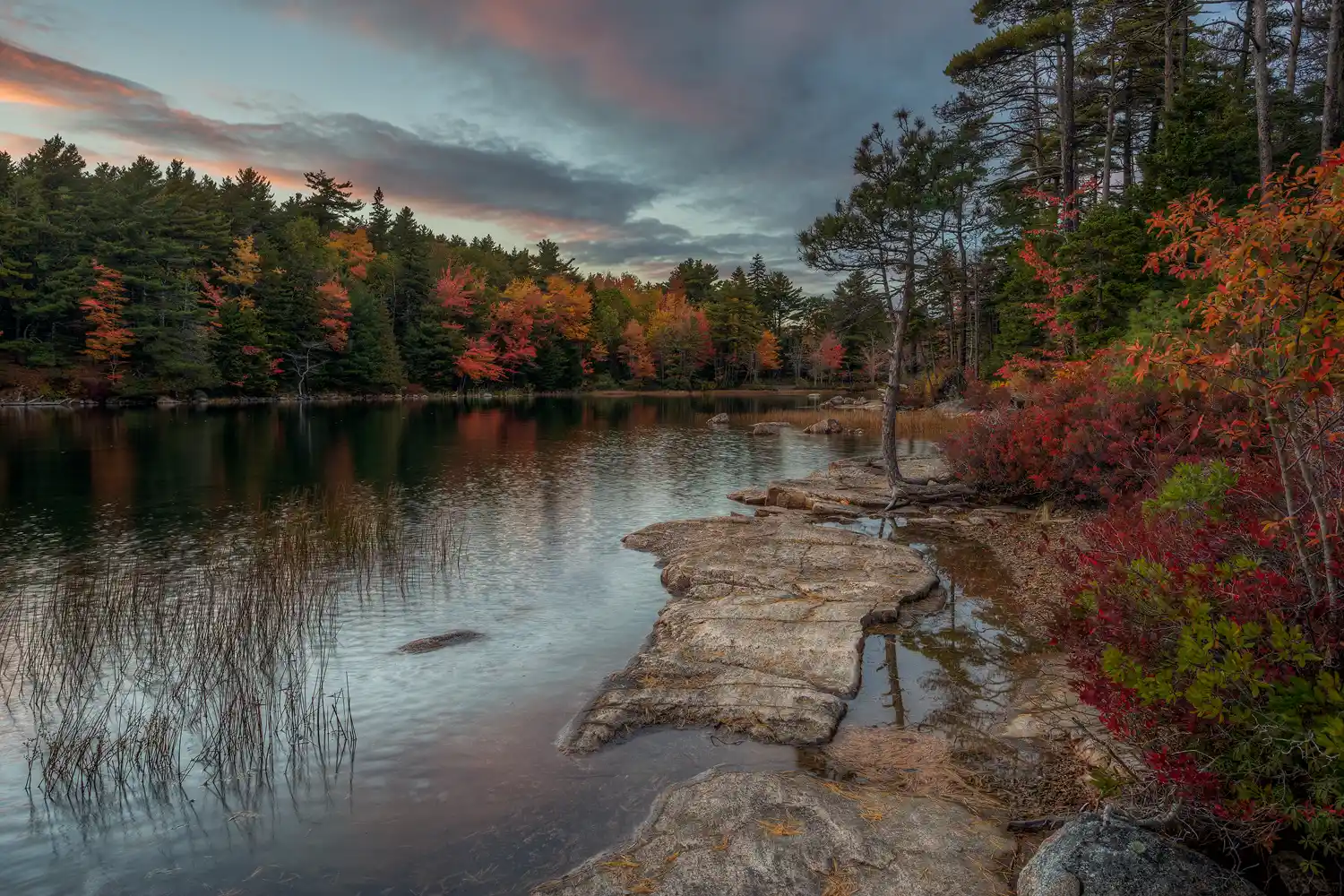
In autumn, Acadia reveals itself a piece at a time. Granite ledges step down toward the sea, quiet ponds gather reflections in sheltered corners, and the park's carriage roads wind through forest already turning red and gold. The landscapes transition quickly from shoreline to inland water to woodland paths, often within a short distance. Some scenes invite careful foreground work among fractured granite, while others reward patience as wind settles and reflections begin to form on still ponds.
This workshop is built around long stretches in the field. We photograph mornings and evenings, moving to a new location each session as light and conditions change across the park. One outing might focus on sunrise reflections around Jordan Pond or Eagle Lake, while another works the rocky shoreline at places like Otter Cliffs or Boulder Beach. The pace allows time to work a scene carefully before moving on while still experiencing a wide range of Acadia's landscapes over the course of the week.
Participants come with a range of experience, and guidance happens in the field. Newer photographers can get help with fundamentals like exposure, composition, and working with a tripod in real conditions. More experienced photographers often focus on refining decisions as scenes evolve, simplifying complex situations, and improving how elements come together within the frame. Andy Cook is present throughout the workshop not to make his own images, but to help participants make stronger photographs, offering feedback when it's useful and stepping back when things are working. You can read more about how instruction works across all workshops on the How We Teach page.
Workshop highlights
Fall color within the landscape
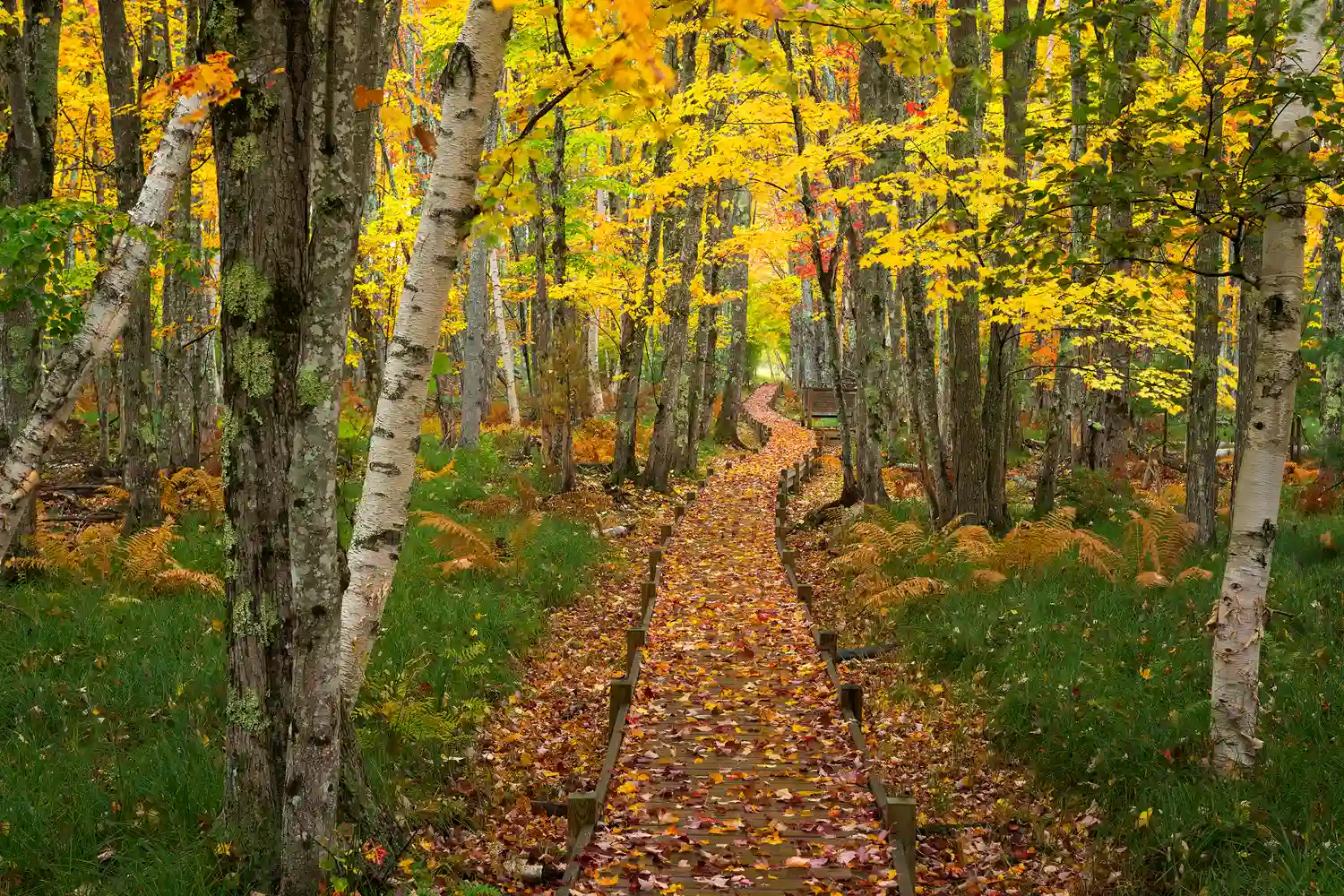
Fall color is part of the draw, but it rarely stands alone. In many scenes it becomes one element within a larger composition, reflected in still water, threaded through forest edges, or appearing alongside rock and shoreline textures. The strongest photographs often come from balancing color with structure and light rather than treating foliage as the entire subject.
Coast, ponds, and forest
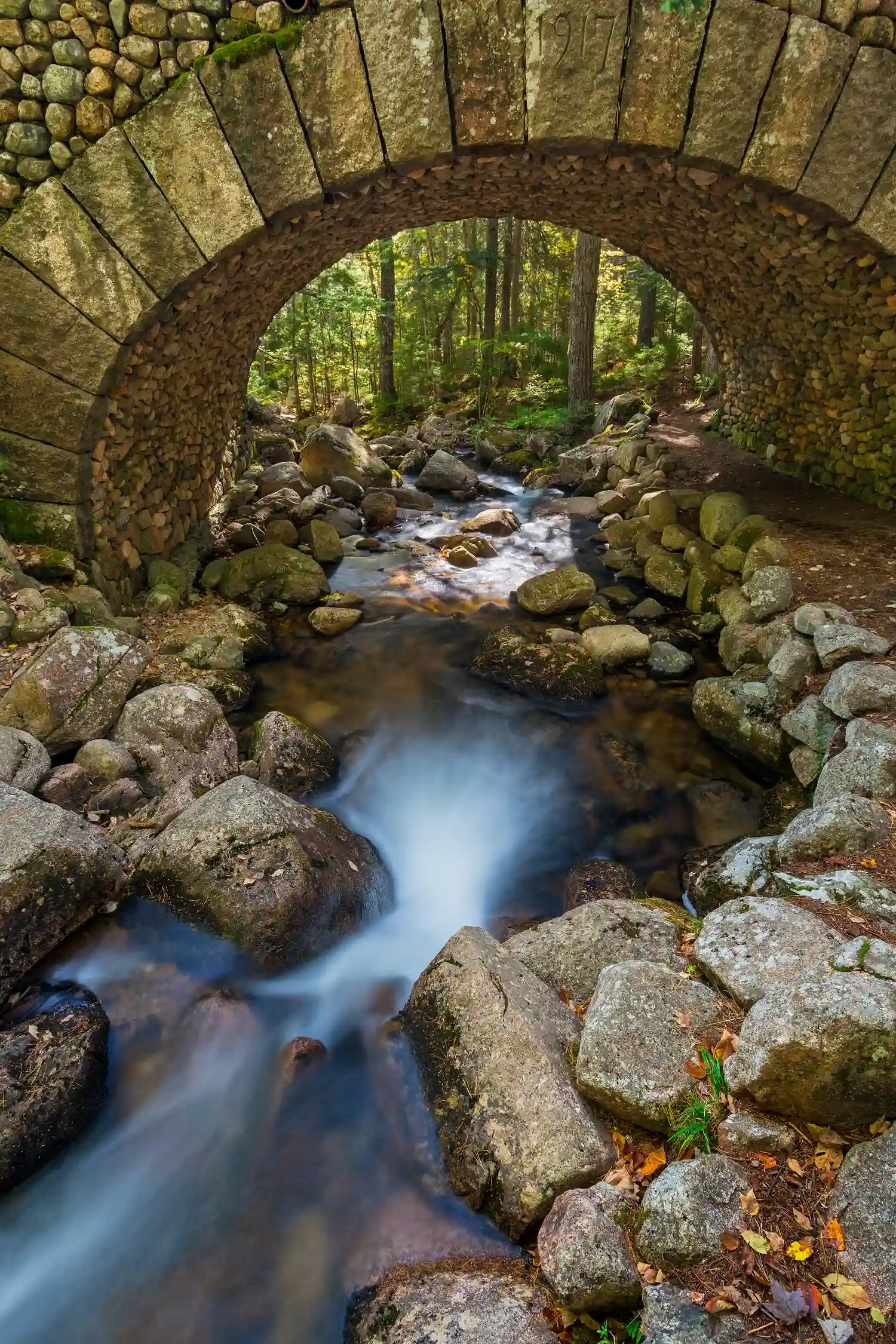
Acadia offers several distinct environments within a relatively small area. The workshop moves between coastal scenes, quiet ponds and lakes, forest streams, and inland woodland paths. Each setting responds differently to light and weather, and the week naturally shifts between them as conditions change.
Instruction in the field
Most guidance happens on location while scenes are unfolding. Questions and ideas are worked through at the tripod, with time to apply them in changing conditions. Image review and processing help are available when time allows, but we prioritize making photographs in the field and coming home with strong, workable images.
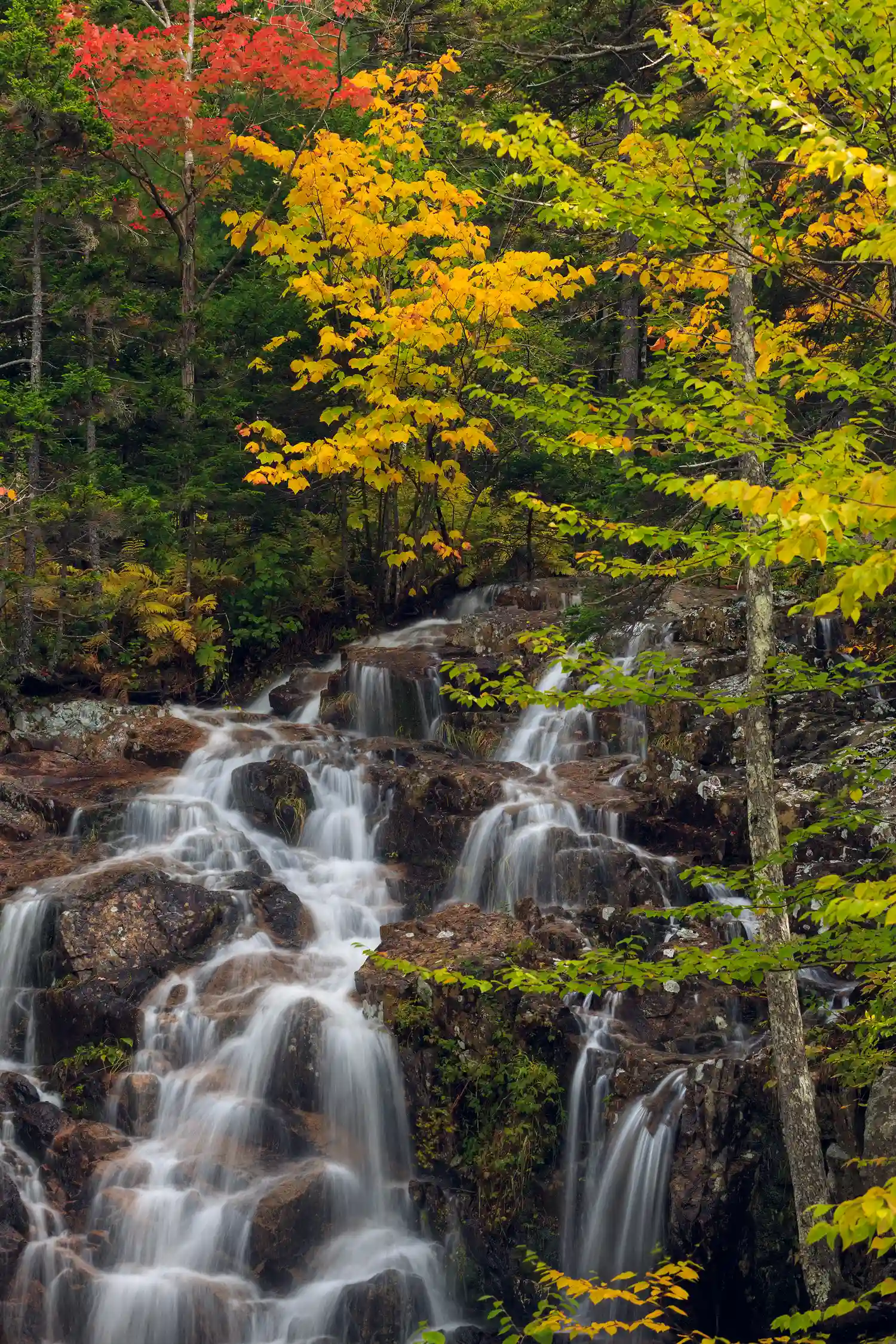
Workshop itinerary and schedule
Overview
The workshop begins Monday evening with introductions, then runs from Tuesday morning through Friday evening.
-
Monday, October 9
— Introductions and discussion.
-
Tuesday–Friday, October 10–13
Field sessions, with midday time generally used for rest, travel between locations, and questions or image review when time allows.
-
Friday, October 13
The workshop concludes after photographing Friday evening.
Lodging
Cromwell Harbor Motel359 Main Street, Bar Harbor, ME 04609
Lodging website · 800-544-3201 (reservations) · 207-288-3201 (info)

What to expect
- Morning: We'll be in position before first light and stay through sunrise. Sometimes we relocate to a second location before breakfast.
- Midday: A lighter stretch of the day, often used for rest and travel between locations. When we're at the hotel, there may be time for post processing questions and limited image review, but the emphasis stays on being ready for the next field session.
- Evening: Evenings are a core part of the workshop, with extended time on location as light changes. Because Bar Harbor can be busy, group dinners aren't scheduled every night. Participants can eat on their own or in small groups. This helps us keep the focus on photographing rather than logistics.
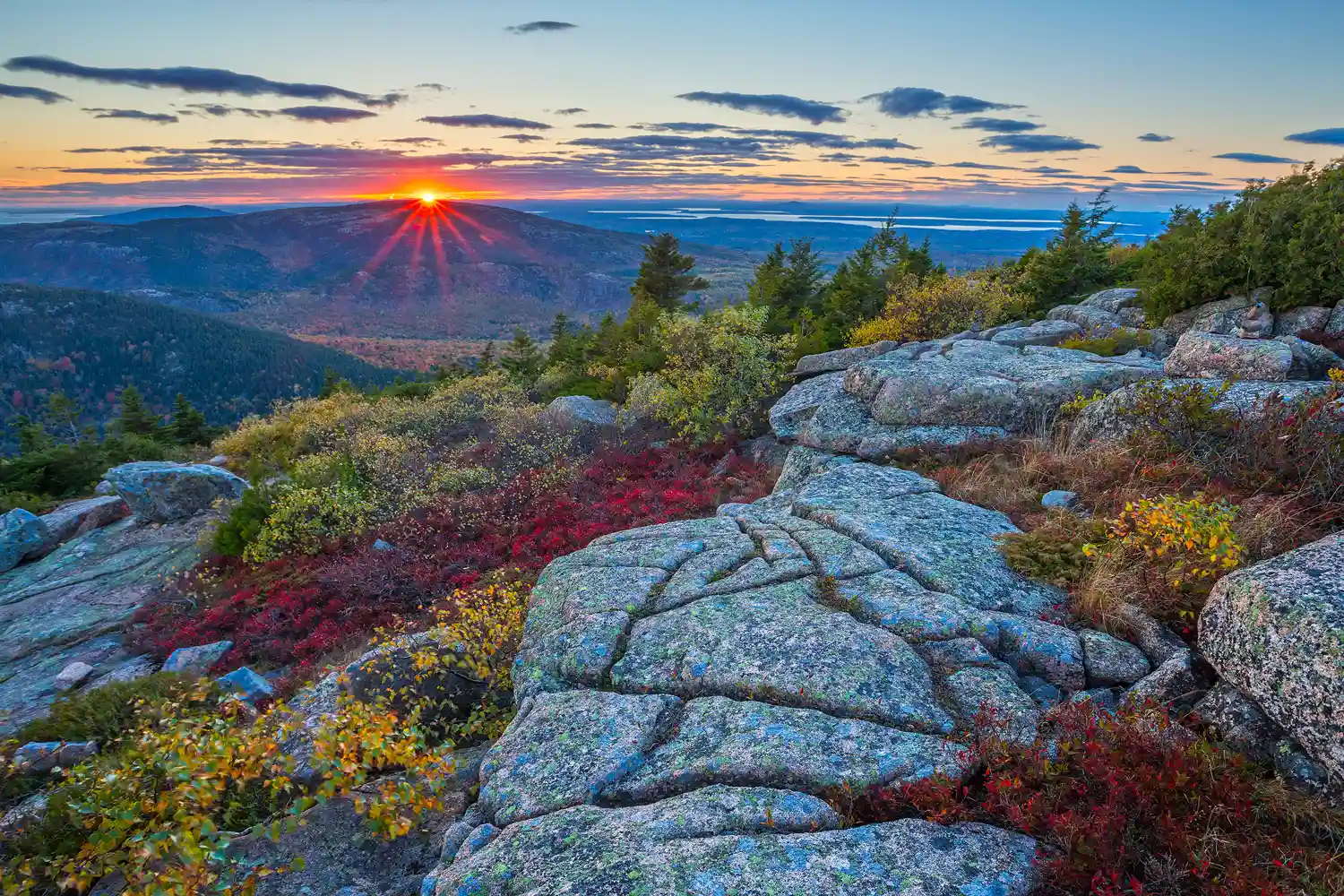
Registration
Registration details are available on the next page where you'll find secure PayPal buttons. You can check out as a guest using your credit or debit card—no PayPal account required.
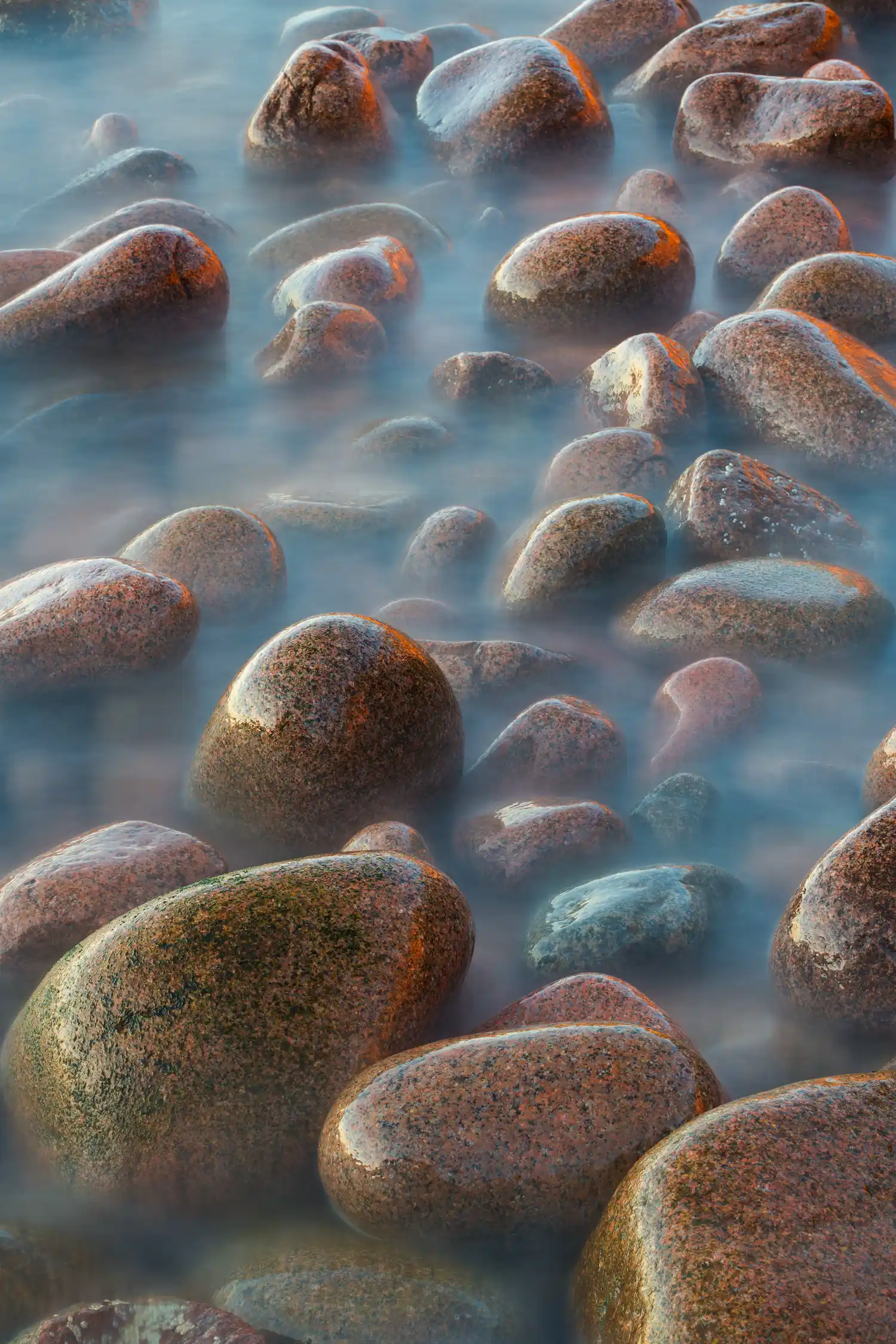
Workshop details
- Experience level
- Beginner to advanced. Participants should be comfortable working independently at times, as the group often spreads out while shooting.
- Group size
- Small group (target of 8 participants) to allow for individual instruction.
- Effort
- Easy. Two carriage road walks of about one mile each way with mild elevation gain, plus shoreline exploration on uneven terrain (sand and rock). One location may require a short scramble of about four feet onto a rock shelf using hands.
- Conditions
- Mornings may be very chilly.
Getting to the workshop
Air travel
Likely airport choices include Bangor (ME), Portland (ME), Manchester (NH), and Boston (MA).
Drive times:
Bar Harbor to Bangor: ~1 hr 30 min
Bar Harbor to Portland: ~3 hr 45 min
Bar Harbor to Manchester: ~5 hr
Bar Harbor to Boston: ~4 hr 35 min
Driving and carpooling
Roads are paved and a standard rental car is sufficient. We encourage participants to carpool during the workshop to limit impact and simplify logistics.
Recommended gear
Lenses
A useful range is roughly 18mm to 400mm (full-frame equivalent). This covers wide coastal scenes, tighter shoreline details, and compressed fall compositions inland.
Filters
Bring a polarizer and a 6-stop (or stronger) neutral density filter.
Footwear and weather
Hiking boots are recommended. Rain is possible—bring an umbrella and rainproof clothing. Mornings can be cold, so layers matter.
Workshop community
FAQ
- How much post-processing instruction is included?
-
Post-processing support is available, but it isn’t the focus of the workshop. When time allows, Andy can help with questions or walk through basic processing decisions, especially as they relate to work made in the field. Most learning happens on location, with the emphasis on making strong captures that hold up well once you’re home and editing on your own.
- How fast-paced is the workshop day to day?
-
The workshop follows a rhythm around morning and evening light. We're out early for sunrise and return to the field again in the evening, with most travel, rest, and questions happening mid-day. Some days involve longer stretches at a single location, while others include a bit more moving. The pace is active but measured, with enough time to work scenes as conditions change.
- How physically demanding is the workshop?
-
Overall it's easy, with a few short “watch your footing” moments. We do two carriage road walks of about a mile each way with mild elevation gain. Coastal locations can involve uneven terrain, sand, rounded rock, and occasionally slick surfaces. One location requires a short scramble of a few feet onto a rock shelf using hands. If you're comfortable walking carefully on natural ground, you should be fine.
- What are October conditions like in Acadia—should I expect cold and rain?
-
Yes, mornings can be very chilly, and weather can change quickly. Rain is always possible. Layers matter more than people expect, especially near the water. If you plan for cold hands, wind, and damp conditions, you'll stay warmer and enjoy shooting longer. Some locations actually photograph best in light drizzle.
- Is Bass Harbor Head Lighthouse part of the workshop?
-
No. It's extremely popular and can be crowded during peak season. If you want to photograph it, we recommend doing so before or after the workshop when you can manage timing and crowds on your own terms. During the workshop, we focus on locations where the group can work comfortably.
Further Study
For photographers interested in refining post-processing techniques related to this workshop, the following tutorials may be helpful: