
Charleston & Savannah Photography Workshop
This Charleston and Savannah photography workshop explores two of the South's most historic coastal cities. Here, moss-draped oaks, quiet streets, gardens, and coastal textures reveal themselves in the soft light of early spring. We photograph these scenes in a small group as light and conditions evolve in the field.
Workshop overview
Workshop video
Filmed during previous Charleston and Savannah workshops, the video includes scenes from historic streets, moss-draped parks, coastal driftwood beaches, and behind-the-scenes moments working in the field.
About the Charleston & Savannah photography workshop
Charleston and Savannah are two historic cities of the American South where architecture, landscape, and atmosphere shape how scenes come together in the frame. Each offers a distinct visual rhythm. In Charleston we work through the layered streets of the historic district. Pastel facades, narrow lanes, and details around Rainbow Row, Church Street, and Tradd Street create dense compositions that reward careful framing. In Savannah the pace shifts. Open squares and oak-lined avenues at places like Wormsloe Historic Site, and quiet evening light in locations such as Bonaventure Cemetery allow scenes to breathe, with space and atmosphere becoming part of the photograph.
Spring is an ideal season here. Mornings are cool and quiet, with soft light moving slowly across streets, gardens, and historic grounds. Foliage is fresh without being overwhelming, and moss-draped oaks begin to fill out across squares and avenues. During the week we work in places that reward patience, from the ruins of Old Sheldon Church to the quiet paths of Magnolia Plantation and the sculptural driftwood shoreline of Botany Bay's boneyard beach. These environments encourage careful observation, where small shifts in position, timing, and framing often make the difference between a photograph that almost works and one that holds together.
Charleston
Simplifying architectural scenes with structure and color
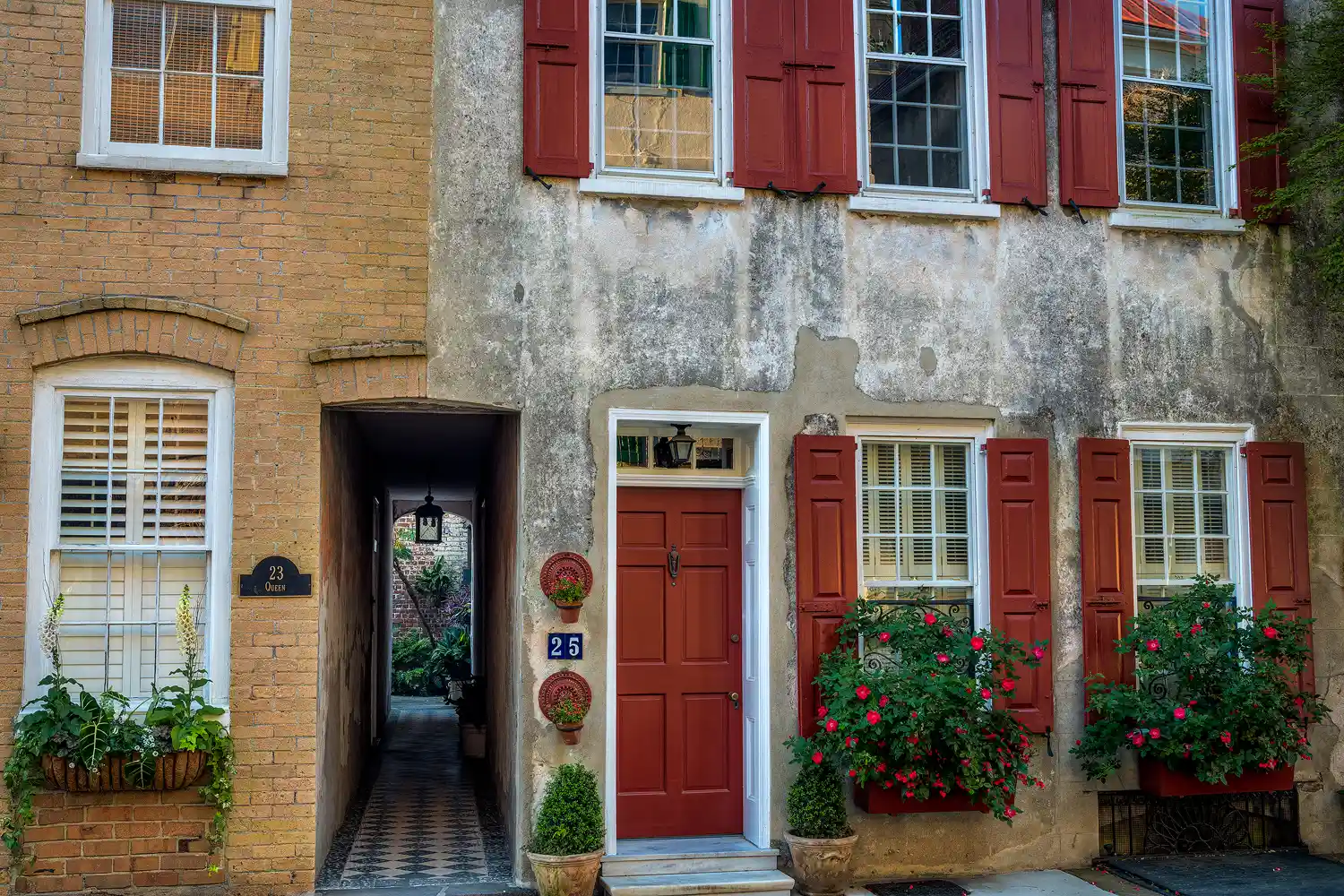
Charleston's historic district presents dense visual information: layered facades, narrow streets, strong verticals, frequent distractions, and seasonal color. Areas around Rainbow Row, Church Street, and Tradd Street offer rich combinations of pastel architecture, ironwork, and garden elements. We focus on slowing down and simplifying by choosing where to stand, managing perspective, and deciding what not to include. The goal is to keep the structure of the scene clear, allowing color to support the composition instead of dominating it.
Finding structure and rhythm in designed landscapes
At Magnolia Plantation we work with intentional design. Paths, plantings, bridges, and architectural elements create rhythm and order within the frame. These scenes reward careful observation, where alignment between elements, subtle shifts in position, and the direction of light determine whether a photograph feels balanced, cohesive, and inviting to the eye.
Adapting to texture, space, and changing conditions
At Botany Bay's boneyard beach, weathered trees and open shoreline replace architecture and color as the primary visual elements. These scenes are shaped by tide, wind, and changing coastal light. The driftwood forms and wide stretches of sand encourage simple compositions built around texture, negative space, and careful placement of foreground elements as conditions evolve.
Savannah
Working with space and restraint
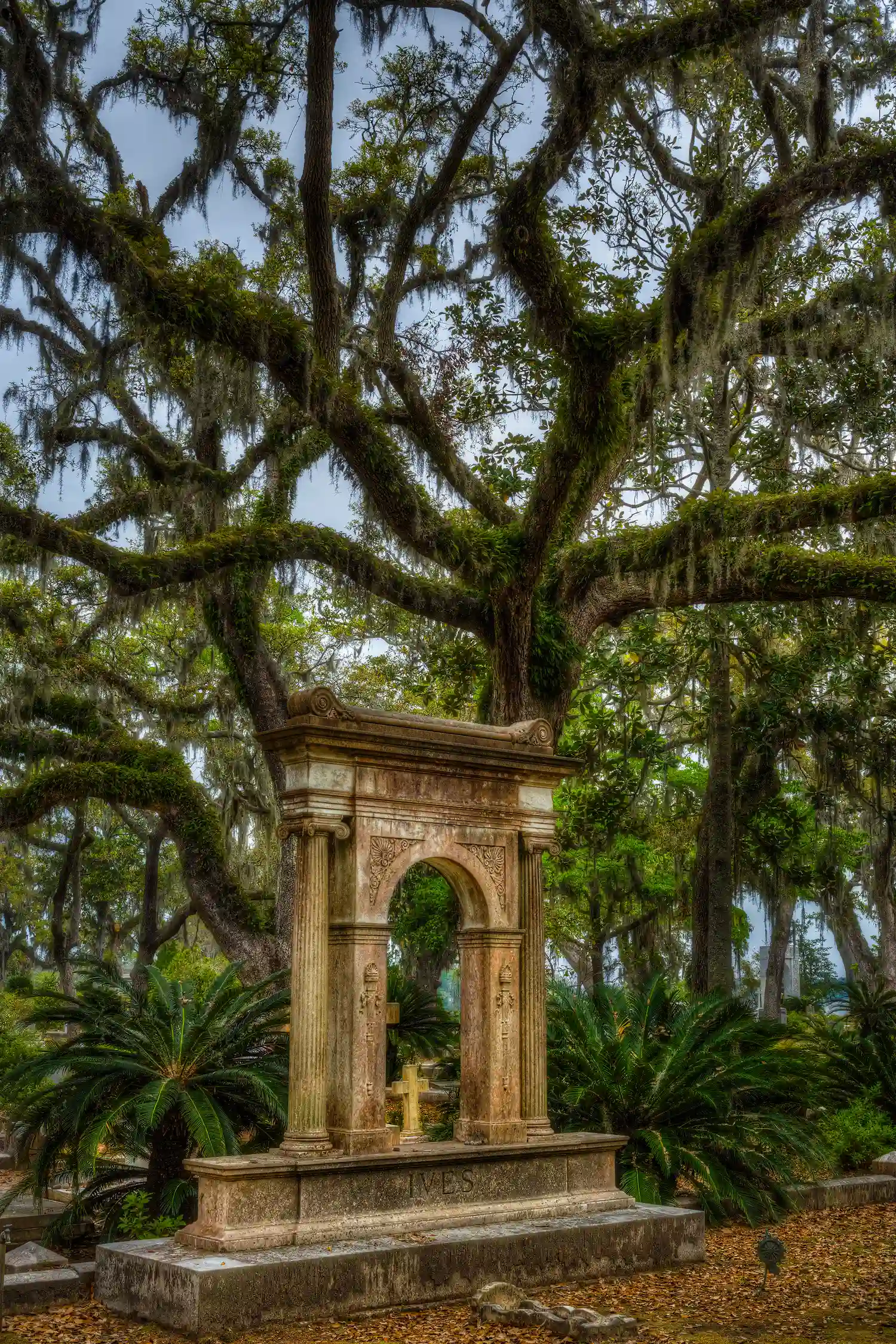
Savannah offers a very different sense of space than Charleston. Locations such as Bonaventure Cemetery and Forsyth Park provide openness and natural separation between elements, which can make it tempting to include too much in a single frame. Moss-covered oaks, curving paths, and quiet garden spaces often invite wider compositions than the scene actually needs. We simplify these environments by choosing fewer elements, paying attention to spacing and balance, and deciding when a composition is complete rather than continuing to add more.
Using repetition and depth to guide the eye
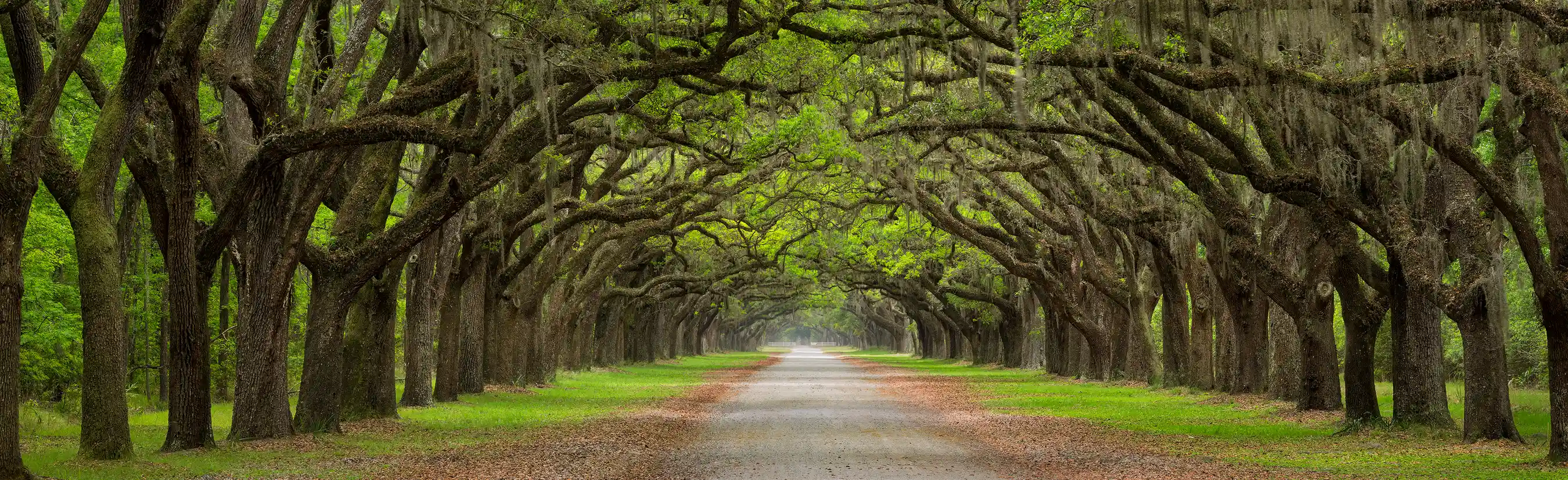
Savannah's oak-lined avenues naturally create rhythm and flow. At Wormsloe Historic Site, long rows of live oaks and hanging Spanish moss form repeating patterns that guide the viewer through the frame. We study how repetition, layering, and depth work together, using position and focal length to lead the eye through the image without relying on dramatic light.
Photographing in soft, transitional light
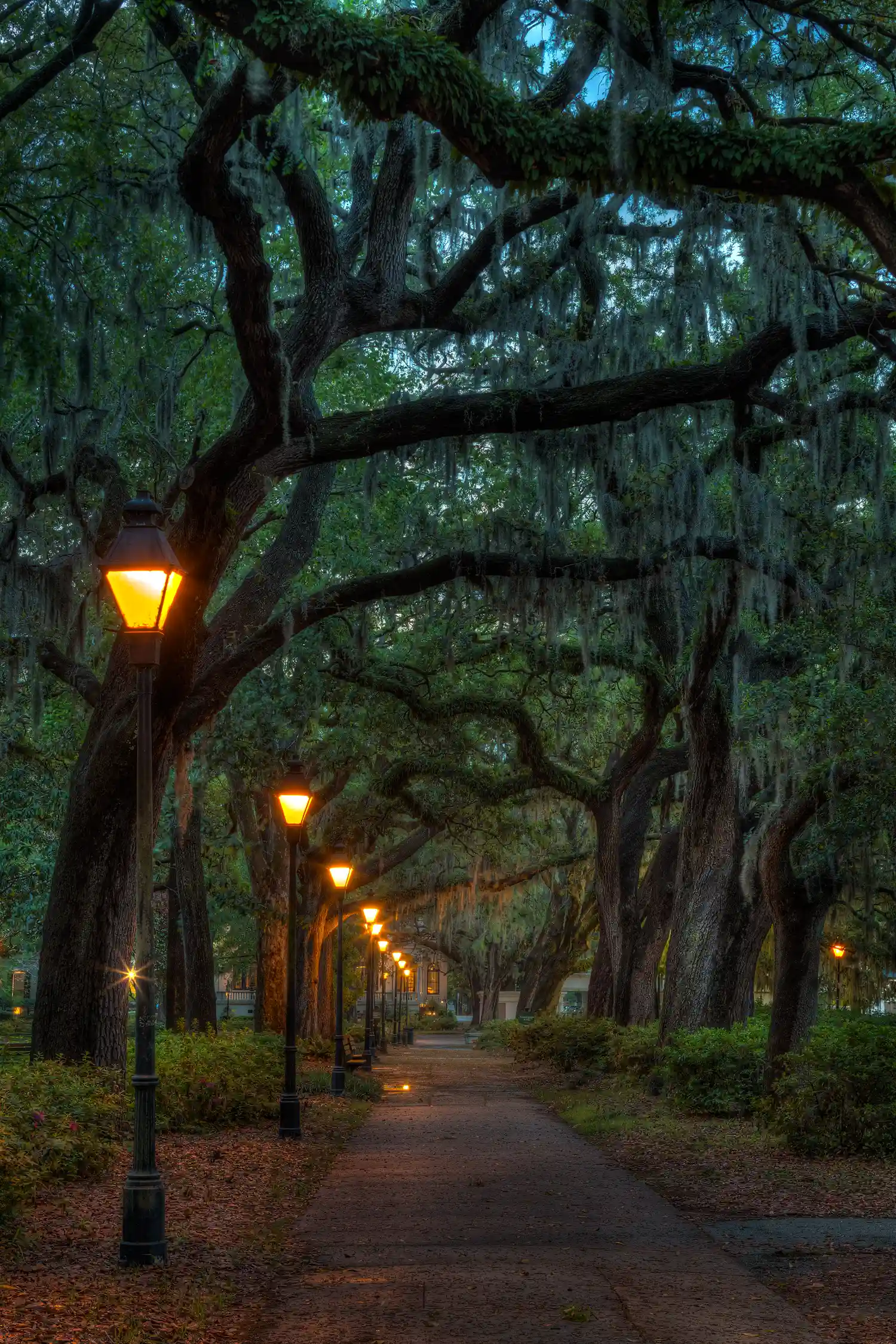
Many of Savannah's strongest scenes reveal themselves in early morning or late evening. Transitional light allows subtle relationships to emerge between trees, paths, monuments, and open space. In places like Bonaventure Cemetery or Forsyth Park, this quieter light makes it easier to work with tone, balance, and careful framing as the scene slowly settles into shape.
Why this workshop?
The workshop allows participants to slow down, refine ideas, and explore independently when conditions are right.
Photographing Charleston and Savannah calls for a different kind of attention. Instead of reacting to dramatic moments, you learn to notice smaller ones: how light moves across a facade, how repetition shapes a frame, or how a scene settles when you stop trying to improve it. That's the pace of the week. You'll learn solid technique and workflow, but just as importantly, you'll learn how to make clearer decisions in the field.
Andy's role during the workshop is straightforward: helping you make stronger photographs. He doesn't use workshop time to build his own portfolio. He's there with you, talking through composition, troubleshooting exposure, and helping you see what's working and what can be simplified. Instruction is practical, patient, and adapted to where you are, whether this is your first workshop or part of a longer photographic path. You can read more about how instruction works across all workshops on the How We Teach page.
Just as important as the photography is the atmosphere of the week. Small groups, shared meals, early mornings, and unhurried conversations create a supportive environment where learning happens naturally.
Workshop itinerary and schedule
The outline below reflects the typical structure of this workshop. Exact dates and timing will be confirmed when the next session is scheduled.
Lodging
Courtyard Marriott, Savannah/Midtown6703 Abercorn Street, Savannah, GA 31405
Lodging website · 912-354-7878 Comfort Suites West of the Ashley (Charleston)
2080 Savannah Hwy, Charleston, SC 29407
Lodging website · 843-769-9850
Daily outline
-
Day 1
- 3:30 PM — Meet in the hotel lobby for introductions and a brief overview of the week ahead.
- 4:00 PM — Afternoon and golden-hour photography at Bonaventure Cemetery, followed by dinner.
-
Day 2
Sunrise session featuring countryside ruins; breakfast in Savannah. Midday image review/processing time. Afternoon/evening photography featuring an oak lined lane and dinner at a local restaurant.
-
Day 3
Sunrise session in a Savannah city park; breakfast. Midday check-out and relocate to Charleston. Evening: early dinner, then a preview/practice session photographing driftwood at a boneyard beach until sunset.
-
Day 4
Morning: driftwood beach session; breakfast. Midday review/processing time. Afternoon: plantation and garden photography; dinner.
-
Day 5
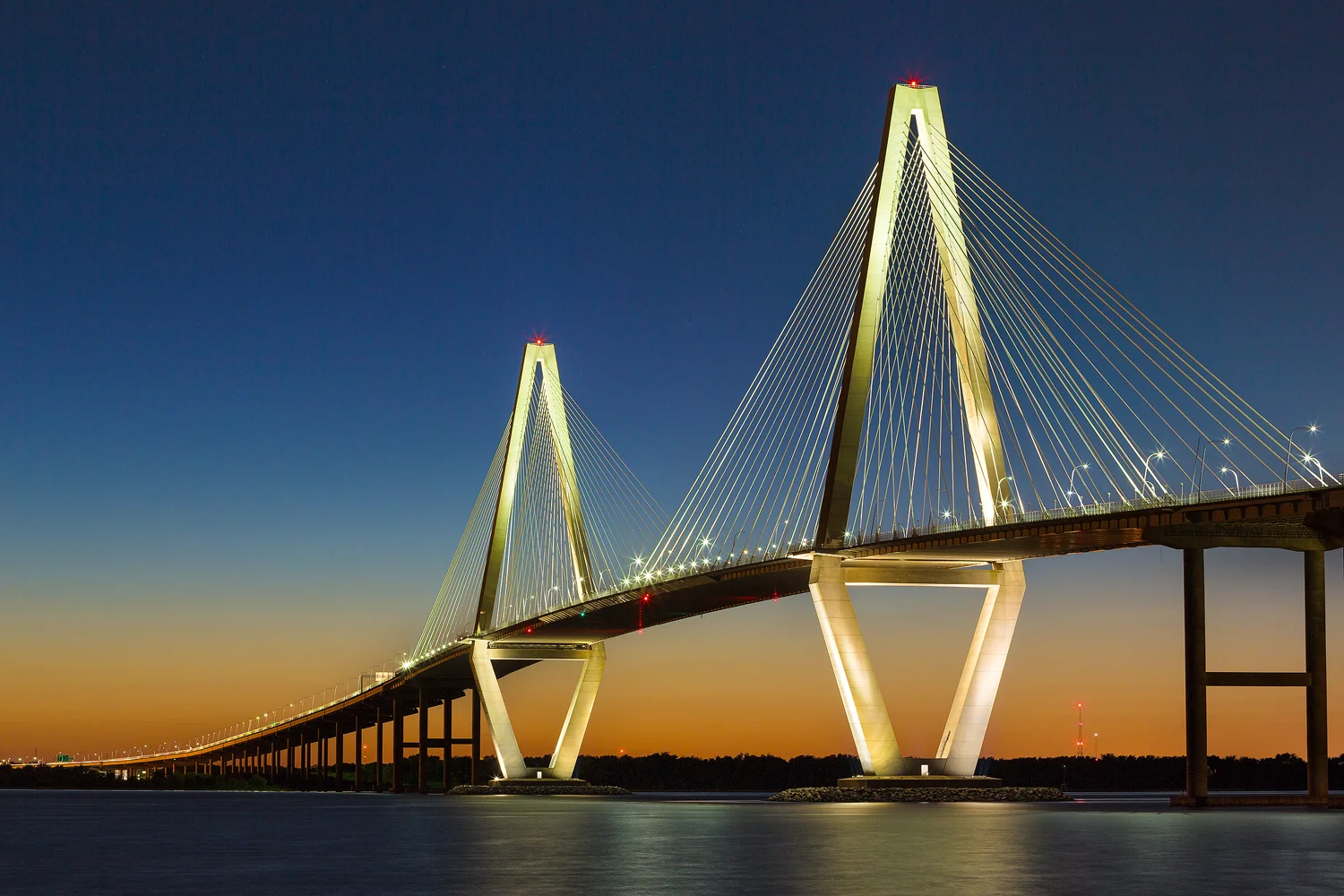
Morning: Charleston historic district. Midday review/processing time. Evening: dinner, then sunset behind the iconic Charleston bridge.
-
Day 6
Final morning session in Charleston's historic district. The workshop concludes after the morning shoot. If your schedule allows, consider extending your stay to explore additional locations on your own.

What to expect
- Morning: Early photography at a primary location, arriving before first light so there's time to work deliberately as the scene comes together. Sunrise is around 7:20 AM during this workshop.
- Midday: Slower hours for rest, image review, and discussion. On select days, post-processing help is available for participants who bring a laptop with Photoshop installed.
- Evening: Dinner is arranged either before or after photography. Sunset opportunities are limited, so we focus on locations that work well in late-day and early-evening light.
Note: Flower blooms, foliage, and beach conditions vary year to year. Rather than relying on any single element, we plan around light, composition, and subjects that photograph well in a range of conditions.
Registration
The next Charleston & Savannah workshop is planned for March 2029. Exact dates and registration details will be announced once the schedule is confirmed.
If you would like to be notified when dates are released, you can reach out to join the interest list.
Workshop details
- Experience level
- Comfortable with camera basics — suitable for developing to advanced photographers.
- Group size
- Small group (target of 8 participants) for individualized help.
- Effort
- Low — most locations are a short, easy walk from parking; a few sites involve a 10–15 minute walk.
- Conditions
- Variable spring weather; mornings can be chilly, so dress in layers. Beach photography may involve getting calves and feet wet.
Getting to the workshop
Air travel
The most convenient airports are Charleston International Airport (CHS) and Savannah/Hilton Head International Airport (SAV).
Driving and carpooling
Expect mostly paved roads throughout the workshop. During the workshop we encourage participants to carpool when possible to reduce impact and build camaraderie. A standard rental car is sufficient.
Drive time between Charleston and Savannah: ~2 hours

Recommended gear
Lenses
Bring lenses ranging from at least 18mm to 200mm (full frame; consider crop factor if applicable) to cover architecture, parks, gardens, and coastal scenes.
Polarizing filter
A polarizer is essential for reducing glare and enhancing color—especially helpful for spring foliage, wet surfaces, and coastal conditions.

Workshop community
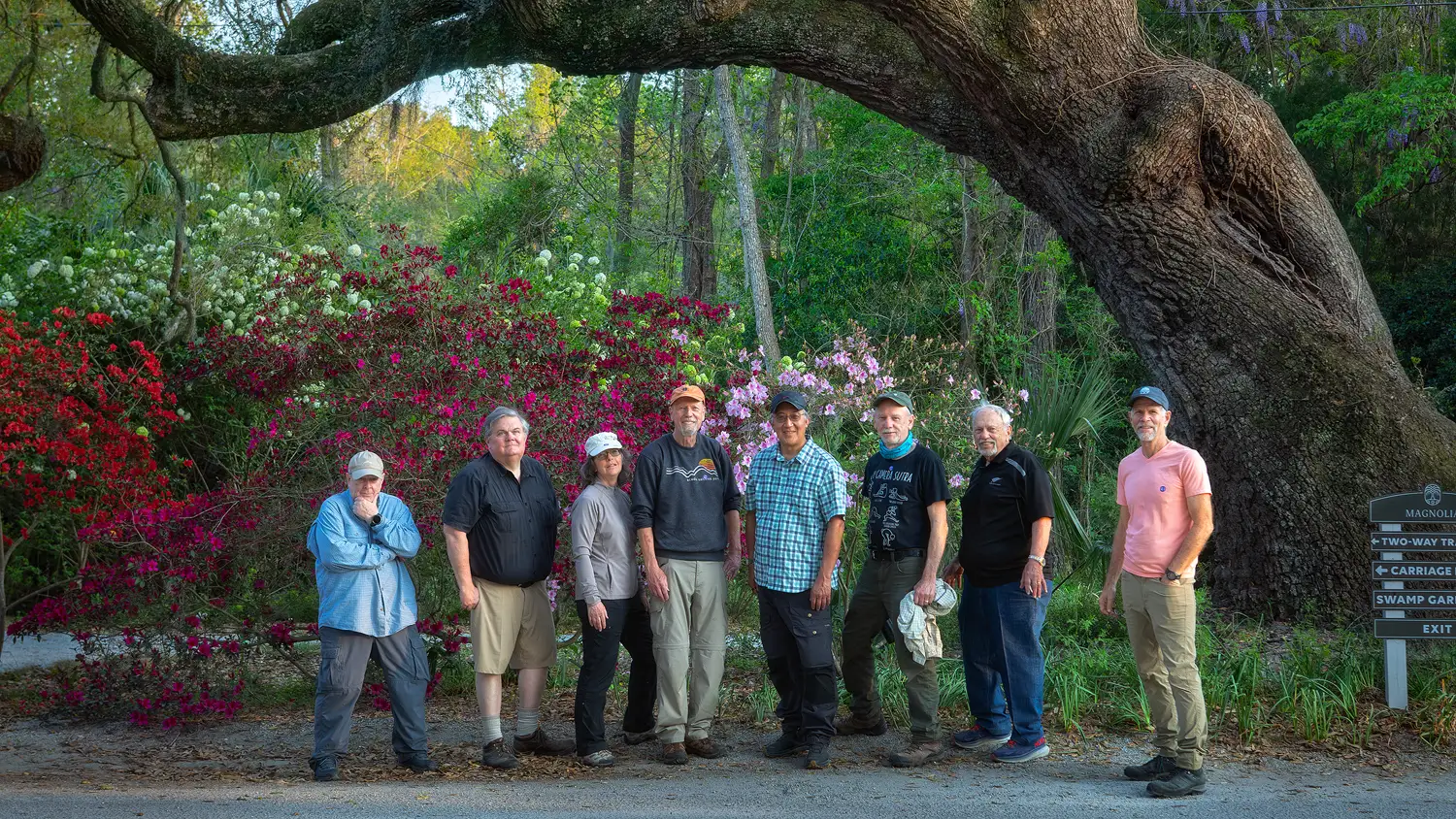
See photographs created by participants during past Charleston & Savannah workshops.
FAQ
- How much time is spent learning versus photographing?
-
Most of the learning happens while we're photographing. Instruction is woven into the field sessions through conversation, demonstration, and one-on-one feedback. You'll have time to work independently, but guidance is always available if you want it. The goal is to help you make better decisions while you're actually standing in front of a scene, not to interrupt the experience with constant teaching.
- Is this workshop appropriate if I'm still developing my skills?
-
Yes. This workshop works well for photographers who understand the basics and want to improve how their images come together. You don't need advanced technical knowledge, but you should be comfortable using your camera without relying on automatic modes. Instruction is adapted to where you are. Newer photographers build stronger foundations, while experienced photographers refine subtle choices.
- How much post-processing instruction is included?
-
Post-processing support is available on select days, primarily through image review and optional Photoshop help. The emphasis is on understanding what a photograph needs to be finished well, not on complex techniques. You're welcome to participate as much or as little as you like. This workshop remains field-focused, with processing used to reinforce decision-making.
- What kind of conditions should I expect in spring?
-
Spring conditions vary, which is part of the learning experience. Mornings can be cool, afternoons mild, and weather can change quickly. Flower blooms, foliage, and coastal conditions are never guaranteed. Rather than planning around specific elements, we focus on light, structure, and subjects that photograph well across a range of conditions.
- How physically demanding is the workshop?
-
This is a low-effort workshop. Most locations are close to parking, with easy walking on flat ground. A few sites involve short walks of ten to fifteen minutes. Coastal sessions may involve sand and shallow water. You don't need to be highly athletic, but you should be comfortable standing and walking for moderate periods.
Further Study
For photographers interested in refining post-processing techniques related to this workshop, the following tutorials may be helpful: